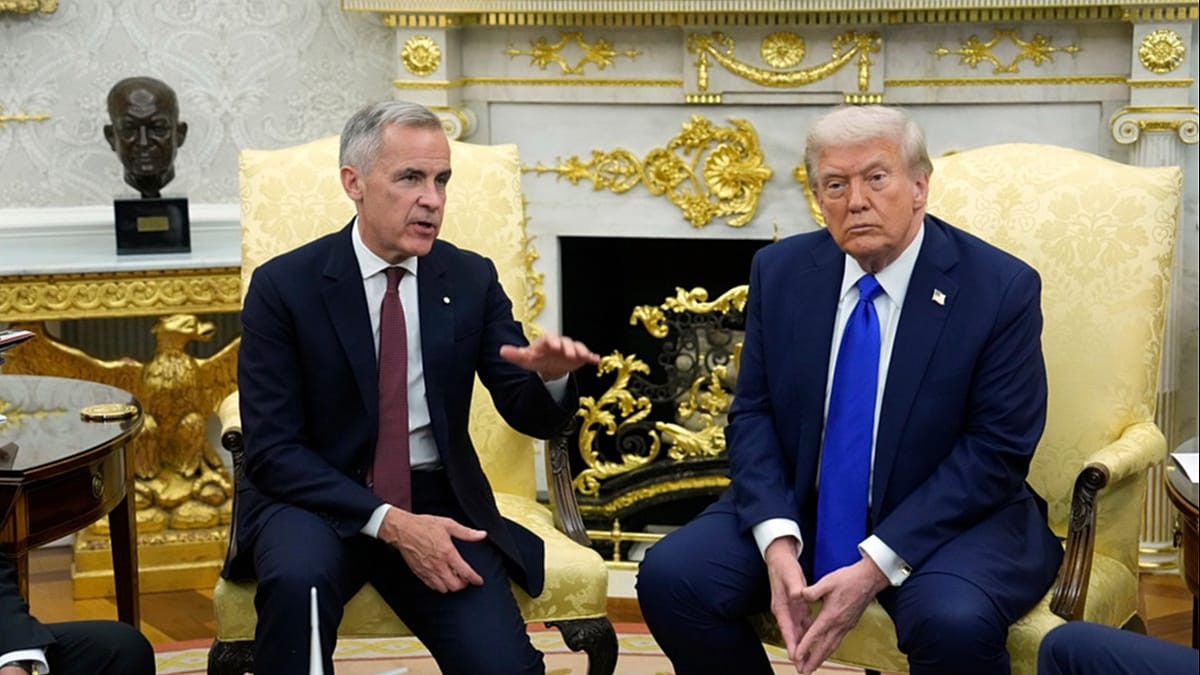
In a late-night reversal, US President Donald Trump announced on Tuesday that he would postpone the 50% tariffs on $20 billion (€17.27 billion) of Canadian imports, just hours before they were due to take effect. The decision follows a last-minute agreement between Washington and Ottawa, providing a temporary reprieve in a trade relationship that has grown increasingly fraught.
Trump made the announcement on his social media platform, Truth Social, less than two hours before the midnight deadline. He wrote: "I have paused the 50% Tariffs against Canada, that were scheduled to kick in tomorrow morning for a three-day period, based on the fact that Canada and the USA, subject to the finalisation of documents, have a DEAL!" The pause gives negotiators time to finalise terms and avoids an immediate escalation that could have disrupted cross-border trade worth nearly $880 billion (€760 billion) last year.
A fragile truce
The threatened tariffs would have hit a range of Canadian products, from hockey sticks to tongue depressors, but the political fallout would likely have been more significant than the economic impact. Canada had vowed to retaliate with its own levies, risking a full-blown trade war between two of the world's most integrated economies. Nearly 72% of Canada's goods exports go to the United States, making the stakes particularly high for Ottawa.
Canadian Prime Minister Mark Carney and Trump spoke twice by phone in the past two days, including a call on Tuesday afternoon, according to Carney's office. The intense last-minute diplomacy underscores how close the two countries came to a damaging confrontation. Ryan Majerus, a partner at King & Spalding and a former US trade official, noted before the delay: "I don't think either side really wants these tariffs to come into effect. There's a pretty strong push on both sides to find an off-ramp here."
The reprieve also reflects domestic pressures on both sides. For the Trump administration, imposing a hefty new tariff—paid by US importers who typically pass costs on to consumers—would have added to the cost-of-living crisis ahead of November's midterm elections. For Canada, the threat of tariffs on a significant portion of its exports would have been economically painful.
An unusual legal route
Trump's approach to Canada marks a sharp departure from the traditionally cooperative relationship between the two countries. He has repeatedly made inflammatory comments about making Canada the 51st US state and has used tariffs as a central tool of his second-term economic agenda. Last year, he imposed double-digit import taxes on almost every country, citing the US trade deficit as a national emergency. However, the Supreme Court struck down those tariffs in February, ruling that Trump had overstepped his authority and setting the stage for refunds to importers.
Seeking alternative legal grounds, Trump turned to a rarely used provision from the Great Depression era: Section 338 of the Tariff Act of 1930. This law, notorious among economists for worsening the Depression by restricting world commerce, allows the president to impose tariffs of up to 50% on imports from countries that discriminate against US businesses. No investigation is required, and there is no limit on how long the tariffs can remain in place. Section 338 has never been used before, but it gives Washington leverage in the ongoing renegotiation of the US-Mexico-Canada Agreement (USMCA), which Trump strong-armed into place during his first term.
The three-day pause provides a window for further talks, but the underlying tensions remain unresolved. As the race to avert a midnight tariff escalation showed, both sides are willing to step back from the brink—but the threat of tariffs still looms over the relationship. For European observers, the episode is a reminder of the unpredictability of US trade policy under Trump, which has also affected Europe, as seen in tariffs on European drones. The coming days will reveal whether this pause leads to a lasting deal or merely delays an inevitable clash.