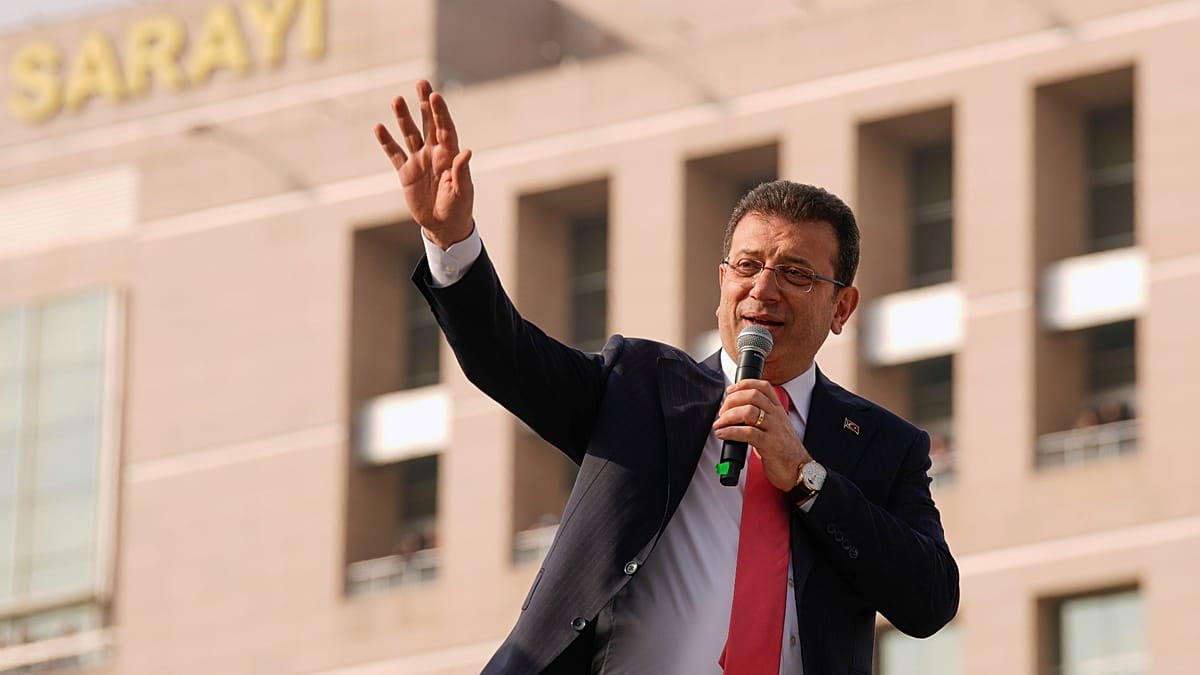
Turkey's highest administrative court has dealt a decisive blow to jailed Istanbul mayor Ekrem İmamoğlu, ruling that his university diploma is invalid and thereby barring him from the 2028 presidential race. The decision, reported by Turkish media on Thursday, is the latest in a series of legal setbacks for the opposition figure, who is widely seen as the most credible challenger to President Recep Tayyip Erdoğan.
İmamoğlu, a member of the Republican People's Party (CHP), was arrested in March 2025 on corruption charges that his party and supporters dismiss as politically motivated. He has been in detention since, and his legal team has consistently argued that the cases against him are fabricated to remove him from the political scene.
Diploma dispute and legal battle
Turkish law requires presidential candidates to hold a valid university degree. The State Council's rejection of İmamoğlu's appeal over his diploma effectively ends his candidacy, a move that critics say is part of a broader crackdown on opposition figures. The diploma was revoked by Istanbul University a day before his arrest, with the institution claiming it had been obtained fraudulently.
İmamoğlu has defended his academic record, telling the court in September 2025 that he was admitted to a university in the Turkish Republic of Northern Cyprus (TRNC) at age 18, and later transferred to Istanbul University following the rules set by Turkey's Council of Higher Education (YÖK). He insisted he followed the proper application process.
“I saw the announcement for a horizontal transfer to Istanbul University, met the requirements, applied and was accepted, studied and graduated,” he said in his testimony.
His office has released a copy of his business management degree from Istanbul University, awarded in 1995, as evidence of his credentials.
Political fallout and protests
İmamoğlu's arrest on 19 March 2025 triggered widespread protests across Turkey, with demonstrators decrying what they see as the weaponisation of the judiciary against Erdoğan's rivals. The CHP, which had nominated İmamoğlu as its presidential candidate, has vowed to continue its legal and political fight.
The court's ruling comes amid a broader climate of concern over judicial independence in Turkey, which has been a recurring issue in the country's relations with the European Union and the Council of Europe. The case has drawn international attention, with human rights groups and foreign governments urging Ankara to respect due process.
For now, İmamoğlu remains in prison, and his political future appears bleak. But his supporters argue that the ruling will only deepen public anger and could backfire on Erdoğan, who faces his own electoral challenges amid an economic crisis and rising inflation.
The decision also raises questions about the credibility of Turkey's electoral process, as the opposition faces an increasingly constrained political space. With the next presidential election scheduled for 2028, the CHP will need to find a new candidate, but the shadow of İmamoğlu's imprisonment will loom large over any future contest.
As the legal saga continues, the European Union and other international actors will be watching closely. The case is a stark reminder of the fragility of democratic institutions in Turkey, and its implications extend far beyond the fate of one politician.