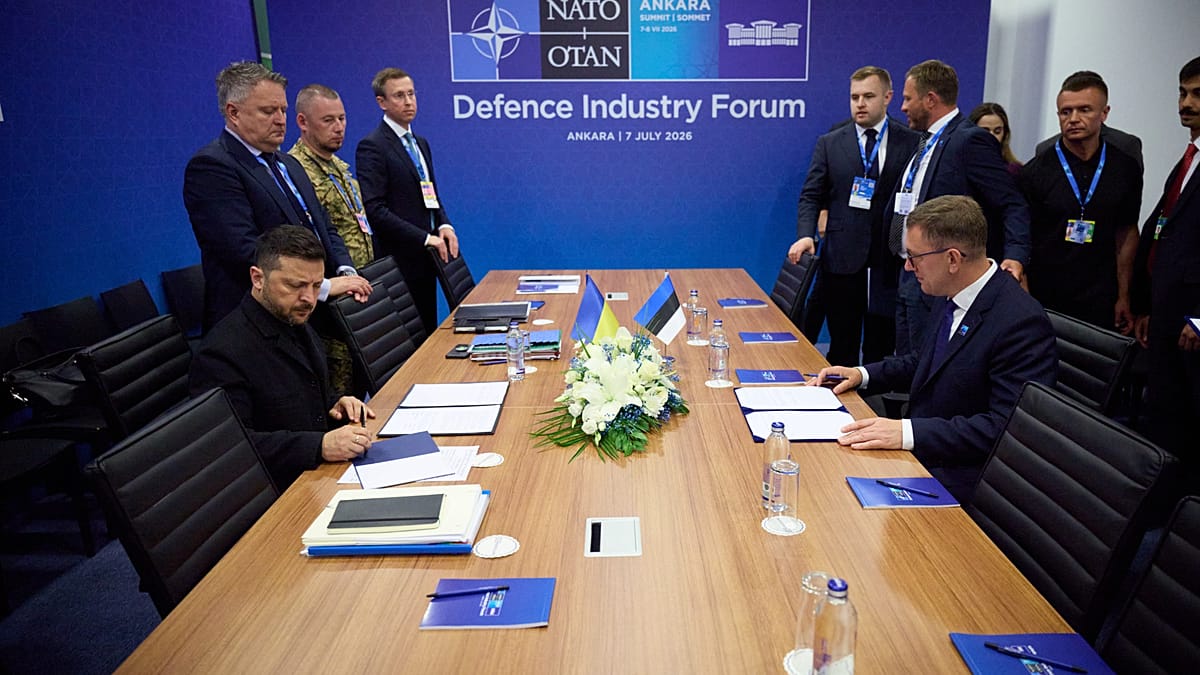
Estonian Prime Minister Kristen Michal and Ukrainian President Volodymyr Zelenskyy signed a new agreement on Tuesday aimed at expanding collaboration on drones, military technology, and the defence industry. The pact, signed on the sidelines of the NATO summit in Ankara, underscores how European allies are increasingly drawing on Kyiv's battlefield experience to bolster their own defence capabilities.
The agreement will deepen cooperation between the Estonian and Ukrainian defence industries, focusing on the exchange of expertise in drone technology, cybersecurity, information technology, and military innovation. Michal stated that Ukraine has developed one of the most competitive defence industries in the world through its experience fighting Russia's full-scale invasion, and that closer cooperation will benefit both nations' defence capabilities and industries.
Under the deal, Ukraine is prepared to export defence products to Estonia, a Baltic country of 1.3 million people. Estonia could also procure Ukrainian-developed capabilities or work with Ukrainian companies on jointly produced systems tailored to the needs of the Estonian Defence Forces. Michal emphasized the importance of maximizing combat capability from every euro, noting a preference for local production where possible.
Joint Ventures and Export Approvals
Estonian Defence Minister Hanno Pevkur added that the agreement would allow joint ventures to begin production in both Estonia and Ukraine, with Kyiv providing the necessary export approvals for selected technologies. The agreement does not include specific financial commitments from the Estonian state, according to the government.
This pact comes as European NATO members face increasing pressure to shoulder more of the defence burden, a topic that has been central to discussions at the Ankara summit. The agreement also reflects a broader trend of European countries seeking to integrate Ukraine's wartime innovations into their own defence planning. For more on the broader context of NATO defence spending debates, see our coverage of Von der Leyen and Rutte Urge European NATO Members to Shoulder More Defence Burden.
Ukraine's experience in drone warfare and electronic warfare has been particularly valuable. The country has developed a range of unmanned systems, from small reconnaissance drones to long-range strike platforms, often at a fraction of the cost of Western equivalents. This expertise is now being sought by European allies looking to modernize their own forces.
The agreement also highlights the growing defence industrial cooperation between Ukraine and European countries. For instance, Ukraine has already partnered with several European firms to produce ammunition and military equipment. This latest pact with Estonia is part of a broader effort to create a more integrated European defence industrial base.
Estonia, a long-time advocate for stronger European defence, has been a key supporter of Ukraine since the start of the war. The country has provided significant military aid and has been vocal in pushing for Ukraine's integration into NATO. For more on Ukraine's NATO aspirations, see Zelenskyy: Ukraine's Battlefield Innovation Proves It Belongs in NATO.
The pact also comes at a time when European defence spending is under scrutiny. The NATO summit in Ankara has seen discussions on meeting the alliance's defence spending targets, with some members falling short. The agreement between Estonia and Ukraine is a practical example of how European countries can leverage Ukraine's experience to enhance their own capabilities without necessarily increasing budgets dramatically.
In addition to drones, the agreement covers cybersecurity and information technology, areas where Ukraine has also gained significant expertise. Ukrainian cyber units have been active in defending against Russian attacks and have developed innovative tools and tactics that could be useful for European allies.
The deal does not include specific financial commitments from Estonia, but it opens the door for future investments and joint projects. Both sides have expressed optimism about the potential for deeper cooperation, with Michal noting that the agreement will benefit the defence industry and Ukraine's ability to defend itself.
This pact is a clear signal that European countries are looking to integrate Ukraine's wartime innovations into their own defence planning. As the war in Ukraine continues, the lessons learned on the battlefield are becoming increasingly valuable for European defence. For more on the challenges Ukraine faces, see Ukraine's Air Defenses Fail to Intercept Any Russian Ballistic Missiles in Overnight Attack.