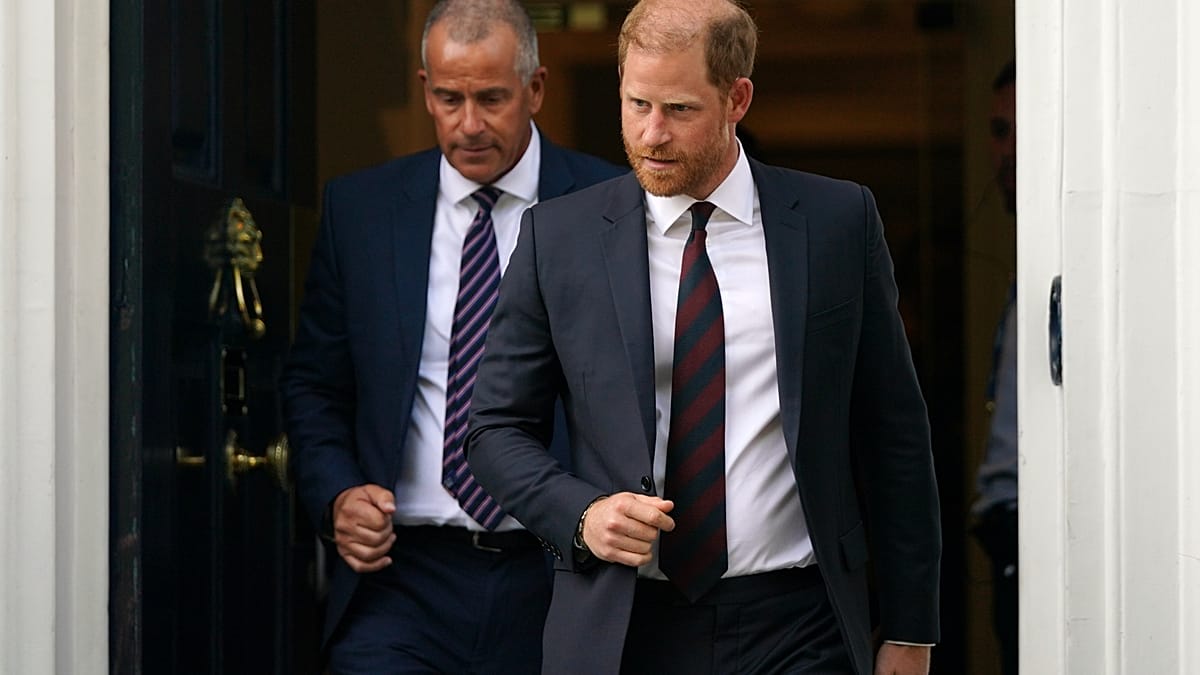
London's High Court has thrown out a privacy case brought by Prince Harry and six other claimants against Associated Newspapers, the publisher of the Daily Mail. In a written judgment on Tuesday, Justice Nicklin concluded that the group had not provided sufficient evidence to support their claims of unlawful information gathering.
The claimants, which also included singer Elton John, alleged that Associated Newspapers had obtained private and confidential details through phone hacking, the deployment of private investigators, and other covert methods. The publisher consistently denied any wrongdoing.
Justice Nicklin stated that suspicion, even when understandable, does not constitute proof. He emphasized that the court could not infer unlawful sourcing simply because information was private and the publisher could not explain exactly how it was obtained. The judgment noted that Associated journalists had provided lawful explanations for the sourcing of the disputed articles.
Leveson Inquiry Allegations Dismissed
The court also rejected claims that three senior Associated executives had lied during their testimony to the Leveson Inquiry, which examined press ethics and practices in the UK from 2011 to 2012. This part of the ruling further undermined the claimants' broader case against the publisher.
In a statement, an Associated Newspapers spokesperson described the outcome as an overwhelming victory for the Daily Mail and its journalists and a magnificent vindication of the paper's journalism. They characterized the allegations of bugs in cars and homes, phone tapping, and illicit access to bank accounts as lurid and preposterous, adding that no credible evidence was ever presented.
The legal battle reportedly cost Associated Newspapers more than £50 million, which the publisher intends to recover. Prince Harry has since called the ruling totally unwarranted and a whitewash, though no formal appeal has been announced.
This case is the latest in a series of legal confrontations between the British royal family and the tabloid press. It also highlights ongoing tensions in the UK over privacy rights and media accountability, issues that resonate across Europe as courts in countries like France and Germany grapple with similar questions. For instance, the Paris Appeals Court recently upheld a fraud conviction against Marine Le Pen, underscoring how legal systems across the continent are increasingly scrutinizing public figures' conduct.
The ruling also comes amid broader debates about cybersecurity and data protection in Europe. The European Central Bank has ordered the eurozone's largest banks to strengthen defenses against AI-driven cyber threats, reflecting a growing awareness of the vulnerabilities in digital information systems.
For now, the Daily Mail's publisher has secured a clear legal victory, but the broader conversation about press ethics and individual privacy in the UK—and across Europe—shows no signs of abating.