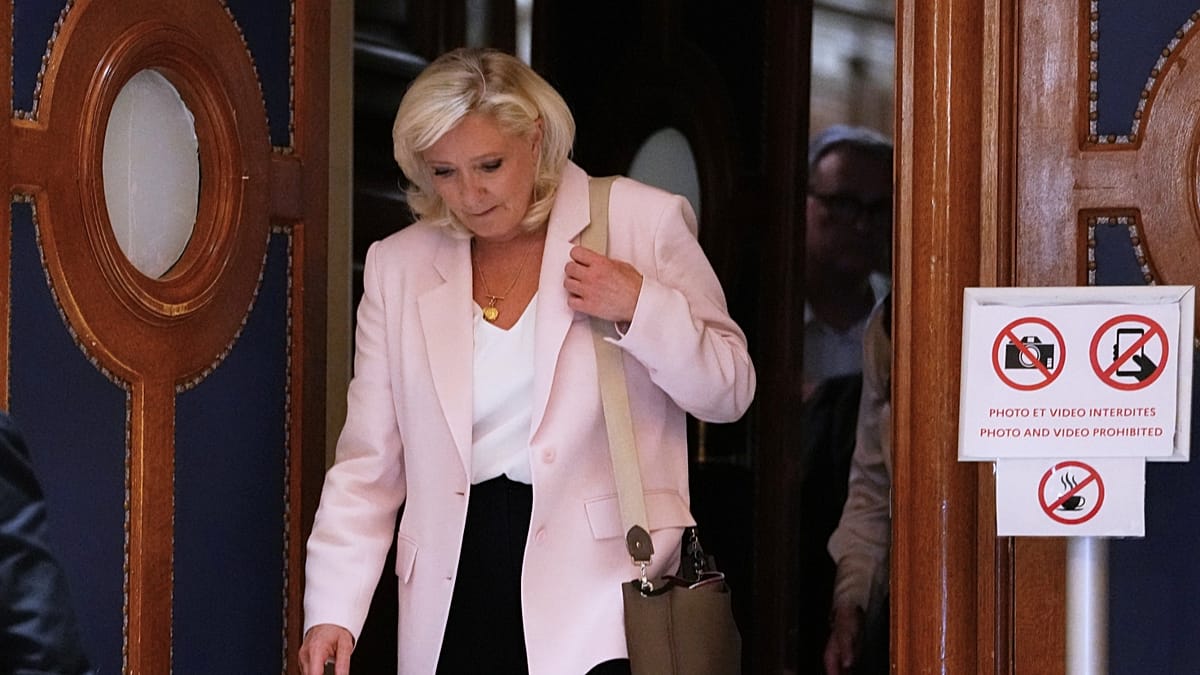
Marine Le Pen, leader of the far-right National Rally, has confirmed she intends to be a candidate in France's 2027 presidential election, even after a Paris appeals court upheld her conviction for embezzling European Union funds. In an interview on TF1, Le Pen stated, "Tonight, I am a candidate for the presidential election," and vowed to pursue all legal avenues to clear her name.
The Paris appeals court on Tuesday upheld the 2025 conviction, which stemmed from a scheme where Le Pen and other party officials used EU parliamentary funds to pay staff who were actually working for the National Rally. The court sentenced her to three years' imprisonment—one year to be served at home under electronic monitoring—a €100,000 fine, and a 45-month ban from holding public office, with 30 months suspended. This effectively leaves a 15-month period of ineligibility, which the judges noted she has already served due to the immediate enforcement of the original 2025 ruling.
Le Pen's announcement aims to quell uncertainty about her political future. Earlier, she had suggested she would not campaign while wearing an electronic bracelet, citing mobility constraints. However, her tone has shifted to defiance. She now plans to appeal to France's highest court, the Court of Cassation, arguing that the first-instance ruling should be overturned. The judges, in their statement, said they considered "voters' freedom of choice" when determining the ban, a factor that likely influenced the reduced ineligibility period.
Political Implications for France and Europe
This legal saga has significant ramifications for French and European politics. Le Pen, a three-time presidential candidate, has long positioned herself as a challenger to the mainstream political establishment. Her conviction for misusing EU funds—a crime that strikes at the heart of European institutional integrity—could undermine her credibility among voters who prioritize transparency. Yet, her base remains loyal, and the reduced ban allows her to campaign actively.
The ruling also affects the National Rally's internal dynamics. Some analysts had speculated that Le Pen's legal troubles might pave the way for her protégé, Jordan Bardella, to take the helm. Bardella, the party's president, has been seen as a potential successor. However, Le Pen's determination to remain the candidate suggests she intends to lead the party into the next presidential race, potentially sidelining Bardella for now. For a deeper look at how the court's decision could reshape the far-right landscape, see our earlier analysis: Paris Court Ruling Could End Marine Le Pen's Presidential Hopes, Boost Bardella.
Beyond France, the case resonates across the European Union. Le Pen's conviction for embezzling EU funds highlights ongoing concerns about the misuse of European taxpayer money by nationalist parties. The European Parliament has tightened oversight of expense claims in recent years, but this case underscores the challenges. It also feeds into broader debates about the rule of law in EU member states, particularly when populist leaders face judicial scrutiny. For context on similar dynamics elsewhere, see our report on Nigel Farage Quits as MP, Triggers Clacton By-Election as 'People vs. Establishment' Vote.
Le Pen's appeal to the Court of Cassation is unlikely to be resolved quickly. French legal experts note that such appeals can take months or even years, meaning the 2027 election could approach with the conviction still hanging over her. If the appeal fails, she would face the full force of the sentence, including the electronic monitoring and fine. However, the reduced ineligibility period means she can legally stand for office, barring any further judicial setbacks.
The case also places President Emmanuel Macron in a delicate position. Macron, who defeated Le Pen in the 2017 and 2022 runoffs, has not yet announced whether he will seek a third term—though the French constitution limits presidents to two consecutive terms, so he cannot run again. His centrist coalition, weakened by recent parliamentary losses, may face a strong challenge from Le Pen if she can rally her base. The broader European context, including the war in Ukraine and economic pressures, will also shape the 2027 race.
For now, Le Pen's defiance keeps her at the center of French politics. Her ability to campaign while under judicial scrutiny will test the resilience of France's democratic institutions and the electorate's tolerance for convicted politicians. As the legal process unfolds, the National Rally's strategy will be closely watched in Paris, Brussels, and beyond.