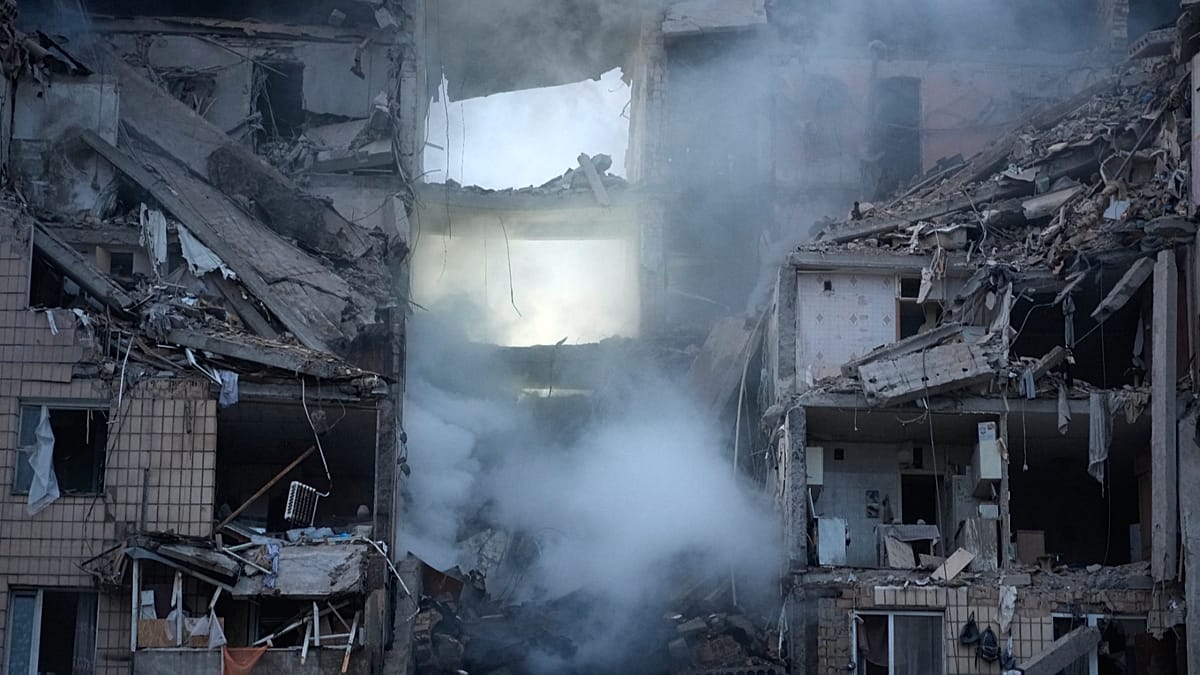
Ukraine’s air defences failed to intercept any of the 29 ballistic missiles launched by Russia during an attack overnight on 6 July, according to air force spokesperson Colonel Yurii Ihnat. Speaking on national television, Ihnat described the interception rate as “low, to put it mildly,” and acknowledged bluntly that Ukraine lacks the means to counter Russia’s ballistic missiles effectively.
“To shoot down ballistic missiles, you need the assets to do so. We have enough systems, but what we need is a steady supply of missiles,” Ihnat said. He added that Moscow is acutely aware of this vulnerability and is deliberately exploiting it. “Russia is exploiting the fact that Ukraine, and indeed the world, is facing a serious shortage of PAC-2 and PAC-3 interceptor missiles. That is why it is increasingly focusing on ballistic missile strikes.”
Patriot Systems Under Strain
The US-made Patriot system remains Ukraine’s only effective defence against ballistic missiles, but supplies of interceptors have fallen critically low. Manufactured by Raytheon and Lockheed Martin, Patriots have been widely used by US allies, including Gulf states, and by Ukraine. However, the US and Israel’s war on Iran has depleted nearly a third of the global stockpile of Patriot interceptors. According to some estimates, Gulf states have collectively fired more than 1,100 interceptors in recent months.
Ukrainian President Volodymyr Zelenskyy noted that Lockheed Martin produces roughly 600 interceptors annually, or about 60–65 per month—a rate far below current demand. “As long as Patriot missiles remain in our allies' stockpiles, Russia is only encouraged to keep 'vanquishing' residential buildings,” Zelenskyy said in a statement on Monday. “The United States and Europe have enough strength to stop this terror.”
Ukraine’s ambassador to the EU, Vsevolod Chentsov, told Euronews’ Europe Today that the Kremlin’s message is clear: “Russia is sending its message that they want to continue this war. But definitely, both Ukraine and our allies will send our message back because war is going back to Russia. And Ukraine already has its answer, and we call it kinetic sanctions.” Chentsov referred to Kyiv’s intensified mid- and long-range strikes into Russia and occupied territories, but admitted that apart from this campaign, Ukraine urgently needs anti-ballistic air defences.
The issue is expected to dominate the NATO summit in Ankara, which begins on Tuesday. Zelenskyy stressed that it is “critically important that the world – first and foremost the United States and our European partners – come out of the NATO Summit in Ankara with strong decisions in support of Ukraine’s air defence, and thus the protection of ordinary people’s lives.”
Ihnat said Ukraine would continue to use every available diplomatic channel to strengthen its air defence capabilities. The summit in Ankara is seen as a pivotal moment for securing additional commitments from allies. For more on Ukraine’s broader diplomatic push, see Ukraine Presses for NATO Support and EU Membership Amid Renewed Russian Attacks.
The attack on 6 July killed at least eight people in Kyiv and wounded dozens more, as reported in Russian Missile and Drone Barrage Kills Eight in Kyiv, Wounds Dozens. The failure to intercept any ballistic missiles underscores the urgency of the situation, as Ukraine’s air defence network faces its most severe test since the full-scale invasion began.