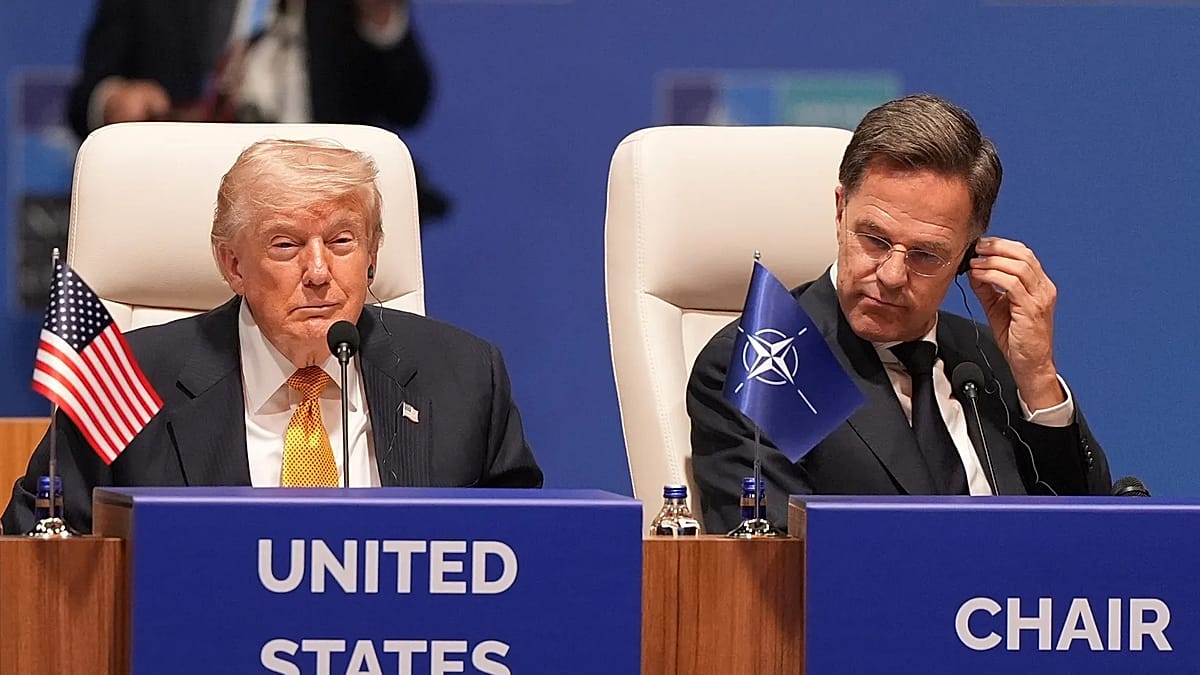
The transatlantic alliance is undergoing its most significant transformation since the Cold War, but not everyone is convinced the changes amount to progress. A former US ambassador, speaking on condition of anonymity, described the so-called NATO 3.0 as "lipstick on a pig" – a rebrand that masks a fundamental reduction in Washington's commitment to European security.
NATO 3.0, a concept developed in Washington, particularly by Under Secretary of War Elbridge Colby, represents a strategic pivot away from Europe. Colby has long advocated for a complete overhaul of US policy towards the continent, and his vision is now being implemented. The US is withdrawing troops and cutting key military capabilities, while simultaneously pressuring European allies to take on more responsibility for their own defence.
At a NATO defence ministers' meeting in Brussels in February, Colby told allies: "Times have changed. We are reprioritising the defence of our homeland and the protection of our interests in our hemisphere." This blunt message underscores a shift from the founding principle that European and American security are indivisible.
European and Canadian leaders have responded by agreeing to spend 5 percent of GDP on defence by 2035, a significant increase. NATO Secretary General Mark Rutte has hailed this as a strengthening of the alliance, crediting President Trump for finally pressuring Europeans to step up. He has dubbed the cumulative spending increases "the Trump trillion."
However, critics argue that NATO 3.0 is a euphemism for a diminished US role. The former ambassador's "lipstick on a pig" remark captures the sentiment that the rebrand is a cosmetic exercise, not a genuine enhancement of the alliance. The US has already withdrawn key assets needed to deter aggression, even as Russia's war in Ukraine continues and allies face hybrid attacks.
Trust under strain
Relations between Washington and its European allies have deteriorated sharply since Trump returned to the White House. His repeated insistence on "acquiring" Greenland, a semi-autonomous territory of NATO ally Denmark, has deeply undermined trust. Then came the US military campaign in Iran, which NATO allies were not consulted about beforehand.
Italy and Spain denied US forces access to bases on their territories, and France refused Israel the right to use its airspace to transport US weapons for use in Iran. Despite these frictions, the UK, Germany, and Romania have allowed US basing and refuelling rights, albeit with conditions. A Franco-British-led coalition has also pre-positioned assets, including de-mining vessels and warships, to help reopen the Strait of Hormuz, a vital shipping route that has been mostly closed since the campaign began.
US Secretary of War Pete Hegseth has lashed out at allies, calling their response to the Iran conflict "shameful" and describing partners as "free riders." In June, he announced a review of US troop levels in Europe, stating: "Europe can and must take primary responsibility for its conventional defence."
Martin O'Donnell, Chief of Public Affairs at NATO's Supreme Headquarters Allied Powers Europe, welcomed the review, telling Euronews it allows NATO to "plan better and more realistically" in the event of a conflict in the Pacific. But the question remains: does the withdrawal of US capabilities weaken NATO's overall deterrent?
Rutte remains optimistic. "The US has adjusted its pledged contributions – and other allies have stepped up to contribute more," he told journalists in June. "This is fair. This makes us stronger, and this is what NATO 3.0 is all about. A stronger Europe in a stronger NATO."
Europe and Canada spent a record $139 billion on defence last year, including $60 billion on American weapons, according to US-NATO figures. More than $50 billion in defence procurement contracts were agreed at NATO's Defence Industry Forum in Ankara in July, including a joint purchase of up to ten Swedish Saab GlobalEye aircraft to replace aging American Boeing surveillance planes.
Yet the underlying tension remains. As Washington's commitment wavers, European allies are left to fill the gaps, but the trust that once underpinned the alliance has been severely eroded. The "lipstick on a pig" critique suggests that no amount of rebranding can hide the fundamental shift in the transatlantic relationship.