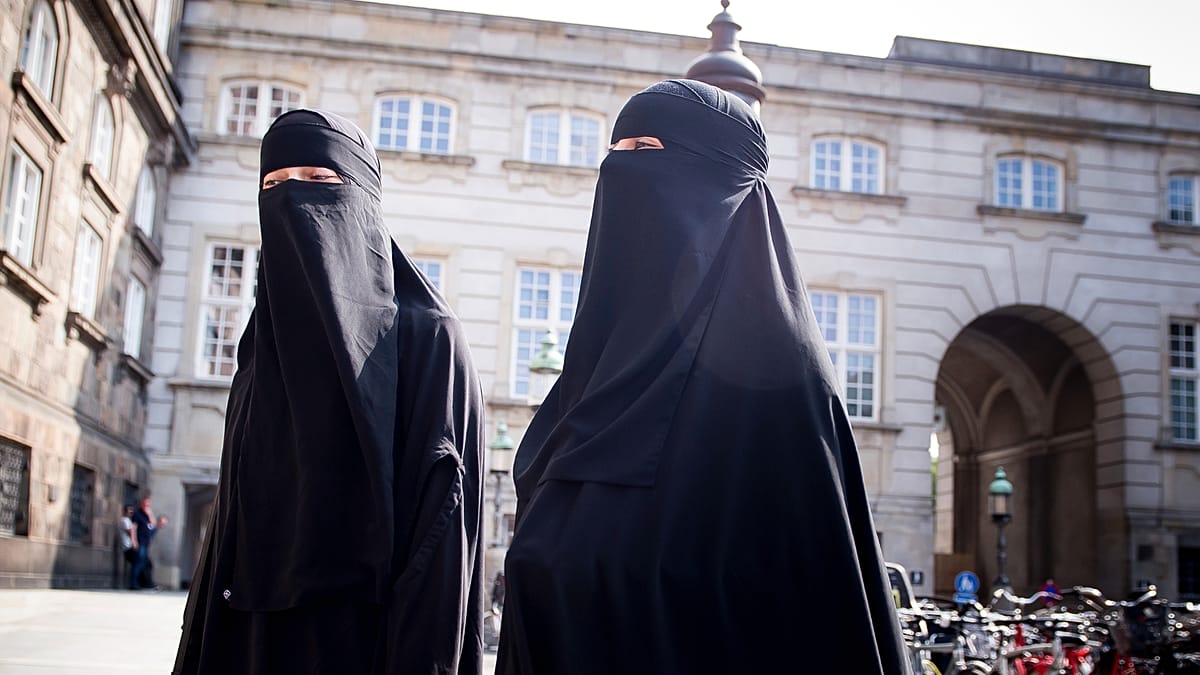
Portugal's President António José Seguro has enacted a law prohibiting face coverings in public spaces, a measure that has ignited a fierce debate over security, religious freedom, and the treatment of Muslim communities. The legislation, widely referred to as the "burqa law" in Portuguese media, was approved by parliament in July with backing from the governing centre-right coalition and far-right parties, while left-wing parties voted against it.
In a statement released late Tuesday, Seguro defended the law, saying, "The face must be considered a central element of human identity and communication." He acknowledged that the issue carries "great social and cultural sensitivity," reflecting the deep divisions the measure has exposed within Portuguese society.
What the law says
The new legislation prohibits clothing designed to conceal the face or prevent identification in public spaces. It also makes it illegal to force someone to cover their face for reasons related to gender, religion, age, or origin. Violators face fines ranging from €150 to €3,000, with exemptions for health, professional, artistic, or weather-related reasons, as well as in places of worship, diplomatic missions, and on aircraft.
The bill originated from the far-right Chega party, which has been gaining traction in Portugal's political landscape. However, it received negative opinions from several influential bodies, including the Portuguese Bar Association, the High Council of the Public Prosecutor's Office, and the Portuguese Association of Women Lawyers, all of which raised concerns about its potential unconstitutionality.
Political and social backlash
The centre-left Socialist Party (PS), green-left Livre, and the Portuguese Communist Party (PCP) opposed the proposal, warning that it could fuel Islamophobia and stigmatise minority communities. The PS denounced what it called the "Islamophobic purpose that was evident in the explanatory memorandum [of the bill], the context of radicalism in which we live and the risks this creates for the communities directly targeted."
The PCP went further, stating that the proposal had "nothing to do with women's rights, nor with security issues," but was "solely about fuelling hate speech and violence against those who are different, fuelling racist and xenophobic discourse."
Supporters of the law, including the centre-right Social Democratic Party (PSD), argue that it is necessary for security and to uphold European values of openness and communication. They point to similar bans in other European countries, such as France and Belgium, as precedents.
The law comes at a time when Portugal is grappling with broader social and environmental challenges. The country has been battling wildfires with over 2,000 personnel as heat persists, and its ancient olive trees, some possibly 3,700 years old, are a testament to its deep cultural roots. Meanwhile, the luxury real estate market in places like Cascais continues to boom, reflecting a nation in flux.
Critics, however, argue that the law is a symbolic gesture that does little to address real security threats and instead marginalises a vulnerable population. They also question the timing, noting that Portugal has one of the smallest Muslim communities in Western Europe, estimated at around 50,000 people.
As the law takes effect, its implementation will be closely watched by human rights groups and legal experts. The potential for constitutional challenges remains high, and the debate over how to balance security, identity, and religious freedom is far from over.
For now, Portugal joins a small but growing list of European nations that have chosen to restrict face coverings in public, a move that continues to polarise opinion across the continent.