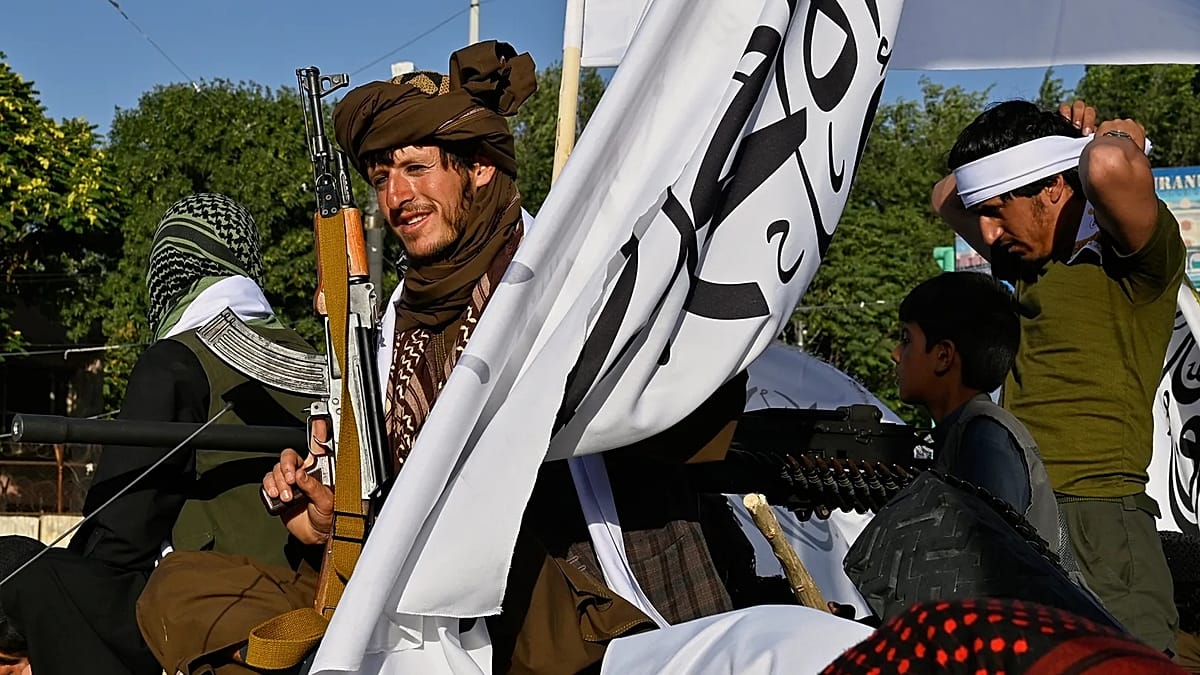
Five years after the Taliban seized Kabul, the International Criminal Court (ICC) has reportedly ordered prosecutors to open a standalone investigation into Taliban persecution of women, separating it from the long-running Afghanistan probe that also examined alleged crimes by US personnel. The move, first reported by Middle East Eye, could ease pressure from Washington on the court, which has faced sanctions and threats from the Trump administration.
Judges at the ICC's Pre-Trial Chamber II have directed prosecutors to launch a separate inquiry into Taliban conduct since 2021, finding it "materially different" from the acts covered by the original investigation. The Office of the Prosecutor declined to confirm or deny the decision to Euronews, but a spokesperson indicated that the Taliban remain the core focus.
"The investigation is focused on the Taliban leadership and their alleged crimes of persecuting women and political opponents, including the deprivation of fundamental rights, systematic arrests and torture," the spokesperson said. They added that the office could not comment further on non-public filings.
Rights advocates alarmed
Shaharzad Akbar, former head of the Afghanistan Independent Human Rights Commission and now a fellow at Oxford's Wolfson College, voiced deep concern. "Any selective justice is deeply troubling," she told Euronews. "It is also alarming to hear the US's bullying, intimidation and attacks on the court are influencing decisions made about investigations."
Akbar noted that Afghan civil society groups have "repeatedly asked the ICC for comprehensive investigations about all allegations that fall within its mandate," including those against US forces. She described Washington's conduct toward the court as "appalling and shameful."
The allegations against US personnel relate primarily to documented abuse of detainees at CIA black sites, including the Salt Pit north of Kabul, and the conduct of military interrogators. The US Senate Intelligence Committee's 2014 report detailed waterboarding, sleep deprivation, and other methods that constitute torture. The Justice Department subsequently declined to open new criminal investigations, and no US administration has acknowledged wrongdoing.
During Donald Trump's first term, the White House applauded an early ICC ruling that declined to open a formal investigation into US actions, calling it "a major international victory." That decision was later overturned.
Why were the two cases bundled together?
Unlike other tribunals, the ICC investigates "situations" defined by territory and time, not by party to a conflict. Afghanistan ratified the Rome Statute in 2003, granting the court jurisdiction over crimes committed on its soil from that date. The 2020 authorisation covered the Taliban, the Haqqani network, ISIS-K, Afghan government forces, and US military and CIA personnel under one umbrella.
In 2021, then-prosecutor Karim Khan deprioritised the US-related part, focusing resources on the Taliban and ISIS-K. But the broader situation remained open, leaving the Taliban case vulnerable to Washington's political pressure aimed at the entire file. That pressure intensified after Trump returned to office in January 2025, with sanctions imposed on ICC officials tied to the Afghanistan and Palestine investigations.
In December, diplomats told Middle East Eye that Washington pressed for both investigations to be dropped entirely as a condition for lifting sanctions. The July 2025 warrants against Taliban leader Haibatullah Akhundzada and judiciary chief Abdul Hakim Haqqani for the crime against humanity of persecution of women were issued amid those pressures.
The US State Department has since announced plans to "dismantle" the court and "systematically disable" its ability to target American officials. Measures could include visa revocations and travel bans.
For Afghan women, the separation of the probes may bring a sharper focus on Taliban abuses, but it also risks leaving US conduct unexamined. As the Taliban mark five years in power, the fate of women's rights remains dire, with bans on education, employment, and public life. The ICC's decision, while pragmatic, raises questions about whether justice can be truly comprehensive when political pressures shape its scope.