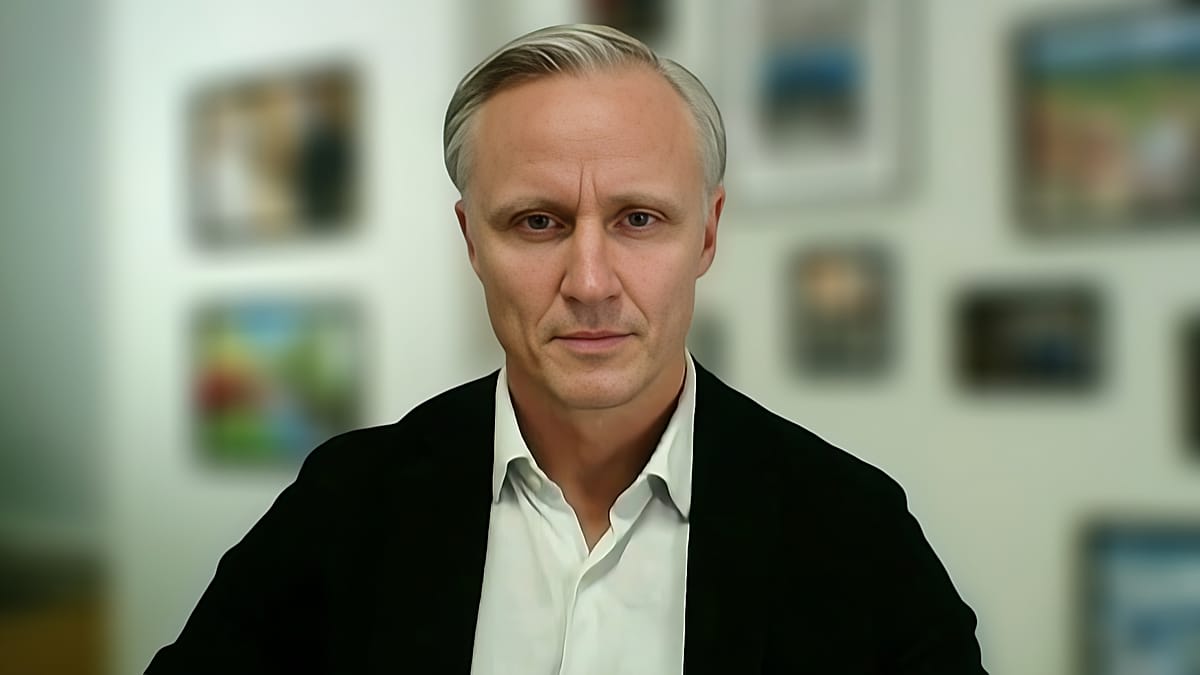
John Ternus steps into the chief executive's office at Apple on Tuesday, taking the helm of a company that still dominates the smartphone market but has yet to match its rivals in artificial intelligence. The 51-year-old engineer, who joined Apple's design team in 2001 and rose to senior vice-president of hardware engineering, inherits a business that Tim Cook built into a global supply-chain powerhouse.
Ternus has barely a week to settle in before Apple's annual iPhone event on September 9, where the company is expected to unveil its first foldable handset. That product launch will be the first public measure of his leadership, just eight days into the job.
Hardware first, AI second
Analysts say Ternus is likely to stick to what he knows. "Tim Cook left the house in phenomenal order," said Dan Ives, partner and senior managing director at Yorkville Ives & Co. "But now it's about Ternus defining the AI chapter." Ives expects the new CEO to focus on hardware innovation while leaving Cook's supply chain intact. "There's no reason to fix what's already working," he said.
Some had argued that software chief Craig Federighi was the more logical pick for a company scrambling to catch up on AI. But Carolina Milanesi, an analyst at Creative Strategies, says that misreads how consumers adopt technology. "Consumers are still buying hardware first, and it's going to be like that for a long time," she said. "You're not going to discover the value of AI if you're not interested in the hardware."
Ternus earned a bachelor's degree in mechanical engineering from the University of Pennsylvania and worked at Virtual Research Systems before joining Apple. Inside the company, he is credited with driving a push to make products more durable, reliable, and resilient, as well as design work that cut their carbon footprint.
The geopolitical test
The harder question is what kind of leader he becomes. "Even people that know him now don't know him as a CEO," Milanesi said. "You might know him as the head of engineering, but once you're CEO, things change. Your responsibility is bigger, your power is bigger. You're dancing a different kind of dance."
Nowhere is that gap wider than in the geopolitical role Cook excelled at, courting both Beijing and the White House to protect a supply chain that runs largely through China. Apple's manufacturing operation is among the most complex in corporate history, a web of hundreds of suppliers and assembly lines that Cook painstakingly built over decades. Cook in recent years began shifting some work to India and Vietnam, but the diversification has been gradual, with China still anchoring the system.
Complicating matters, former President Donald Trump repeatedly demanded Apple build iPhones on American soil, threatening tariffs on those made overseas. Cook avoided the heaviest blows of Trump's trade war by cultivating the president directly, making US investment commitments and political donations—all while also keeping Beijing onside.
That tricky political terrain will be new for Ternus. "He knows Apple Park like the back of his pocket in terms of hardware," Ives said. "But on the global stage—that's probably one of the biggest areas where he's going to have to learn on the job."
Cook is not going far. He becomes executive chairman of Apple's board on the same day, with a mandate that includes engaging policymakers around the world. "That was really clever," said Milanesi, arguing the arrangement frees Ternus from a role Cook has handled alone for years.
The September 9 iPhone event will be the first public measure of the handover. A foldable iPhone would be the most significant redesign in years, and Ternus will be its face. For European consumers and businesses watching Apple's moves, the transition signals a continued emphasis on hardware-led innovation, even as the company plays catch-up in AI. The broader tech landscape in Europe, where regulators are scrutinising big tech's market power, will be watching closely.