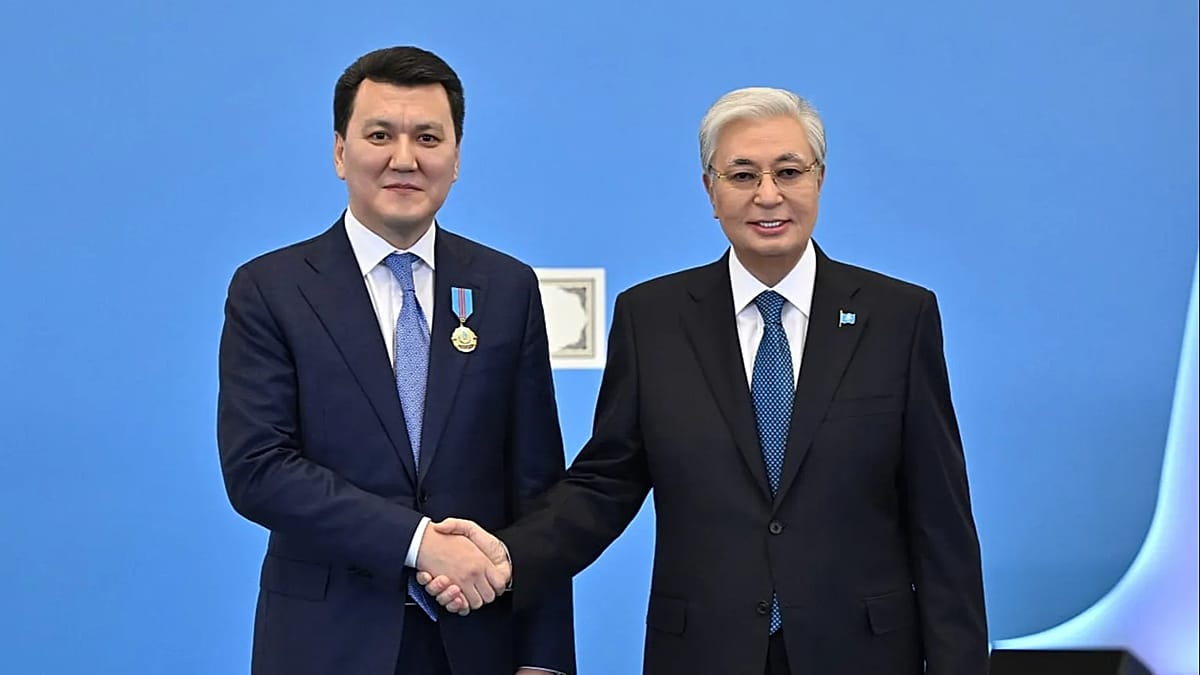
Kazakhstan's President Kassym-Jomart Tokayev has appointed Erlan Karin as the country's first vice president in three decades, reviving a position that had been dormant since the mid-1990s. The announcement came on Monday during the second session of the newly elected unicameral Parliament, the Kurultai.
Tokayev put forward two candidates for the role: Karin, a former state adviser and deputy head of the Presidential Administration, and Olzhas Bektenov, who will remain as Prime Minister. The choice of Karin signals a preference for a seasoned political insider over the head of government, who continues to lead the cabinet.
A return to an old office
The vice presidency was reinstated under Kazakhstan's new Constitution, approved by a nationwide referendum in March 2026. The office had existed only briefly after the collapse of the Soviet Union, from 1991 to 1995, before being abolished under former President Nursultan Nazarbayev.
Tokayev has said the vice president will help maintain a balance between the branches of government and will work closely with both Parliament and the Government. The appointment is part of a broader political overhaul that has seen the introduction of a unicameral legislature and other constitutional changes.
Karin's elevation places one of the key architects of Tokayev's political agenda at the centre of the new system. In recent years, he has been instrumental in shaping the country's ideological direction, heading a working group on parliamentary reform and serving as deputy chairman of the Constitutional Commission.
He has also been involved in developing and promoting flagship initiatives associated with the Tokayev administration, including the concepts of "New Kazakhstan", "Law and Order", and "Taza Kazakhstan" ("Clean Kazakhstan"). These campaigns have sought to redefine the country's post-Nazarbayev identity and governance style.
Before the parliamentary session, Tokayev met with leaders of the five political parties that secured seats in the Kurultai. After the appointment, he held separate talks with Karin and Bektenov, underscoring the importance of the new arrangement.
The move comes amid a wider regional context where Central Asian states are recalibrating their political systems. Kazakhstan's shift to a unicameral parliament and the restoration of the vice presidency are seen as attempts to streamline decision-making while maintaining presidential authority.
Observers note that Karin's background as a former state adviser and his close alignment with Tokayev's vision make him a reliable partner in implementing the president's reform agenda. His role is expected to focus on legislative coordination and strategic policy planning.
At the first session of the Kurultai on August 28, the government resigned, and Aida Balayeva, formerly Deputy Prime Minister and Minister of Culture and Information, was appointed Deputy Chairman of the Security Council. These changes reflect a broader reshuffling of the top echelons of power as Kazakhstan adapts to its new constitutional framework.
For now, the vice presidency remains a largely symbolic but potentially influential post, with Karin expected to act as a bridge between the executive and legislative branches. Whether it will evolve into a more powerful office will depend on how Tokayev chooses to delegate authority in the coming months.