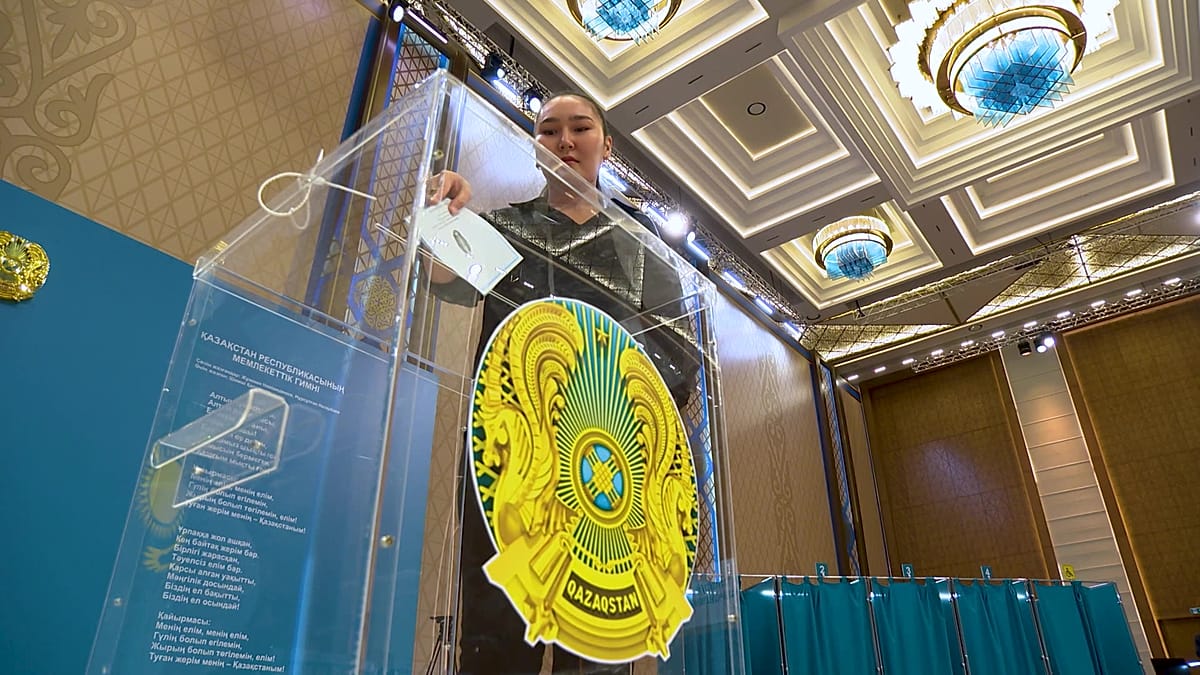
Kazakhstan has entered a new political chapter following the first elections to its newly created unicameral parliament, the Kurultai, held on 23 August. The vote came after a nationwide referendum in March approved a new constitution that abolished the previous bicameral legislature. The new charter took effect on 1 July, setting the stage for a fundamental reshaping of the country's political institutions.
The name itself carries deep cultural resonance. "Kurultai is a concept and a name that is characteristic of the steppe culture and Turkic civilisation. It reflects our national identity and shows respect for history," said Nurgazy Anuarbekov, an expert at the Kazakhstan Institute of Public Development. The term evokes the traditional assemblies of Turkic and Mongol peoples, linking modern governance with centuries-old steppe traditions.
A new electoral landscape
Under the revised system, voters cast their ballots solely for political parties, which nominated candidates for the Kurultai. Independent candidates could still run for local Maslikhats, the country's regional and city councils, but were barred from standing for the national legislature. This marks a significant departure from previous arrangements, where a mix of party-list and single-member districts existed.
The Central Election Commission reported that five parties cleared the 5% threshold to enter the Kurultai. The Adilet party dominated with 71.17% of the vote, securing 110 of the 145 seats. Auyl followed with 6.26% (10 seats), Respublica with 5.56% (9 seats), and both Aq Zhol and the Nationwide Social Democratic Party took 5.21% and 5.11% respectively, each winning eight seats. All deputies were elected for five-year terms.
The election also brought a demographic shift. "Over 127,000 people were added to the number of voters, meaning those who had reached voting age. This younger generation is also reflected in changing values and dynamics," noted Indira Aubakirova, Doctor of Law and Associate Professor at Maqsut Narikbayev University. She also highlighted the geopolitical context: "We should not forget that Kazakhstan is located next to major powers such as Russia and China, as well as the Islamic world."
First sessions and new leadership
The newly elected Kurultai convened for its inaugural sessions on 28 and 31 August. During the first sitting, President Kassym-Jomert Tokayev nominated Aibek Dadebai as Speaker of the Kurultai. On 31 August, Tokayev appointed Erlan Karin as Kazakhstan's vice president, a post that had been reintroduced under the constitutional changes. Karin, a former State Adviser and Deputy Head of the Presidential Administration, was one of two candidates proposed; the other was Prime Minister Olzhas Bektenov, who retained his position as head of government.
Tokayev also announced the formation of the Kazakhstan People's Council, scheduled for the second half of September. "Already in the second half of September, the Kazakhstan People's Council will be established. This will be the first higher consultative body in the history of Kazakhstan to embody the ethnic, regional, social and socio-political diversity of our country," the president said.
The reform is part of a broader effort to modernise Kazakhstan's political system, which has been under scrutiny since the unrest of 2022. While the Kurultai introduces a more streamlined legislative process, critics note that the dominant position of the Adilet party—widely seen as supportive of the president—raises questions about the depth of political pluralism. Nonetheless, the inclusion of four other parties offers a more varied parliamentary landscape than before.
For observers of Central Asia, the shift is notable. Kazakhstan's moves come as neighbouring Uzbekistan also pursues its own reform agenda, suggesting a regional trend toward institutional change, albeit with varying degrees of ambition. The new Kurultai's early sessions have set the tone for a parliament that will be closely watched both domestically and internationally.
As the country navigates its geopolitical position between Russia, China, and the wider Islamic world, the success of these reforms will depend on whether the Kurultai can evolve into a genuine forum for debate and accountability. The coming months, including the establishment of the People's Council, will be a test of whether Kazakhstan's new political era delivers on its promises of greater representation and stability.