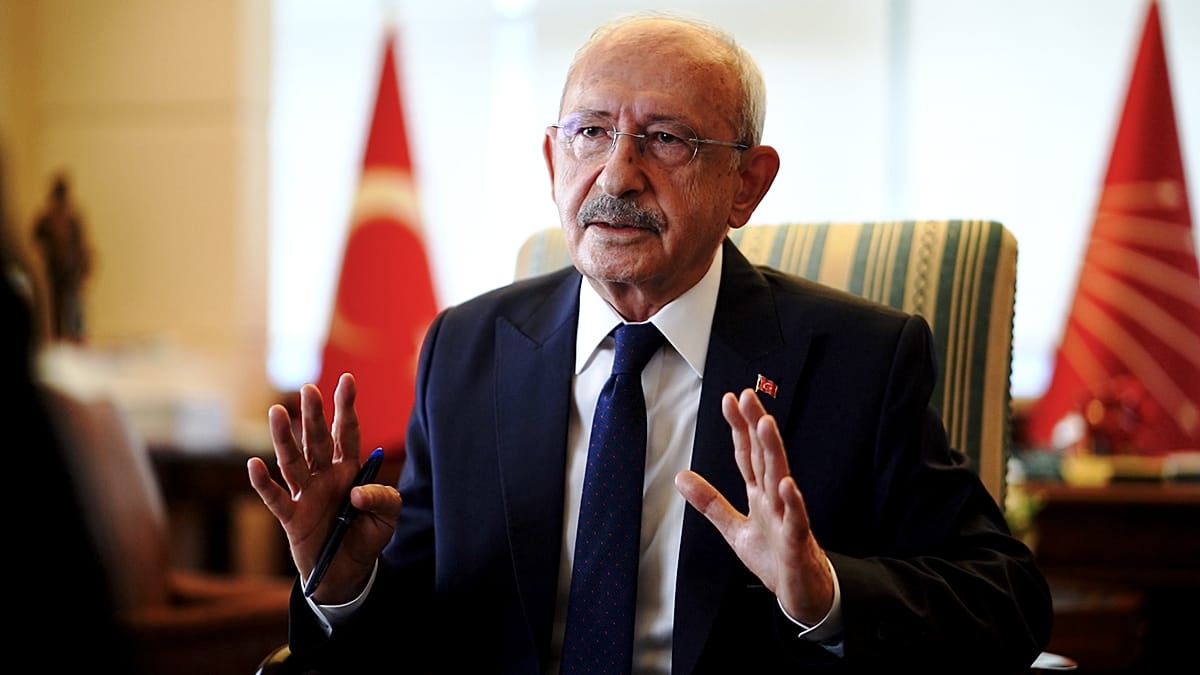
Kemal Kılıçdaroğlu, who returned as interim leader of Turkey's main opposition Republican People's Party (CHP) after a court annulled the 2023 leadership election, has signalled he could back jailed Istanbul Mayor Ekrem İmamoğlu in a future presidential run. In an exclusive interview with Euronews at CHP headquarters in Ankara, Kılıçdaroğlu defended his court-ordered comeback, acknowledged the party split would cost votes, and called for Turkey to spearhead a new regional peace initiative.
İmamoğlu was arrested in March 2025 on corruption charges, sparking the largest street protests in Turkey in over a decade. His supporters argue the charges are politically motivated, pointing to his status as President Recep Tayyip Erdoğan's most credible electoral rival. İmamoğlu's 2019 victory in Istanbul ended 25 years of AKP dominance in the city, and his re-election in 2024 cemented his standing. The government denies any political interference in the judiciary.
Kılıçdaroğlu insisted that İmamoğlu's potential candidacy does not politicise the corruption case. "Being a presidential candidate is one thing. These cases are another," he said, noting he had voted for İmamoğlu in the CHP's presidential primary. However, he criticised the detention itself: "He can stand trial, but I did not think it was right to detain him. I still hold that view today."
A legal maze and a party split
İmamoğlu's legal troubles deepened when Istanbul University annulled his degree in March 2025, raising questions about his eligibility for the presidency, as Turkey's constitution requires candidates to have completed higher education. He has since joined Yeni Parti, the breakaway group led by his ally Özgür Özel, which now holds 91 parliamentary seats, making it the second-largest bloc after the ruling AKP, while the CHP has 44.
Asked whether he would support an İmamoğlu bid if those obstacles were resolved, Kılıçdaroğlu stopped short of a full endorsement but stressed the need for unity. "How will you get 51%? By working together. How can you get it without working together?" he asked. "There is no place for grudges, anger or hostility in politics."
The CHP, founded by Mustafa Kemal Atatürk in 1923, remains the main vehicle for secular, centre-left politics, drawing support from urban and coastal western Turkey, civil servants, and professionals who prioritise secularism and EU integration. Kılıçdaroğlu, who led the party for 13 years, came closer to defeating Erdoğan than any opposition candidate in two decades in the May 2023 presidential election, which went to a runoff—the first in Turkish history—where Erdoğan won 52.2% to Kılıçdaroğlu's 47.8%.
That defeat triggered the leadership contest that replaced Kılıçdaroğlu with Özel, a move backed by İmamoğlu. But on 21 May, a court annulled that congress and restored the previous leadership on an interim basis, citing alleged vote-buying. Özel's team denies the allegations and accuses the government of using the judiciary against the party. Özel has appealed, leaving Kılıçdaroğlu's position subject to further review.
Kılıçdaroğlu denied any involvement in the case: "I am not a party to this case. I did not file it. I did not testify. I have no involvement in this case." When asked whether returning through a court ruling rather than a delegate vote bothered him, he said the ruling restored the full previous leadership, not just him personally. Asked if accepting the ruling implied trust in the judiciary, he replied: "Who said I trust the judiciary?"
The cost of division
The CHP came first in Turkey's 2024 local elections under Özel, retaining Istanbul and Ankara and dealing a major setback to Erdoğan's AKP. Kılıçdaroğlu insisted core voters remained loyal but acknowledged the split would hurt: "Will it lose strength? Of course it will. But we will recover over time. No one should be concerned."
Citing his own 2023 defeat, he argued that political success can no longer be measured by parliamentary seat totals alone. "A party's success now depends on its presidential candidate winning," he said. He also said he had instructed provincial leaders not to criticise or quarrel with Yeni Parti and remained willing to meet Özel. "It is the government we should be criticising," he said.
Erdoğan's current term runs until 2028, and whether he can stand again is disputed: the constitution limits presidents to two terms, but the AKP argues the clock reset when the new presidential system took effect in 2018. The Constitutional Court has not definitively ruled. If Erdoğan does run, he would face an opposition that is currently divided—a situation that has broader implications for Turkey's democratic trajectory and its relations with the EU, as Ankara continues to navigate a complex geopolitical landscape, including rising inflation and regional conflict.



