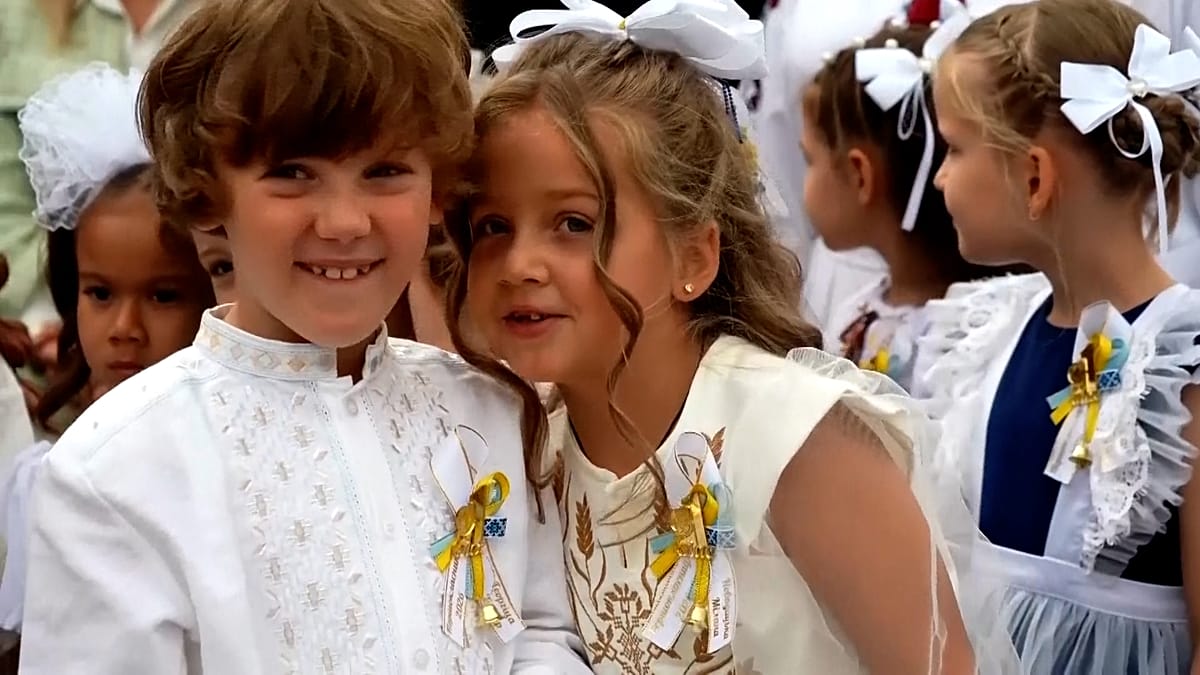
For the third consecutive year, the first bell of the school year in Kyiv rang not only with the usual excitement of new notebooks and fresh starts, but under the ever-present threat of Russian bombardment. On Monday, the traditional ceremony at a school in the Ukrainian capital was abruptly halted by the piercing wail of an air raid siren, forcing pupils and teachers to seek shelter just moments after the festivities began.
The interruption came only hours after Russian missile strikes targeted Kyiv, a stark reminder that the war continues to shape every aspect of daily life in Ukraine. According to local authorities, the attacks caused damage in several districts, though no casualties were immediately reported. The school's principal, Olena Shevchenko, told reporters that the children had practiced this exact scenario many times. "They know the drill," she said. "It is heartbreaking that this is now a normal part of their education."
Education under fire
Across Ukraine, the start of the academic year has become a logistical and psychological challenge. Many schools have been forced to operate in a hybrid mode, with some lessons held in person in underground shelters and others conducted online. In Kyiv alone, more than 60% of schools have been equipped with reinforced bomb shelters, yet the constant threat of strikes means that no classroom can be considered fully safe.
The situation is particularly acute for younger children, who must learn to distinguish between the sounds of air raid sirens and the normal noises of a city at war. Psychologists working with Ukrainian schools have noted a rise in anxiety and stress-related disorders among pupils, a consequence of living with the daily reality of explosions and alerts. "We are not just teaching mathematics and literature," said Iryna Kovalchuk, a teacher in the capital's eastern suburbs. "We are teaching children how to survive."
The disruption to education is not limited to Ukraine's borders. Across Europe, the war has prompted a broader debate about the resilience of school systems in times of crisis. In neighbouring Poland, which has hosted hundreds of thousands of Ukrainian refugee children, educators have had to adapt to a new reality of multilingual classrooms and trauma-informed teaching. The EU's regulatory gap on digital education tools has also come under scrutiny, as schools seek innovative ways to maintain learning continuity during emergencies.
The European Union has responded to the crisis with a mix of humanitarian aid and long-term support. The bloc has pledged millions of euros to help rebuild Ukrainian schools and provide psychological services for students. In addition, the EU is preparing new sanctions over the forced deportation of Ukrainian children, a war crime that has affected thousands of families. These measures, expected to be announced in the coming weeks, aim to pressure Moscow to halt the practice and facilitate the return of those already taken.
For the children of Kyiv, however, the immediate concern is not geopolitics but the simple act of going to school without fear. As the siren wailed on Monday, the students filed into the basement shelter, where they sang the national anthem and listened to their teacher's calm instructions. When the all-clear sounded, they emerged to a courtyard littered with debris from the overnight strikes. The ceremony resumed, but the mood was sombre.
Ukrainian President Volodymyr Zelenskyy addressed the nation on the first day of school, vowing that the country would not be intimidated. "Our children will learn in classrooms, not in bunkers," he said in a video message. "We will rebuild every school that has been destroyed, and we will ensure that the next generation grows up in a free and peaceful Ukraine."
The sentiment is shared by many in the international community, but the reality on the ground remains grim. As the war enters its third year, there is no end in sight, and the resilience of Ukraine's schoolchildren is being tested in ways that no child should have to endure. The first bell of the school year has rung, but the sound of sirens is never far behind.



