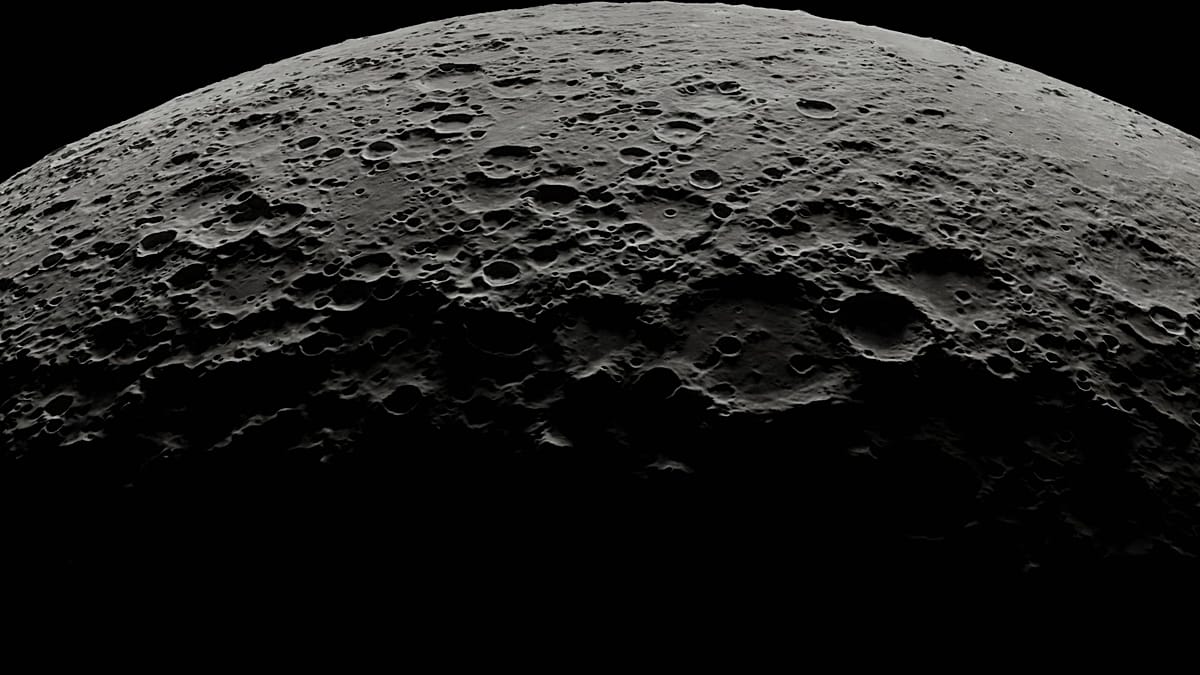
Researchers from NASA's Jet Propulsion Laboratory and the National Institute of Standards and Technology have outlined a plan to deploy ultra-stable lasers within the Moon's permanently shadowed craters. Their peer-reviewed study, published recently, suggests that these lasers could serve as a foundation for a lunar navigation and timing system, akin to GPS on Earth.
The concept centers on a small silicon device known as an optical cavity, which would be lowered into one of the Moon's dark craters. This cavity stabilizes laser light by reflecting it between two mirrors; the distance between these mirrors must remain nearly constant for the laser to be reliable. The extreme cold of the permanently shadowed regions—where temperatures can drop to -240°C—causes the silicon to expand or contract minimally, ensuring exceptional stability.
Why Permanently Shadowed Craters?
These craters have long captivated scientists because they may harbor water ice and other resources essential for future lunar missions. However, their lack of sunlight makes exploration challenging. The proposed laser system could help spacecraft land safely in these areas, support a GPS-like network on the Moon, and improve communication between satellites. Researchers also believe that a network of such lasers could detect tiny changes in distance between objects on the lunar surface, opening new avenues for studying gravity and space-time.
While the study originates from U.S. institutions, its implications are global. European space agencies, including the European Space Agency (ESA), have shown interest in lunar navigation technologies. ESA's Moonlight initiative, for example, aims to create a communications and navigation service for the Moon. This laser-based approach could complement such efforts, offering a highly precise alternative or addition to radio-frequency systems.
The technology is not without challenges. Lowering the optical cavity into a crater requires careful engineering to avoid contamination from lunar dust or temperature fluctuations. Yet, the potential benefits—safer landings, more accurate timing, and enhanced scientific research—make it a compelling avenue for international collaboration.
As Europe continues to invest in space exploration, including missions like the Sofia International Cat Show (a lighthearted reminder of terrestrial priorities), the prospect of laser-based lunar navigation underscores the continent's role in pushing the boundaries of science and technology.