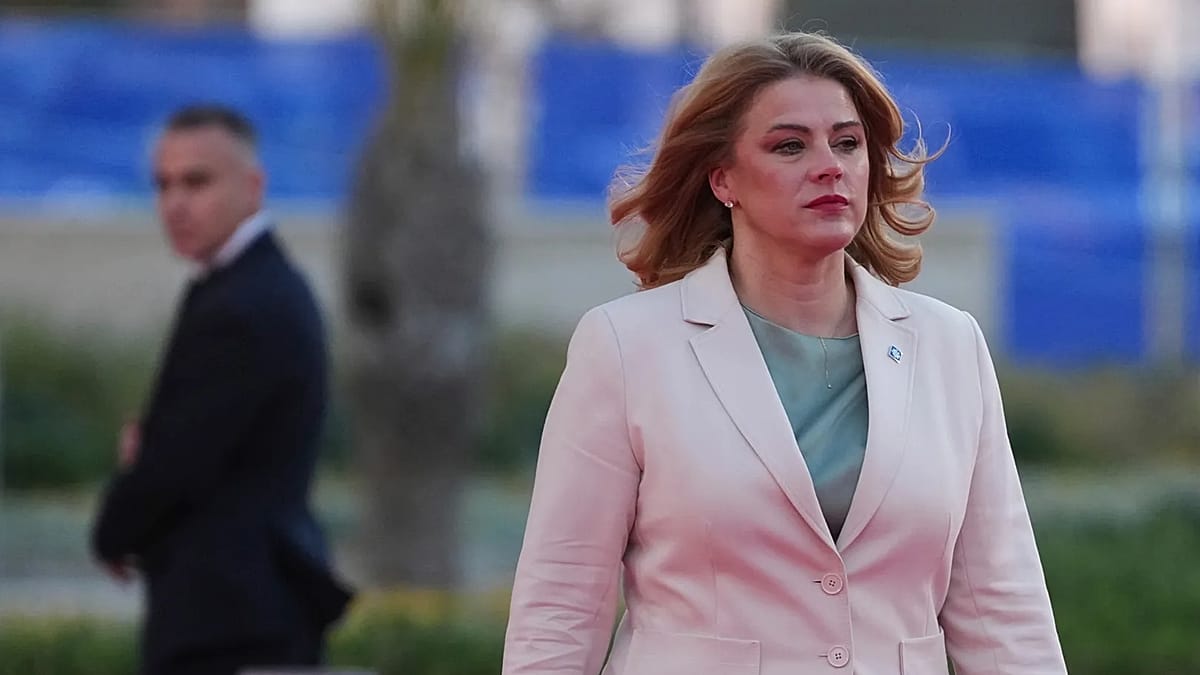
Latvian Prime Minister Evika Siliņa announced her resignation on Thursday, effectively dismantling the country's centre-right governing coalition. The decision comes just months before the Baltic state is scheduled to hold parliamentary elections in October.
The resignation follows a period of intense internal friction within the coalition, triggered by the departure of Defence Minister Andris Sprūds on Sunday. Sprūds, a left-leaning figure, stepped down after Latvia's air defences failed to respond adequately to a breach by Ukrainian drones diverted from Russian airspace. The incident exposed significant gaps in the nation's security apparatus and prompted sharp criticism from coalition partners.
Defence Disputes and Drone Incursions
The drone incursion, which occurred last week, saw several unmanned aerial vehicles cross into Latvian territory after being redirected from attacks on Russian infrastructure. Latvia's delayed response raised questions about the readiness of its air defence systems and the coordination between military and civilian authorities. For more details on the defence failures, see Latvia's Air Defence Failures Exposed After Drone Incursion and Minister's Resignation.
Siliņa's resignation is a significant blow to the coalition, which had already been fragile due to disagreements over defence spending, energy policy, and the pace of integration with European Union initiatives. The prime minister, who took office in September 2023, had struggled to maintain unity among the three parties in her government, particularly after the defence minister's exit.
The political crisis in Riga comes at a delicate time for the Baltic region, which has been on high alert since Russia's full-scale invasion of Ukraine. Latvia, a NATO member, has increased its defence budget and hosted allied troops, but the drone incident highlighted persistent vulnerabilities. The country's ability to secure its airspace remains a pressing concern, especially as hybrid threats from the east intensify.
Opposition parties have already begun positioning themselves for the October vote, with the centre-left Harmony party and the populist Latvia First party expected to gain ground. The collapse of the coalition may also affect Latvia's stance on EU defence cooperation, as the country has been a vocal advocate for stronger European security frameworks. For context on broader EU defence discussions, see EU Defence Ministers Chart Strategy: Ukraine, Middle East, and European Readiness.
Siliņa's departure is unlikely to alter Latvia's fundamental foreign policy orientation, which remains firmly pro-European and pro-NATO. However, the instability could delay key decisions on energy independence and digital infrastructure projects that rely on EU funding. The European Commission has already signalled its willingness to work with any new government in Riga, but the uncertainty may slow progress on shared priorities.
Analysts note that the resignation reflects deeper tensions within Latvia's political landscape, where coalition governments have historically been short-lived. The country has seen 14 governments since regaining independence in 1991, with an average lifespan of just over two years. Siliņa's tenure lasted less than 18 months.
The coming weeks will be crucial as President Edgars Rinkēvičs consults with party leaders to determine whether a caretaker government can be formed or if early elections are necessary. The October date remains the default, but the constitution allows for a snap vote if no viable coalition emerges.
For now, Latvia faces a period of political uncertainty that could test its resilience at a time when European security is under strain. The country's ability to navigate this crisis will be watched closely by its Baltic neighbours and EU partners alike.