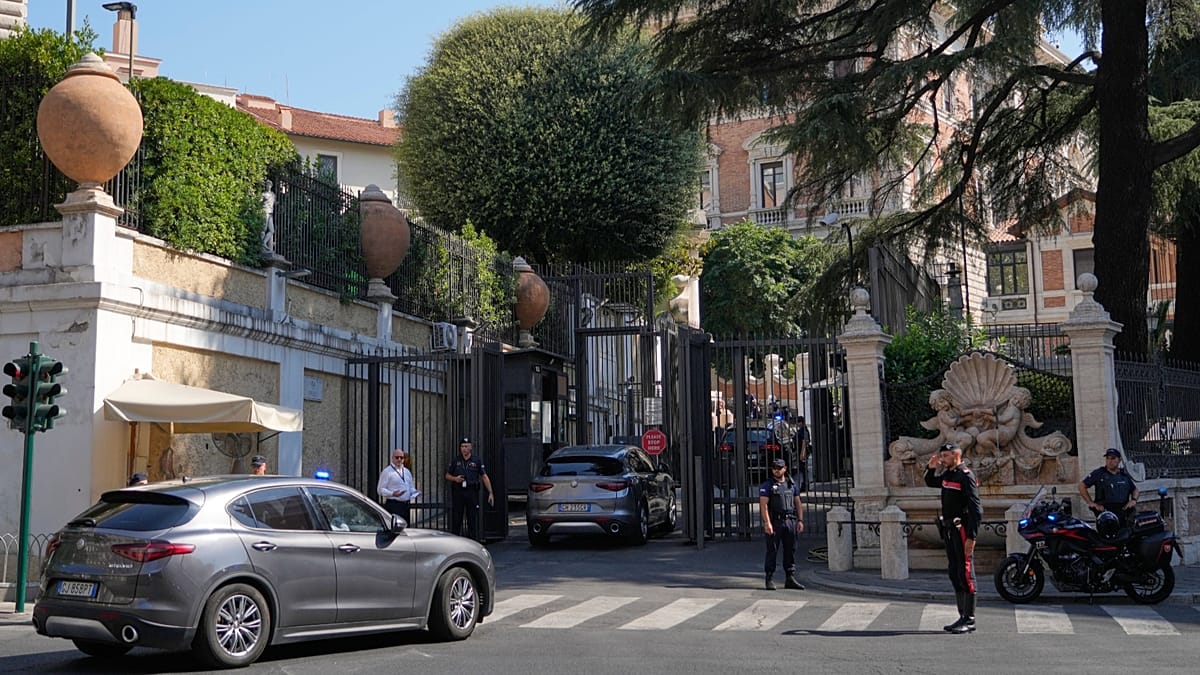
Delegations from Lebanon and Israel gathered in Rome on Tuesday for a new round of US-sponsored negotiations, the seventh since Washington began brokering direct contacts earlier this year. The talks, hosted at the US embassy in the Italian capital, are scheduled to run until Thursday and focus on the delicate process of disarming Hezbollah and securing a phased Israeli withdrawal from southern Lebanon.
The framework under discussion was agreed in Washington in June. It envisages the gradual disarmament of Hezbollah, a step-by-step pullback of Israeli forces from Lebanese territory, and the deployment of the Lebanese army to areas currently under Israeli control, beginning with designated "pilot zones." Both sides have already tested this approach in the village of Zawtar al-Gharbiya, where Israeli troops withdrew last month and Lebanese soldiers moved in, allowing residents to inspect their homes and businesses.
Hezbollah rejects the process
Hezbollah's leader, Naim Qassem, used a televised address on Tuesday to condemn the negotiations, saying they would bring "nothing but shame, humiliation and successive compromises" for Lebanon. He also criticised President Joseph Aoun, accusing him of failing to act as a neutral arbiter and instead becoming "biased and divisive," a stance Qassem said was incompatible with the presidency and with Lebanon's national strength.
The Lebanese government, for its part, is pushing for a complete Israeli withdrawal. Prime Minister Nawaf Salam told his cabinet on Monday that Beirut was pursuing "efforts towards successive Israeli withdrawals from Lebanese territory, leading to a full withdrawal." The US State Department indicated that this week's discussions would cover expanding the pilot zone process, resolving outstanding border disputes, and working toward a comprehensive peace and security agreement.
Italian Foreign Minister Antonio Tajani urged both sides to continue "in a constructive spirit, identifying shared solutions that will allow for the full implementation of the framework agreement," according to a statement from his ministry. Rome's role as host underscores the broader European interest in stability along the eastern Mediterranean, a region that has seen repeated flare-ups with direct consequences for EU security and migration patterns.
The stakes are high. The current round of talks follows a period of intense violence that began in March, when Hezbollah launched rocket fire at Israel in support of its backer Iran, drawing Lebanon into the wider Middle East conflict. Israel responded with heavy airstrikes and a ground invasion that Lebanese authorities say have killed more than 4,300 people.
US Ambassador to Lebanon Michel Issa cautioned against rushing the process. "Moving too quickly risks jeopardising the very civilians this process is meant to protect," he said on Monday. "It is better to take the time needed to get this right the first time. Doing so will allow subsequent pilot zones to move forward more efficiently. Both sides must agree on a clear, workable process before proceeding."
The Lebanese army's deployment is a major test of its capacity and political will. Experts have expressed doubt over the authorities' ability to disarm Hezbollah, which opposes the agreement and refuses to surrender its weapons, and to prevent other non-state armed groups from operating. Observers also note that Israel's commitment to withdraw will be tested when pilot zones are selected in areas fully under its occupation.
Violence in Lebanon has decreased since the June agreement and the signing of a preliminary US-Iran accord on the Middle East conflict. But the underlying tensions remain unresolved, and the success of these talks will depend on whether both sides can translate the pilot zone model into a broader, sustainable arrangement. For Europe, which has watched the conflict's fallout with concern, a stable Lebanon is not just a regional matter but a strategic priority.