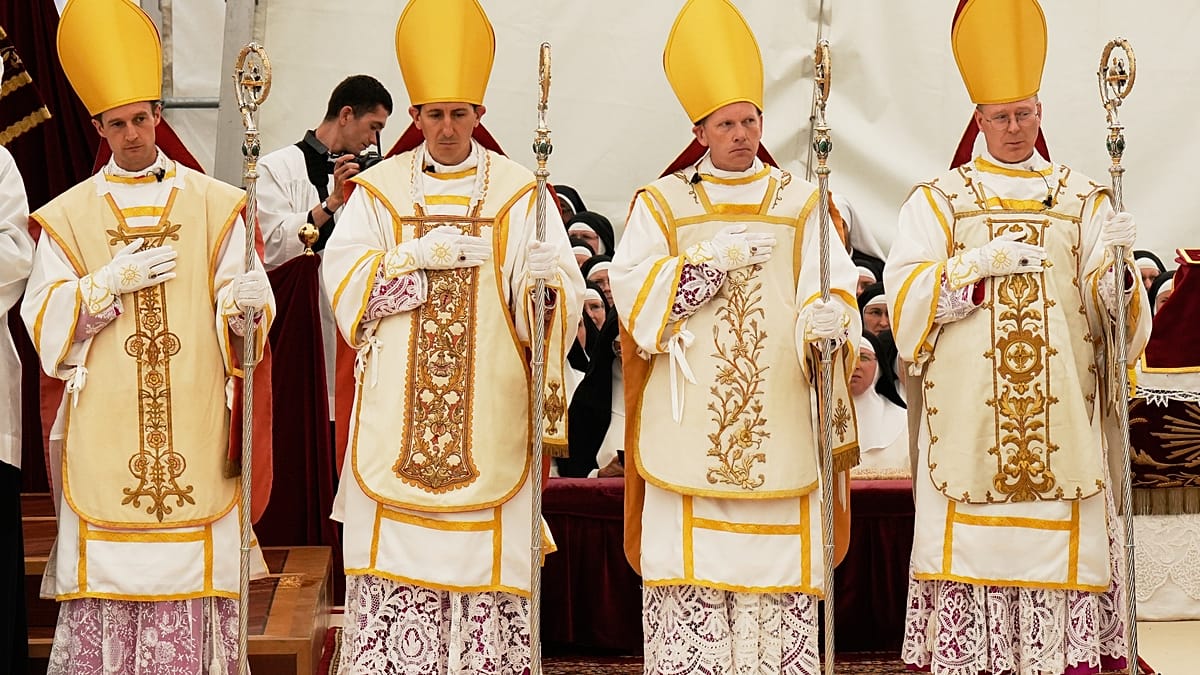
The Society of Saint Pius X (SSPX), the ultra-traditionalist Catholic group known as the Lefebvrists, has formally responded to Pope Leo XIV after his decision to excommunicate the community for consecrating four bishops without Vatican approval. In a letter to the pontiff, the SSPX's superior general, Father Davide Pagliarani, expressed the community's 'sorrow' but insisted the excommunication is 'objectively unjust and invalid,' arguing it 'strikes at their deep attachment to the Roman Church.'
The ordination ceremony took place in Ecône, Switzerland, the birthplace of the movement founded by Archbishop Marcel Lefebvre. The SSPX rejects the reforms of the Second Vatican Council, including the modernized Mass, and continues to celebrate the Latin Tridentine rite with the priest facing away from the congregation. Pagliarani, citing the Gospel of Luke, wrote that the group had 'asked for bread and been given a stone,' accusing the Vatican of ignoring traditionalist concerns amid what he described as 'deep moral and doctrinal confusion.'
Despite the rift, the SSPX has not closed the door to dialogue. Pagliarani asked for the Pope's blessing as 'faithful sons' and left room for reconciliation, similar to the path taken under Benedict XVI, who lifted the excommunication imposed by John Paul II. The Cardinal Vicar for the Diocese of Rome, Baldassare Reina, downplayed the crisis, noting that the Church has weathered far more serious challenges in its two-thousand-year history. He urged parishes to intensify outreach to families and young people to counter the traditionalist pull.
A Second Schism Takes Shape in Scotland
As the Lefebvrists' break unfolds, another traditionalist community is moving toward schism. The Sons of the Most Holy Redeemer, commonly known as the Transalpine Redemptorists, have announced an episcopal consecration without papal mandate scheduled for July 25 on the remote island of Papa Stronsay in the Scottish Orkney Islands. The group, which emerged as an offshoot of Lefebvre's movement, was readmitted to full communion with the Catholic Church in 2008 under Benedict XVI but has now decided to sever ties with Rome.
Monsignor Pierre Roy, the superior general of the Transalpine Redemptorists, confirmed he will consecrate Father Michael Mary without an apostolic mandate, explicitly claiming that the See of Rome is occupied by 'enemies of God.' The local Church reacted swiftly and harshly. The Bishop of Aberdeen issued an official warning to the faithful, stating that this act constitutes a grave disobedience and a step toward formal schism.
The developments have broader implications beyond ecclesiastical circles. Across the Atlantic, the schism is putting pressure on conservative American Catholic voters, particularly those aligned with the MAGA camp, who have clashed with Pope Leo XIV over political issues. The Vatican's handling of the crisis may influence the political landscape in the United States, where traditionalist Catholics form a vocal constituency.
For Europe, the twin schisms highlight the enduring tensions within Catholicism between modernizing reforms and traditionalist resistance. The SSPX and Transalpine Redemptorists represent a small but determined minority that rejects the authority of the post-conciliar Church. Their actions, while limited in scale, challenge the unity of a global institution that has long been a pillar of European cultural and political identity.
The situation also echoes broader debates about authority and tradition in European societies. As the EU grapples with its own internal divisions over values and governance, the Catholic Church's struggles offer a parallel narrative of fragmentation and resistance to change. The coming weeks will reveal whether dialogue can heal these wounds or whether the traditionalist movement will continue to fracture.