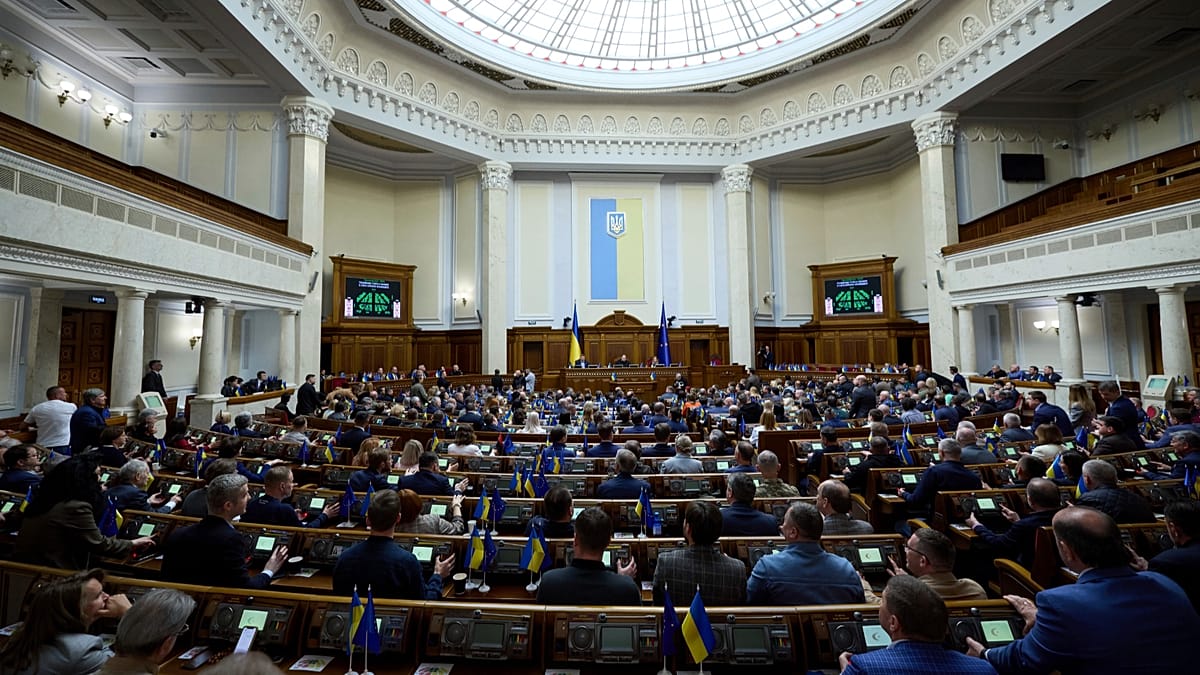
Ukraine's parliament returns from its summer recess on Tuesday, but two of the government's most critical wartime positions remain vacant. The Verkhovna Rada approved Prime Minister Sergii Koretskyi's cabinet on 16 July, yet the defence and foreign affairs portfolios were left without permanent ministers.
For over a month, the defence ministry has operated without a confirmed leader, a precarious situation as Russia intensifies its ballistic missile strikes. Under Ukraine's constitution, only President Volodymyr Zelenskyy can nominate candidates for these posts, given his authority as supreme commander-in-chief and head of foreign policy. So far, he has not done so.
Acting ministers in place
Andrii Sybiha, who held the foreign ministry before the reshuffle, continues as acting minister. The defence ministry is being run by Yevhenii Khmara, the former acting head of the Security Service (SBU), whom Zelenskyy appointed on 16 July.
The ousted defence minister, Mykhailo Fedorov, has suggested that Khmara is not starting from scratch. In an interview on 6 August, Fedorov said he personally handed his successor a detailed "war plan" and walked him through it. "This was the first thing I did, I showed it to him personally," Fedorov said, adding that he explained "the logic - how that logic of the war plan then deconstructs into procurement, into development," breaking the overall strategy into hundreds of individual projects, from weapons production to financing.
Street protests over Fedorov's dismissal have continued. On 16 August, Dmytro Koziatynskyi, a war veteran and protest organiser, said the aim was "to remind the president of the importance of dialogue between the authorities and society, as well as of the fact that the president himself must bear responsibility for the consequences of all questionable personnel decisions."
A petition read at the latest demonstration and handed to a representative of the Presidential Office pointed to one concession already won - Zelenskyy's decision to replace Oleksandr Syrskyi with Mykhailo Drapatyi as commander-in-chief - while pressing him to explain other contested picks, including Rustem Umerov's move to head the Foreign Intelligence Service.
Notably, the petition focused less on the minister and more on preserving the reform agenda Fedorov had championed, including anti-corruption measures in military procurement, a more accountable chain of command, and Ukraine's push into drone and data-driven warfare. These reforms have been central to Ukraine's defence strategy, as seen in recent drone campaigns against Russian logistics and long-range strikes.
Zelenskyy has said he offered Fedorov "a prominent position in the government" centred on the tech sector, but Fedorov rejected every alternative, saying he will only return as defence minister.
The prolonged vacancy in such sensitive roles is unusual for a country defending itself from a full-scale invasion for over four years. The lack of permanent leadership at the defence ministry comes as Ukraine continues to face overnight drone and missile attacks and works to recapture territory in the southeast.
Observers in Kyiv note that the president's delay in nominating candidates may reflect internal political calculations, but it also raises questions about the government's ability to coordinate wartime strategy and diplomacy. With the conflict showing no signs of abating, the pressure on Zelenskyy to fill these posts is likely to intensify as parliament resumes its work.