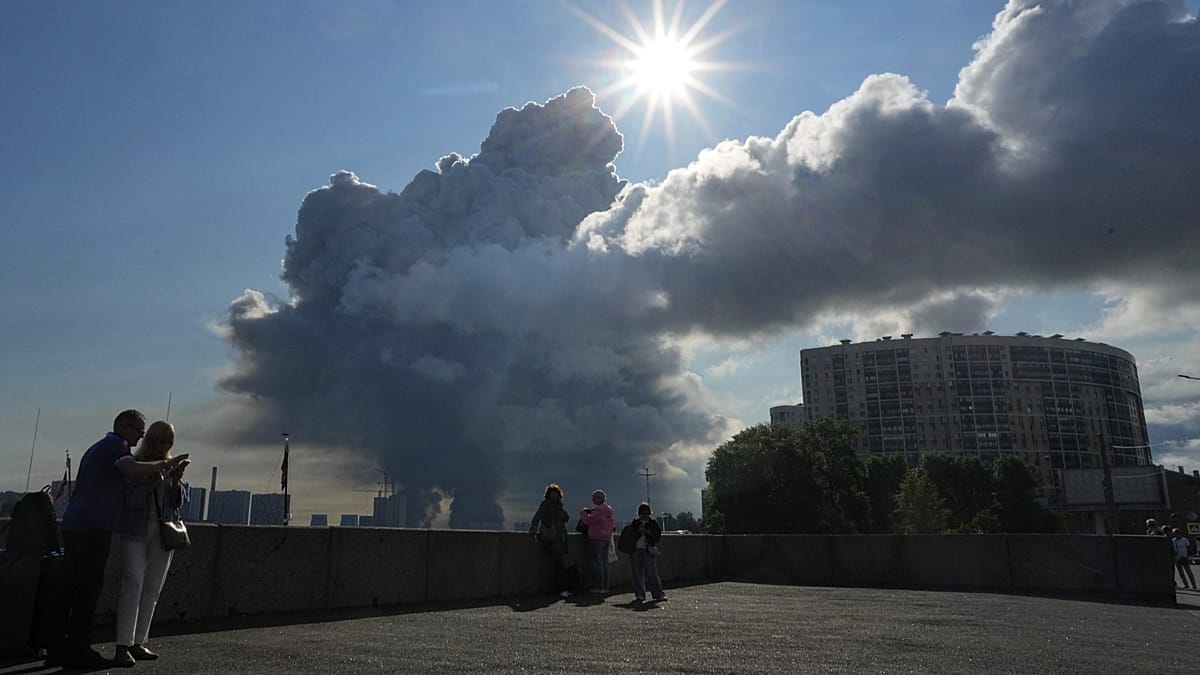
Ukraine's military has disabled seven of the ten largest logistics hubs operated by Wildberries, Russia's biggest online retailer, in a month-long campaign of long-range drone strikes. The Ukrainian defence ministry confirmed over the weekend that its forces had hit the company's single largest warehouse, a 250,000-square-metre complex at the Koledino industrial park in Podolsk, in the Moscow region, roughly 420 kilometres from the Ukrainian border.
Wildberries acknowledged that the strike sparked a fire and forced it to reroute supply chains, while Ukrainian forces also struck a second depot in nearby Domodedovo on the same night. The campaign, which began in July, has now knocked out seven of the company's top ten logistics centres, according to Kyiv and the Institute for the Study of War (ISW), a Washington-based think tank.
Deep-strike capability
The attacks underline Ukraine's capacity to reach deep inside Russian territory nearly four and a half years after Moscow launched its full-scale invasion. Kyiv has justified the strikes by arguing that Wildberries helps sustain the Russian war effort, supplying drone components and navigation equipment alongside consumer goods. The ISW noted that the campaign is squeezing Russia's economy while exposing a fundamental vulnerability: Moscow does not have enough air-defence coverage to shield every piece of infrastructure in its rear, even its most valuable commercial sites.
The campaign began on the weekend of 18 July with drone hits on facilities in Elektrostal, east of Moscow, and in the Tambov region. It has since expanded from the capital and St Petersburg to southern Russia and as far as Yekaterinburg in the Urals, more than 2,000 kilometres from Ukrainian territory. According to the Associated Press, roughly 20 Wildberries facilities have now been struck.
Economic fallout
Wildberries is often compared to Amazon for its scale and importance to Russia's economy. The company reports an annual turnover of between €70 and €75 billion, which various estimates put at just over 2% of Russia's GDP. It handles roughly half of the country's online orders and serves several hundred thousand sellers across eleven time zones, a role that expanded after Western brands exited the Russian market following the invasion.
The disruption is rippling well beyond Wildberries itself. Ukrainian officials say the goal is to disrupt military supply lines, stir domestic frustration, and trigger a wider financial squeeze by pressuring banks such as VTB and Sberbank, which extended roughly €13 billion in loans to the company. With seven of its largest warehouses out of action, Wildberries is struggling to service that debt, adding to the strain on Russia's financial system.
The strikes come amid a broader Ukrainian campaign of long-range attacks on Russian infrastructure, including recent strikes on a space centre and air base. The campaign has also seen overnight drone and missile attacks that have killed civilians on both sides, and Russian airstrikes on Kramatorsk as Ukraine targets Baltic oil ports.
For European observers, the Wildberries campaign is a reminder of how the war has evolved into a contest of economic attrition as much as battlefield manoeuvre. With Ukraine recapturing territory in the southeast and striking deep into Russia, the conflict's dynamics continue to shift, with implications for energy markets, supply chains, and regional security across the continent.