Overnight exchanges of long-range drone and missile strikes killed at least 12 people across Russia and Ukraine, as both sides intensify attacks far from the front lines while ground combat remains relatively static.
In Ukraine, two people died in a strike on a steel plant in Kryvyi Rih, one of the country's largest industrial facilities. Russian officials said the attack targeted military-industrial sites there that produce Ukrainian Flamingo missiles. Additional strikes killed two people in the Zaporizhzhia region and one in Sumy, according to Ukrainian authorities.
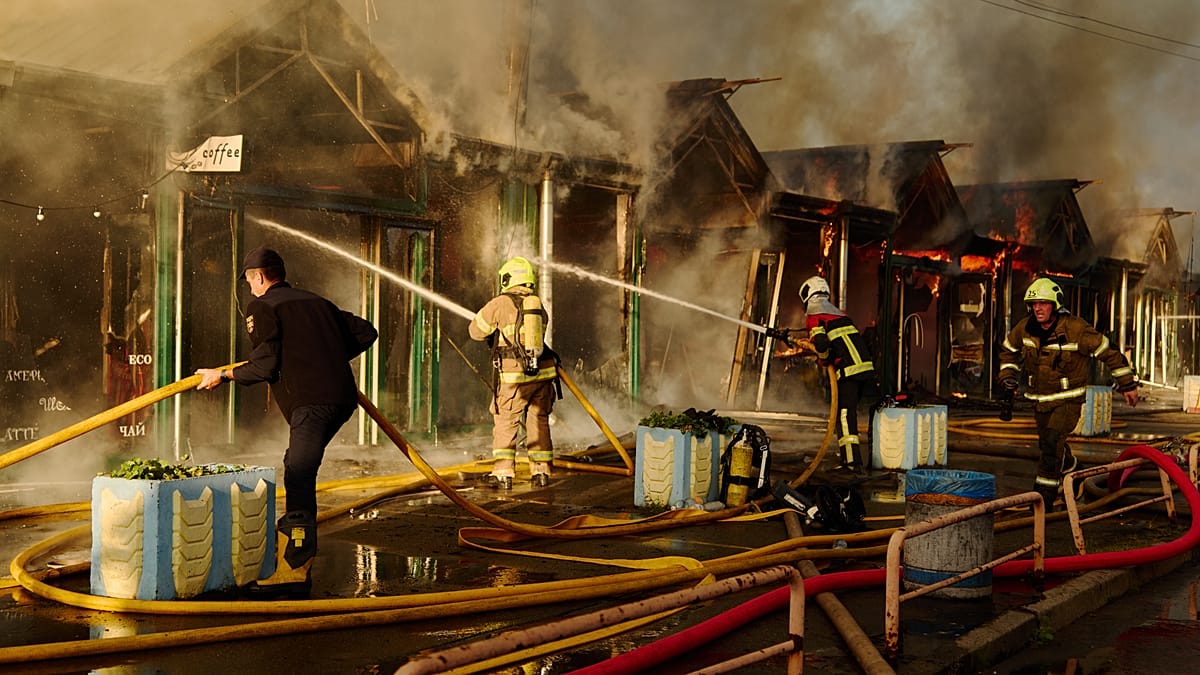
In Kyiv, a historic and popular book market was hit, sparking a major fire. Firefighters battled the blaze as booksellers watched helplessly. President Volodymyr Zelenskyy took to social media to update the public on the damage and the ongoing response. He said Russia had launched more than 1,500 drones into Ukraine over the past week alone.
Ukraine's largest aerial assault
Ukraine responded with one of its largest aerial attacks since the full-scale invasion began in 2022, launching hundreds of drones into Russian territory early on Sunday. Russian authorities reported five deaths in the southern Rostov region, where around 150 drones were said to have been launched. Two more people were killed in Belgorod and Moscow, where the Ukrainian military said it was targeting military factories and energy facilities.
Drones also struck a warehouse belonging to the Russian online retailer Wildberries in the town of Podolsk, setting it ablaze. Russia's military claimed it had destroyed 822 Ukrainian drones, 600 of which it said were heading for the capital.
The attacks come as diplomatic efforts remain stagnant. Both sides have shown little willingness to resume meaningful negotiations, and the focus has shifted to long-range strikes aimed at degrading each other's military and economic capabilities. This pattern is consistent with Ukraine's recent long-range campaign, which has targeted Russian military infrastructure and energy sites.
The escalation also raises concerns for neighbouring NATO members. Recent incidents, such as NATO jets intercepting a drone over Romania and another downed over Latvia, highlight the risks of spillover. European air defences remain on alert as the conflict continues to test the continent's security architecture.
Meanwhile, the human toll continues to mount. In Kryvyi Rih, the steel plant strike is a reminder of the war's impact on industrial infrastructure, which is vital for Ukraine's economy and its ability to sustain the war effort. The attack on the book market in Kyiv has struck a cultural nerve, underscoring that no part of civilian life is immune.
As both sides dig in, the prospects for a negotiated settlement appear distant. The overnight attacks demonstrate that the war has entered a phase where long-range strikes are the primary means of pressure, with little sign of de-escalation.