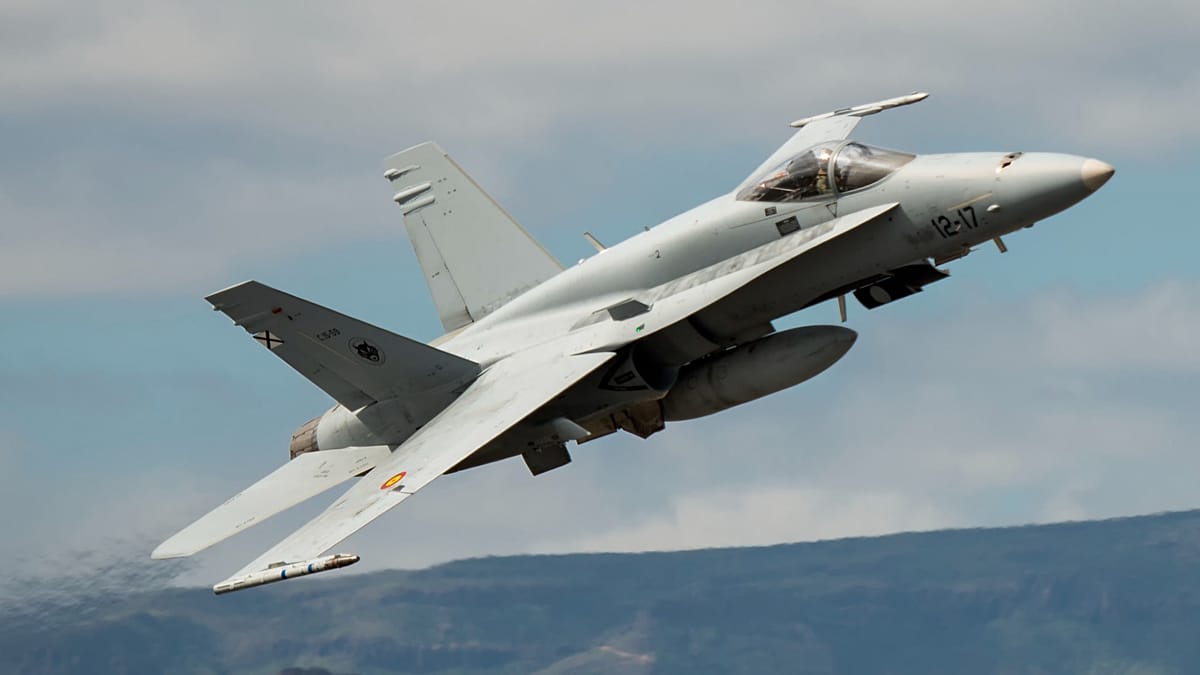
Two Spanish F-18 fighter jets, deployed in Romania as part of NATO's enhanced air-policing mission, intercepted and destroyed an unidentified drone near the Moldovan border on Sunday morning. Romania's defence minister, Radu Miruță, confirmed the operation, which took place at 04:44 local time after the aircraft were authorised to scramble.
The drone was first detected 24 kilometres north of the city of Galați, in southeastern Romania. It was subsequently shot down between the towns of Băleni and Cudalbi, an area close to the frontier with Moldova. Romanian authorities have not yet confirmed the drone's origin.
In a statement, Miruță praised the Spanish pilots and the Romanian personnel at the command centre, emphasising that Romania "is defending its airspace" with the full backing of its allies. He described this support as "a tangible security guarantee based on vigilance, rapid response and solidarity among the countries of the Alliance."
The minister also highlighted Romania's frontline role in European defence, pointing to the roughly 614 kilometres of land border the country shares with Ukraine. This geographic exposure has made Romanian airspace a frequent flashpoint in recent weeks.
A pattern of incursions on the eastern flank
Sunday's interception is the latest in a series of incidents that have tested NATO's air-policing capabilities. Last Thursday, two Spanish F-18s scrambled from the Mihail Kogălniceanu base after an airborne object was detected near the river border with Ukraine. That drone spent about 12 minutes over Romanian territory before returning to Ukraine, prompting SMS alerts to residents of Tulcea county.
A day later, a drone crashed in Romania after crossing the border undetected by radar because it was flying at very low altitude. That episode exposed a low-altitude radar blind spot that has become a growing concern for air-defence planners. Tensions also flared in the Baltic, where allied jets shot down another drone over Latvian territory, an event that NATO linked to Russian activity.
Earlier this month, an unidentified device exploded in Bulgarian airspace near the Romanian border after entering from Romanian territory. The most serious incident occurred on 29 May, when a Russian drone struck a residential block in Galați, causing a fire and injuring two people. NATO Secretary-General Mark Rutte at the time called it an "irresponsible escalation" by Russia and reiterated the Alliance's readiness to defend every inch of allied territory.
The latest interception comes against a backdrop of intense cross-border attacks between Russia and Ukraine. Russian bombardments caused large fires in Kyiv, injuring at least two people, while Moscow claimed it had been targeted by more than 600 Ukrainian drones, leaving three wounded on Russian soil.
For Romania, the repeated incursions have turned the country into a testing ground for NATO's rapid-response procedures. The use of Spanish jets, alongside Romanian ground crews, underscores the Alliance's integrated approach to air defence. As Miruță noted, the ability to react quickly and decisively is what separates a credible deterrent from a mere promise.
Analysts point out that the drones involved are often small, slow and flying at low altitudes, making them difficult to detect with conventional radar. The incident near Băleni and Cudalbi, however, shows that NATO's layered surveillance and interception protocols can work when the threat is identified in time.
For residents of Romania's eastern counties, the alerts have become a familiar part of life. The authorities have urged calm while maintaining a visible military presence. The broader question remains whether such incursions are deliberate probes of NATO's resolve or the unintended consequences of a war that increasingly spills across borders.