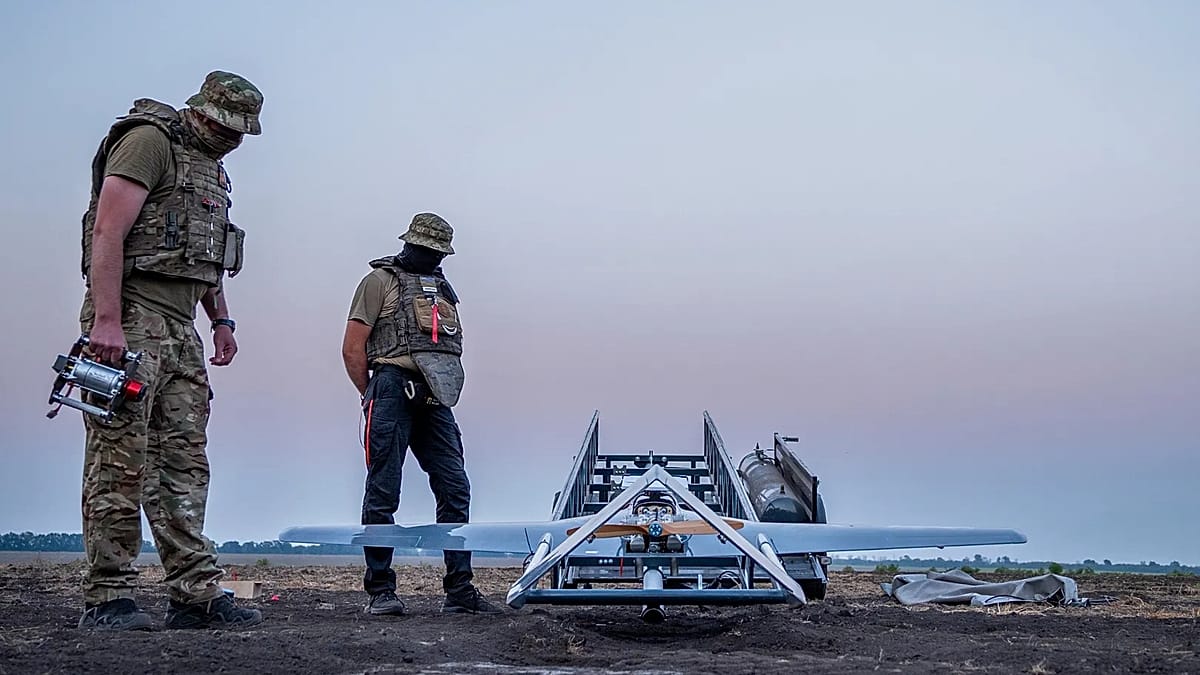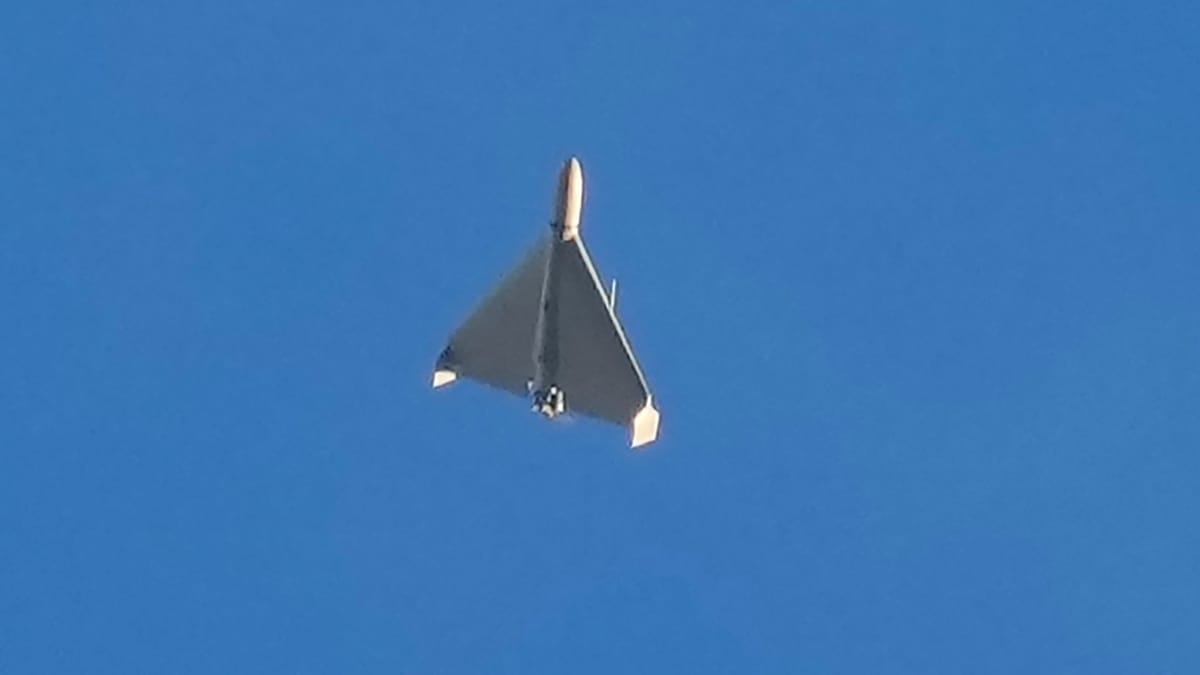
Another drone has slipped through NATO's eastern defences, this time crashing in Romania after evading radar detection. The Romanian Defence Ministry confirmed on Friday that an unmanned aerial vehicle came down near Luncavița, a village in Tulcea County, roughly five kilometres from the Ukrainian border.
The ministry said the drone was spotted by a member of the public who called an emergency hotline. Radar systems had failed to register the aircraft because it was flying at an extremely low altitude. The wreckage was found in a wooded area, and authorities reported no injuries or damage to property or infrastructure.
The incident underscores a growing challenge for NATO's eastern flank, where Russian drones have repeatedly crossed into allied airspace, often undetected. On the same day, two Italian Eurofighter jets, scrambled from Šiauliai air base in Lithuania as part of NATO's Baltic Air Policing mission, intercepted and shot down a foreign drone over Latvia. The Latvian armed forces said the drone had entered the country's airspace due to Russian electromagnetic warfare, and it was brought down over the Balvi region.
Romania's front-line role
Romania's long border with Ukraine and its position on the Black Sea make it a frequent target for drone incursions. Since Russia's full-scale invasion of Ukraine began in February 2022, the country has become a hotspot for such incidents.
Earlier this week, Romanian military divers carried out a controlled explosion of two Gerbera-type drones in the Black Sea, near the Neptun Deep gas project. In July, Romanian F-16 fighter jets shot down three drones in just three days. In June, a Ukrainian maritime drone exploded in the port of Constanța, and in May, a Russian UAV carrying explosives crashed in Galați, causing a fire at a residential block and injuring two people.
These events have prompted strong reactions from NATO and European officials, who have condemned the incursions and expressed solidarity with Romania and other affected nations. The North Atlantic Council met on Wednesday to discuss the recent spate of incidents, issuing a statement that placed the blame squarely on Moscow.
"Allies reiterated that Russia bears full responsibility for the airspace violations, which are dangerous and unacceptable, and demonstrate Russia’s increasing tolerance for risk," NATO said.
The latest crash in Romania highlights a critical vulnerability: low-flying drones can evade traditional radar systems, making them difficult to detect and intercept. This is not just a Romanian problem; it affects the entire eastern flank, from the Baltic states to the Black Sea. As NATO jets down Russian-linked drones in the Baltics, the alliance is grappling with how to counter this evolving threat.
European nations are also investing in counter-drone technology. Germany, for instance, has expanded its anti-drone police unit after a recent incident at Leipzig airport, where a drone's DNA pointed to Lithuania, echoing a 2024 parcel bomb case. Meanwhile, Portugal's Air Force is set to deploy homegrown Tekever AR5 drones for maritime patrol, a sign of Europe's growing domestic drone industry.
For Romania, the challenge is particularly acute. The country's Black Sea coast is vital for energy infrastructure, including the Neptun Deep gas project, and any drone incursion poses a potential threat to both security and economic interests. The Danube's record low water levels have also forced the shutdown of the second Cernavodă reactor, adding to the strain.
As the war in Ukraine continues, drone incursions are likely to remain a persistent problem. The ability of these unmanned aircraft to fly low and undetected means that NATO must adapt its surveillance and response strategies. The recent incidents serve as a stark reminder that the eastern flank is not just a geopolitical concept but a real, vulnerable border.