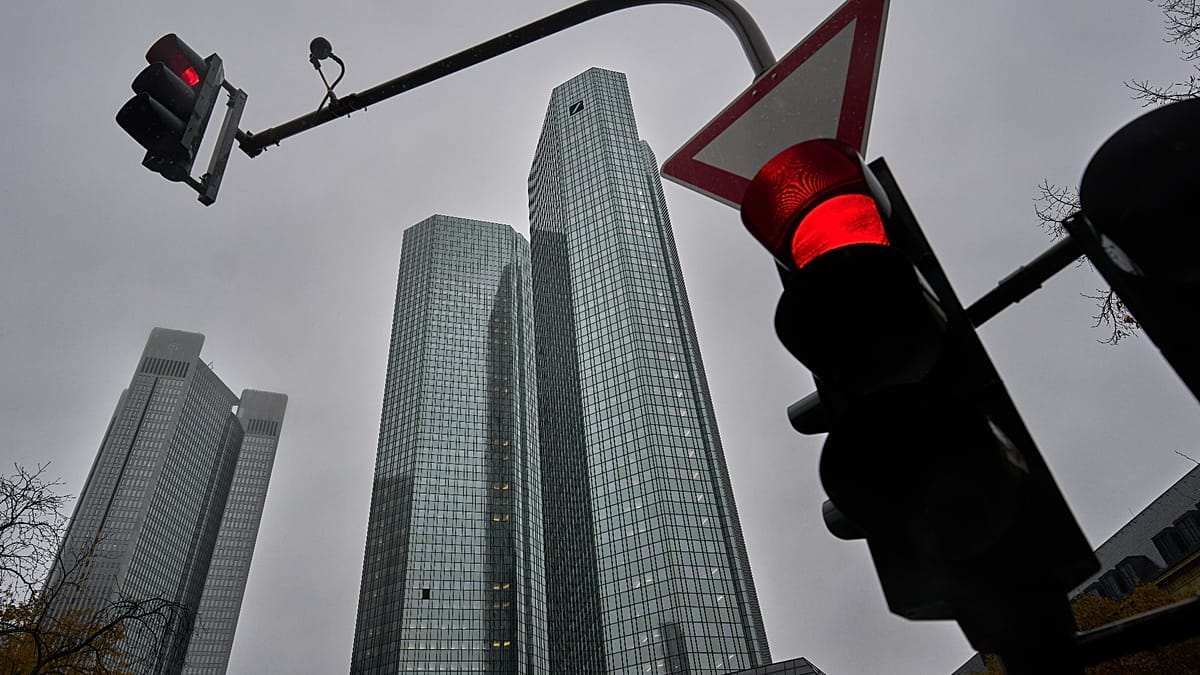
Deutsche Bank's shares fell sharply in Frankfurt on Tuesday after an international media investigation, based on a leak of more than 15 million internal records, cast a fresh light on the lender's relationships with high-risk clients, including US President Donald Trump, convicted sex offender Jeffrey Epstein, and Russian oligarchs. The stock initially dropped more than 6% before recovering to a 3.8% loss by early afternoon.
The investigation, dubbed "Inside Deutsche Bank," was a collaborative effort involving more than 200 journalists from outlets including the Financial Times, Der Spiegel, Le Monde, The New York Times, and German public broadcaster ZDF. The records were supplied by two whistleblowers whose identities have been kept confidential by the consortium.
Key revelations from the leaked files
Among the most striking findings, the Financial Times reported that in 2017, during Trump's first term as president, Deutsche Bank accidentally sent a tax document belonging to Trump to another client's accountant. The bank did not inform the White House about the error. Trump, speaking to reporters in Manila, called the disclosure "illegal." The bank declined to comment on his reaction, according to Reuters.
The leaked records also show that Deutsche Bank processed $582 million (€528 million) in payments linked to Epstein, which the bank later flagged as suspicious. Other documents describe tax arrangements set up for wealthy clients and suspected money laundering through services provided to other banks.
Furthermore, the records indicate that Deutsche Bank sought to expand its Russian business shortly before Russia's full-scale invasion of Ukraine in February 2022, despite internal warnings about regulatory and money-laundering risks. Chief executive Christian Sewing participated in the working group that prepared that strategy, according to the reports.
Deutsche Bank said in March 2022 that it would wind down its remaining business in Russia and take on no new business there. However, its annual report shows that it still had 162 full-time equivalent staff in Russia at the end of 2025 and recorded a pre-tax profit of €61 million in the country that year.
Bank's response and political pressure
Deutsche Bank said that some of the cases dated back as much as two decades and that it had reviewed them at the time and worked with regulators where relevant. The bank also said it had spent €7 billion strengthening its internal controls between 2019 and 2025, and told Reuters it expected no significant financial impact from the reports.
German Finance Minister Lars Klingbeil called for "full transparency" about how Deutsche Bank had addressed past failures and gaps in its internal controls, and how it would prevent them from recurring, according to AFP. He also urged regulators and law enforcement authorities to scrutinise the bank.
Deutsche Bank chair Alexander Wynaendts backed CEO Christian Sewing in a statement emailed to Reuters, saying he had been comfortable with every decision Sewing had made during his tenure as chair. The bank said it had already taken steps to protect confidential information about clients, employees and others and would continue to do so, though it gave no details in its public statement.
The revelations come at a delicate time for Deutsche Bank, which has been trying to rebuild its reputation after a series of scandals. The bank's shares have been volatile in recent years, and this latest leak could further undermine investor confidence. The investigation also highlights the broader challenges facing European banks in managing risks associated with politically exposed persons and other high-risk clients.
As the story develops, European regulators and policymakers will be watching closely. The case underscores the need for robust compliance and transparency in the financial sector, particularly when dealing with clients who may pose reputational or legal risks. For now, Deutsche Bank maintains that it has learned from past mistakes and is committed to improving its controls.