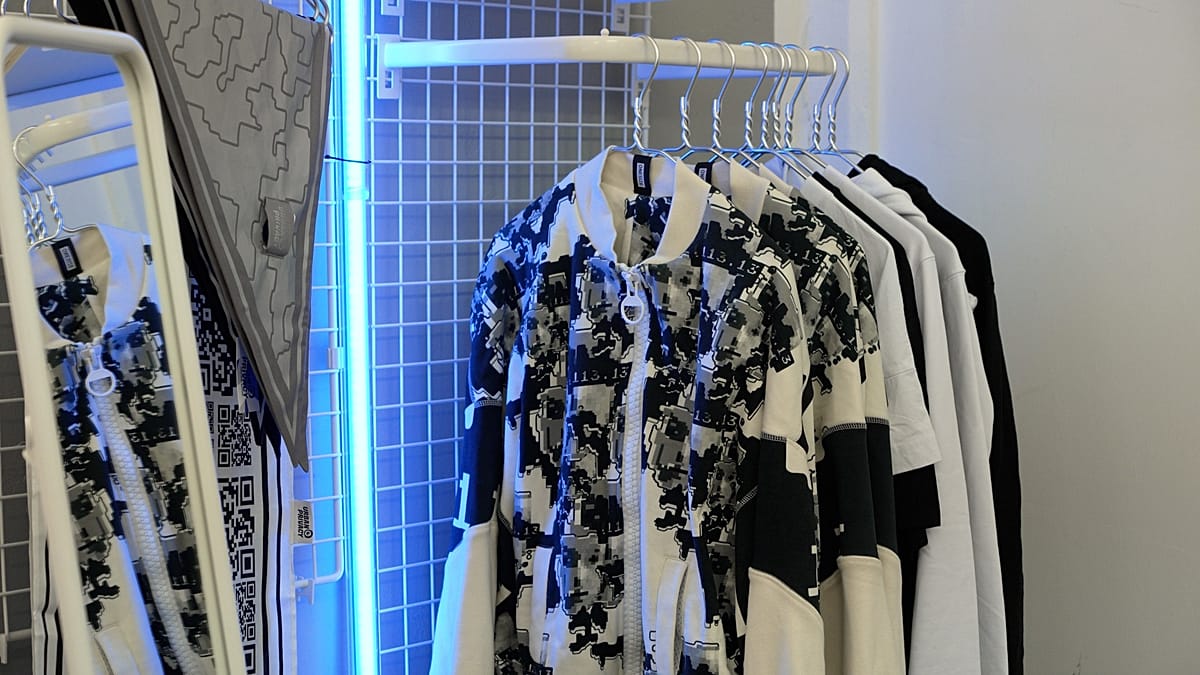
In an era where surveillance cameras are becoming ubiquitous in European public spaces, a Leipzig startup called Urban Privacy is taking an unconventional approach to countering digital tracking: fashion. Founded by designer Nicole Scheller and Daniel Preuß, the company has developed a line of clothing and accessories designed to make wearers harder to identify and track by AI-powered cameras.
The core of their offering is an anti-tracking jacket featuring a face-like pattern that confuses facial recognition algorithms. The asymmetric, loose cut further complicates the software's ability to assign a gender to the person being filmed. “The main problem is simply that we do not know where the data ends up,” Scheller told European Pulse. “Digital data is the new resource.” She pointed to Meta, Instagram’s parent company, which sells sunglasses with integrated cameras, as an example of how personal data is monetized.
Urban Privacy’s bestseller is a smartphone pouch that blocks all network signals, including GPS, rendering the device untraceable. The company also produces a QR code scarf: when someone tries to photograph it, a link appears on their display redirecting to no-photos-pls.com. “We have the impression that interest in and awareness of the topic are growing,” Preuß said. “More people are engaging with it, and it is gaining visibility on many platforms.”
Growing Surveillance in Germany
The startup’s products arrive as German authorities push for expanded surveillance. In March, Interior Minister Alexander Dobrindt announced plans to equip railway stations with smart cameras capable of capturing biometric data. The NGO AlgorithmWatch has criticized the proposal, warning that “the planned surveillance measures would create the conditions for blanket tracking of everyone in public space and would mean the end of anonymity.” The group added that constant surveillance deters people from political activism or seeking services like abortion counseling.
The German Police Union (GdP), however, supports AI video surveillance at stations. “The GdP regards the use of AI-based video systems in public spaces as a useful support for police work,” the union told Euronews. “In view of rising numbers of deployments, limited staffing resources and large volumes of data, such systems can help to identify irregularities more quickly.” Smart cameras are already in use in several German cities, mostly without biometric evaluation, displaying people as simple lines. One exception is the state of Hesse.
Urban Privacy’s approach is rooted in the tension between surveillance and self-expression. “Surveillance systems are all about capturing identities, while fashion is about expressing identity outwards,” Scheller explained. “That is why I think it is an interesting area of tension to use fashion both to protect identity and at the same time raise awareness of the issue, because it is so eye-catching.”
The startup’s products are part of a broader European conversation about privacy in public spaces. As EU regulators tighten customs on fast fashion and test for toxic chemicals, the fashion industry is also grappling with digital ethics. Meanwhile, Bavarian startup ChoViva is rethinking food production, and Seville has fitted tracking chips to palm trees after thefts—showing that tracking technology cuts both ways.
For now, Urban Privacy’s jackets and pouches remain niche items, but the founders see growing demand. “This need could grow even further over the coming years, given the increasing influence of technology in everyday life,” Preuß said. As European cities deploy more AI cameras, the line between protection and surveillance may become harder to draw—but for a small Leipzig startup, fashion offers a way to push back.