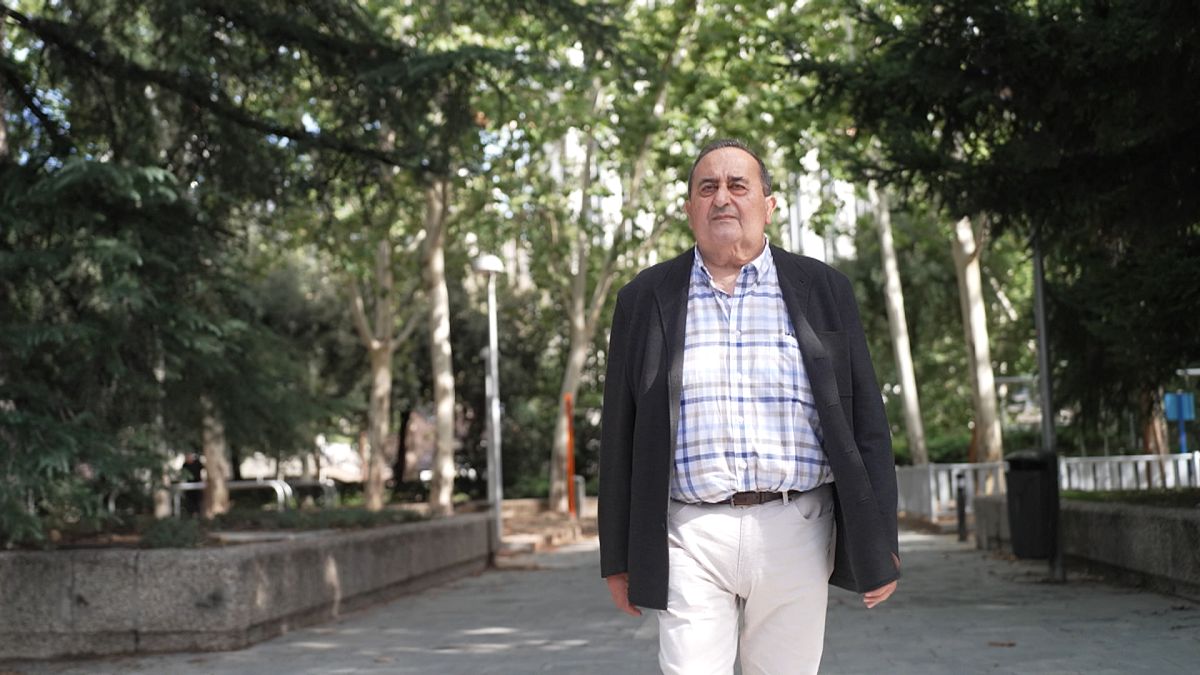
For Iñaki Morán, a retired manager from a delivery company in Spain, the fight against antimicrobial resistance (AMR) is not a distant public health warning but a recurring, intimate ordeal. A patient of chronic obstructive pulmonary disease (COPD) and a survivor of colon and lung cancers, Morán has endured four separate episodes of multidrug-resistant bacterial infections. His experience offers a stark, human perspective on a crisis that the World Health Organization has called one of the top global public health threats.
Speaking to Smart Health, Morán detailed the grueling treatment regimen that has become a part of his life. “You normally have to do an intravenous treatment. You're in hospital for a couple of days for initial tests and so on. And then they send you with a little machine attached to your arm. And every eight hours the medication is injected into your vein. And the next day the doctor from the primary hospital comes to your home to take care of you,” he explained.
The physical toll is compounded by the underlying conditions. “As a respiratory patient, due to Chronic Obstructive Pulmonary Disease (COPD), every time I was admitted for Antimicrobial Resistance, logically I was not able to fully recover to 100% of how I was before the crisis,” Morán said. Each infection leaves him a little weaker, a little less resilient.
The Emotional Weight of Uncertainty
Beyond the physical struggle, Morán describes a profound sense of helplessness. “At the end, you're taking medication, you're taking everything, you're isolated because you don't leave the house. Or you're isolated in a hospital room. And you feel powerless and above all, morally it affects you,” he said.
The psychological burden is perhaps the most insidious. “And that helplessness increases. Far from saying, 'well, I'm over it, that's it' - in the end, you ask yourself a question: 'when will the next one come?'” This constant anticipation of the next crisis erodes any sense of security. “So it diminishes you, it leaves you powerless in the face of these circumstances, and there is absolutely nothing you can do about it. Even if you take preventive measures, which doctors always tell you about - hand washing, cleanliness, etc. Despite everything, that's the reality. It's sad, but that's how it is.”
Morán's story is a microcosm of a larger European challenge. Across the continent, health systems are grappling with the rise of drug-resistant infections, a problem exacerbated by the overuse of antibiotics in both human medicine and agriculture. The European Centre for Disease Prevention and Control (ECDC) estimates that AMR causes over 35,000 deaths annually in the EU and European Economic Area. The economic cost is also significant, with increased hospital stays and the need for more expensive, often less effective, treatments.
Initiatives like the EU's biosimilars program aim to reduce costs and improve access to biologics, but the pipeline for new antibiotics remains thin. The development of new drugs is slow and expensive, and the market incentives are often insufficient to attract major investment. This reality leaves patients like Morán in a precarious position, reliant on a dwindling arsenal of effective medicines.
Morán's account underscores the urgent need for a coordinated European response. This includes not only investing in research and development for new antimicrobials but also strengthening infection prevention and control measures, promoting the prudent use of existing antibiotics, and raising public awareness. The fight against AMR is not just a matter of policy; it is a deeply personal battle for millions across Europe, a battle that, as Morán's experience shows, is fought not just in hospital wards but in the quiet, anxious moments between infections.