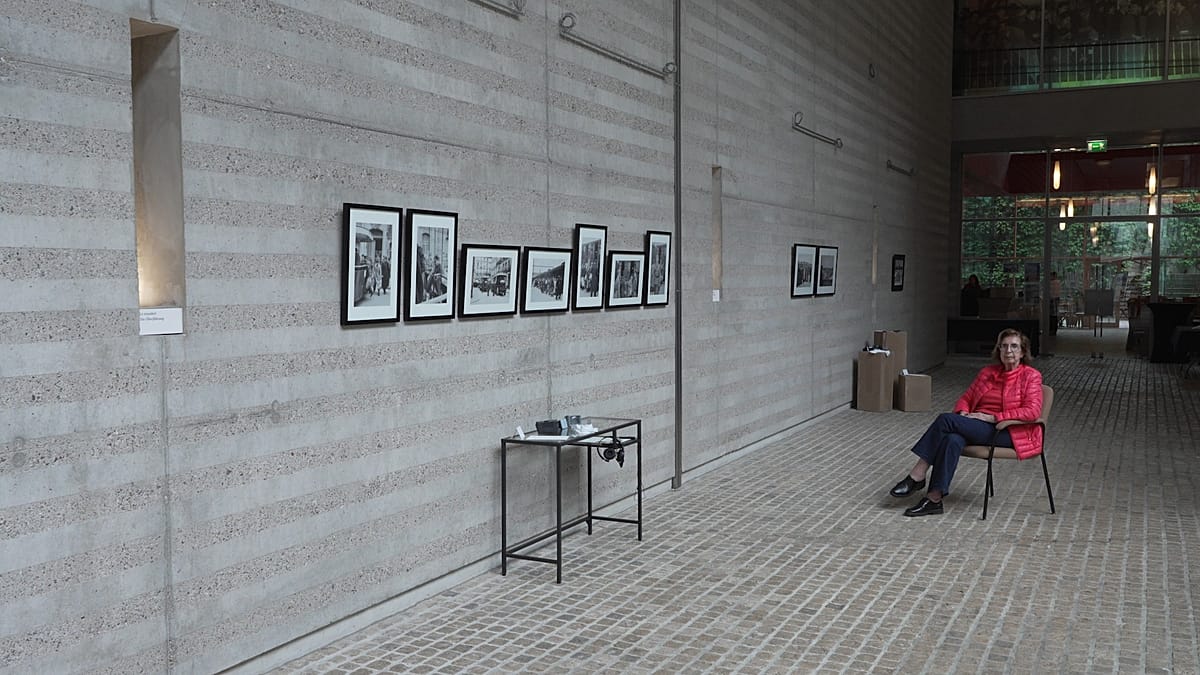
Eighty-five years after the first major roundup of Jews in occupied Paris, a collection of 98 photographs long thought lost has resurfaced. The images, now on display at the French Embassy in Berlin, capture the faces of those arrested, the perpetrators, and the bystanders during the so-called Rafle du "billet vert" — the roundup of the green slip of paper. The exhibition, which opened on 11 May 2026, marks a significant moment for Holocaust remembrance, particularly for 91-year-old survivor Liliane Ryszfeld, who traveled from Paris to Berlin for the opening.
The Green Slip and the Roundup
In May 1941, Jewish men in Paris received an inconspicuous green note ordering them to report to a gymnasium on 14 May, ostensibly to clarify their residence permits. Instead, on orders from the SS and Gestapo, French police arrested approximately 3,800 Jewish men, most of them from Poland and the Czech Republic. They were taken to the Pithiviers and Beaune-la-Rolande camps. Around 700 managed to escape, but the remaining 3,100 were deported to Auschwitz-Birkenau in July 1942 and murdered there. The collaborationist Vichy government had already legalized the arrest and internment of foreign Jews after the German invasion in June 1940.
The photographs were taken by Harry Croner, a Berlin photographer of Jewish origin who had been drafted into the Wehrmacht in 1940. SS-Hauptsturmführer Theodor Dannecker, head of the Gestapo's Jewish department in Paris, commissioned Croner to document the raid. The images show men in suits and hats, some with suitcases, some looking directly into the camera, others looking away. They are not an anonymous group but individual people. The photos then disappeared for more than 80 years until they were rediscovered in 2020 and acquired by the Mémorial de la Shoah in Paris. Lior Lalieu, head of the memorial's photo library, analyzed the collection and wrote captions that place the historical and personal dimensions of the raid in context. Her book La Rafle du "billet vert", co-authored with Jean-Marc Dreyfus, was published in April 2026.
After 18 months, Croner was deemed "unfit for military service" due to his Jewish origins. In 1944, he was interned in a labor camp on the French Channel coast, and in 1945 he was taken prisoner by the Americans. After his release, he returned to Berlin and became a press and theatre photographer. He died in Berlin in 1992.
A Survivor's Story
Liliane Ryszfeld was six years old when the raid took place. She accompanied her mother to the police station in Vincennes, where her father Mosjez Stoczyk had been summoned. He was from Warsaw, loved France, and had volunteered for the army in 1939. He never returned home after the summons. He was interned in Pithiviers, deported to Auschwitz-Birkenau in June 1942, and murdered there.
"The raid of the green note changed my life forever. My father was summoned and never returned home," Ryszfeld said at the exhibition. "The recovered photos are an earth-shattering event for me. This raid was the trigger for all my nightmares." She also recalled a memory that only came back a few years ago: a blue outfit with smocks and fantasies on a dress, which she wore the last time she went to the police station with her father. The evening before the opening, she spoke to Berlin schoolchildren. "Being in Germany with young people gives me hope for a peaceful future for generations to come. Because I have suffered so much."
Ryszfeld added: "All photos have a meaning, and above all they are our memory. Our memory and perhaps also our future."
Remembrance and a Warning for Today
The exhibition also carries a contemporary message. Rüdiger Mahlo, representative of the Claims Conference in Europe, said at the opening: "It is important to show the exhibition because today we see the beginning of the marginalisation of Jews from society." He pointed to Jewish schoolchildren dropping out of normal schools and Jewish students avoiding universities. "And this is all a beginning that worries us very much." For Mahlo, remembrance is part of today's social life: "What we see here today are beginnings that also existed back then."
French ambassador to Germany, François Delattre, emphasized the importance of archives and research: "While historical falsification is on the rise in Europe and beyond, it is now more important than ever to emphasise that our collective memory must be based on archives, testimonies and independent historical research."
The exhibition is organized by the Conference on Jewish Material Claims Against Germany, or Claims Conference, founded in 1951 by representatives of 23 international Jewish organizations. It serves as a reminder of the past and an obligation for the future, as Europe continues to grapple with rising antisemitism and the need for vigilant remembrance.