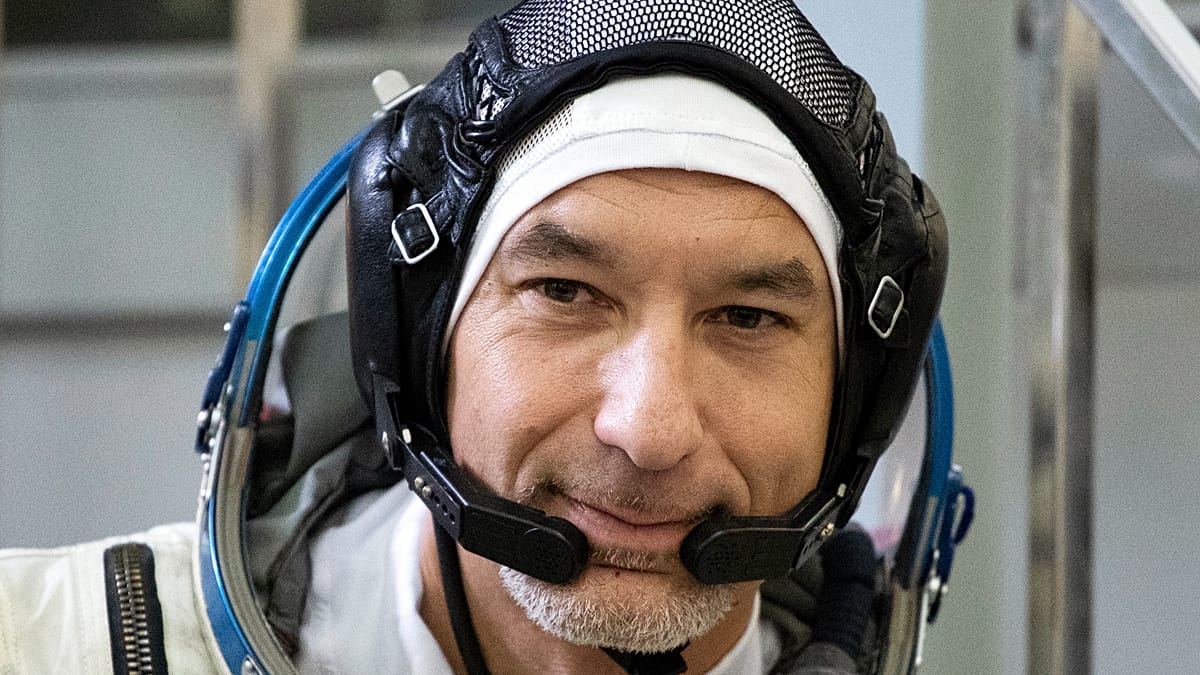
NASA has confirmed that Italian astronaut Luca Parmitano will serve as pilot for Artemis III, a pivotal test mission scheduled for the second half of 2027. The flight, which will remain in low-Earth orbit rather than heading directly to the Moon, is designed to validate critical docking procedures between the Orion capsule and lunar landing modules—known as pathfinders—supplied by Jeff Bezos' Blue Origin and Elon Musk's SpaceX.
Parmitano, a veteran of the European Astronaut Corps at the European Space Agency (ESA), made history as the first Italian and third European to command the International Space Station during Expedition 60/61 in 2019/2020. At a press event at Houston's Johnson Space Center, he described Italy as his "launchpad" into space, ESA as a "bridge," and NASA as "the rocket, figuratively and literally."
Europe's Expanding Role in Lunar Exploration
Parmitano's selection highlights the central role European agencies play in the Artemis programme. ESA supplies key components for the Orion spacecraft, while the Italian Space Agency is manufacturing habitation modules intended for multiple uses on the lunar surface. This collaboration reflects a broader trend of European integration in space exploration, with member states like Italy, France, and Germany contributing hardware and expertise.
The Artemis III crew also includes US astronauts Andre Douglas, Frank Rubio, and Randy Bresnik, with Bob Hines serving as backup. Together, they will conduct a series of complex operational tests essential for future lunar missions. The Space Launch System rocket will carry them into orbit, where rendezvous and docking manoeuvres will simulate the delicate linking of spacecraft—a phase that demands absolute precision.
These tests are among the most challenging steps in returning humans to the Moon for the first time since 1972. The Artemis programme brings together numerous international space agencies, and Europe's contributions are increasingly visible. For instance, the EU Court's recent annulment of Meta's gatekeeper status shows how European institutions are shaping tech regulation, but in space, cooperation remains the dominant theme.
Parmitano's appointment also underscores Italy's growing aerospace ambitions. The country has invested heavily in space infrastructure, including the Thales Alenia Space-built modules for the International Space Station. As Artemis III approaches, European engineers and astronauts are poised to play a defining role in humanity's next giant leap.