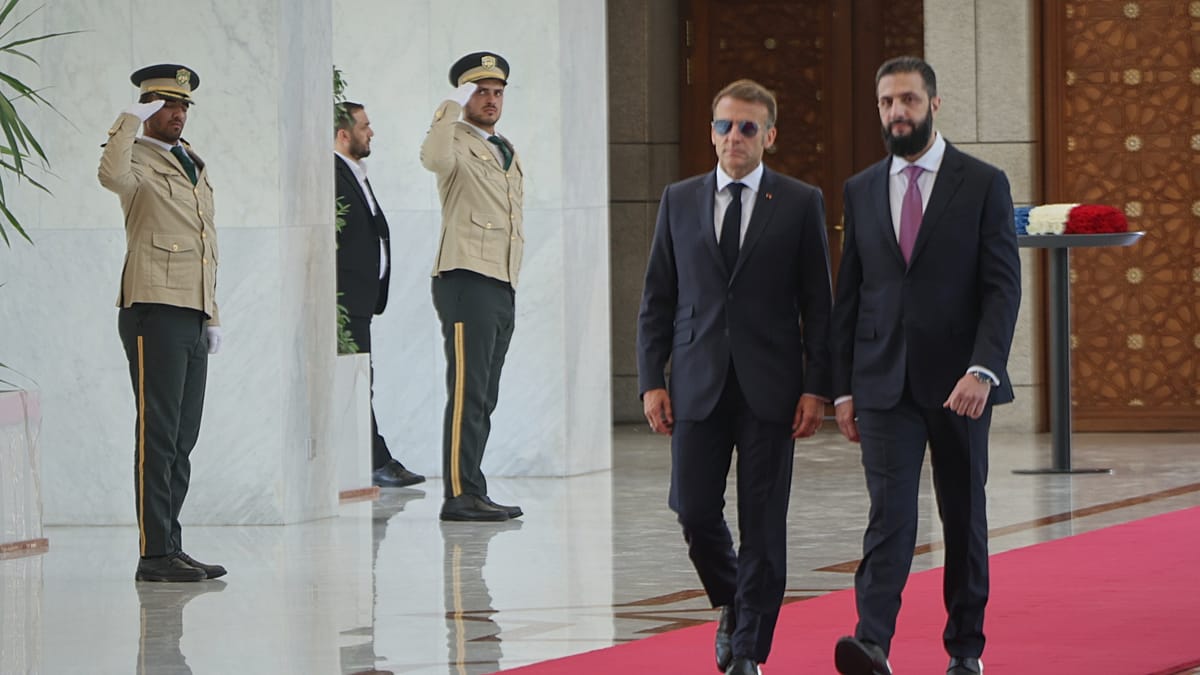
French President Emmanuel Macron toured the historic Umayyad Mosque in Damascus on Wednesday, accompanied by Syrian leader Ahmed al-Sharaa. The visit, which included a ceremonial signing of the guestbook, underscores a significant diplomatic engagement between France and Syria following the fall of the Assad regime.
The Umayyad Mosque, one of the oldest and most revered Islamic sites in the world, holds deep cultural and religious significance. Macron's presence there, alongside al-Sharaa, signals a symbolic gesture of respect and a potential thaw in relations between Europe and Syria's new leadership.
Context of the Visit
Macron's trip to Damascus is part of a broader European effort to re-engage with Syria after years of isolation during the civil war. The French president is the first Western European leader to visit the country since the ouster of Bashar al-Assad, a move that has drawn both praise and criticism. The visit comes amid ongoing instability, including recent explosions in the capital, as reported in Explosions in Damascus as Macron Meets Syrian President al-Sharaa.
The European Union has been cautious in its approach to Syria, balancing humanitarian concerns with security interests. Macron's visit may pave the way for increased EU involvement, particularly in reconstruction and political normalization. However, the situation remains fragile, with factions vying for influence and a devastated infrastructure.
During the mosque tour, Macron and al-Sharaa were seen discussing the site's restoration, which has suffered damage during the war. The French president's engagement with cultural heritage highlights a soft-power approach, aiming to build bridges through shared history.
This visit follows Macron's earlier condemnation of global human rights abuses, as noted in Macron Condemns Global Surge in Executions at Paris Congress, and aligns with France's broader foreign policy goals in the Middle East.
The trip has not been without controversy. Critics argue that engaging with al-Sharaa's government prematurely could legitimize a regime with a questionable human rights record. Supporters, however, see it as a necessary step to influence Syria's future and secure European interests, including migration control and counterterrorism.
Macron's itinerary also included meetings with civil society groups and discussions on humanitarian aid. The EU, under Ursula von der Leyen, has recently unveiled support packages for neighboring regions, as seen in Von der Leyen Unveils Major EU Support Package During Strategic Visit to Armenia, indicating a coordinated European strategy.
The Umayyad Mosque visit is a powerful image of diplomacy, but its long-term impact remains uncertain. As Europe watches, the outcome of Macron's engagement could set a precedent for how the continent interacts with post-conflict states in its neighborhood.