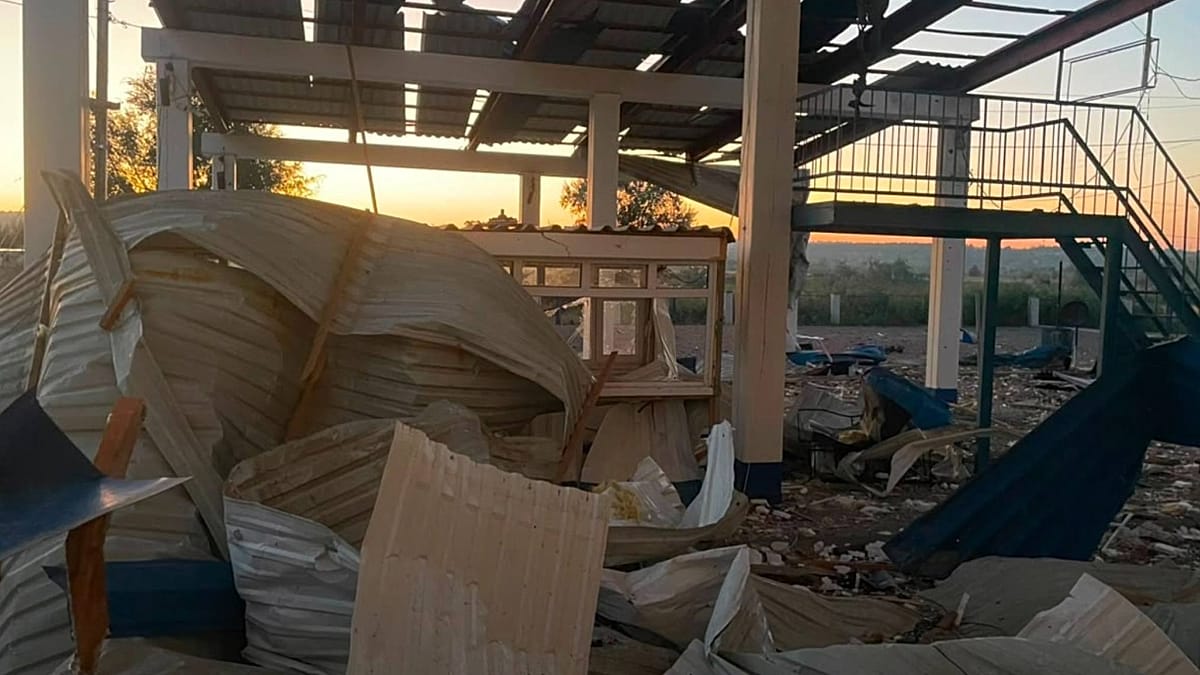
Russian drones struck the Tabaky border crossing with Moldova in Ukraine's southern Odesa region overnight, damaging the facility and forcing the suspension of traffic, Ukraine's State Border Guard Service said on Friday morning.
The checkpoint has been closed and vehicles are being redirected to other crossing points, the service said on Telegram. Authorities in Chișinău have been informed of the situation.
The assault follows a separate incident on Thursday, when a Romanian F-16 fighter jet destroyed an explosive-laden maritime drone close to Europe's largest offshore gas project, the Neptun Deep field in the Black Sea. The interception came hours after another drone entered Romanian airspace and crashed near the Ukrainian border.
Romanian President Nicușor Dan blamed Russia for the latest incident, condemning what he called an escalation of "irresponsible incidents" by Moscow. Two Romanian F-16s were scrambled, and one destroyed the drone after authorities determined it posed a threat to hundreds of workers at the gas site and to critical energy infrastructure.
Defence Minister Radu Miruță said the drone was carrying explosives and that Kyiv had confirmed it was not Ukrainian. The incident has heightened concerns about the security of NATO's eastern flank, particularly as similar drone incursions have occurred in Romania in recent months.
European leaders warn of hybrid warfare
European Commission President Ursula von der Leyen described the episode as part of "an escalating campaign of threats" against the European Union. "This is hybrid warfare," she said, accusing those responsible of seeking to unsettle European citizens and divide the bloc.
The incidents come as Europe remains on high alert after drone flyovers into NATO airspace reached an unprecedented scale last September. In response, European leaders agreed to develop a "drone wall" along their borders to better detect, track, and intercept drones violating European airspace.
In November, NATO military officials said a new US anti-drone system had been deployed to the alliance's eastern flank. Following a violation of Polish airspace, NATO Secretary General Mark Rutte announced the formation of the Eastern Sentry programme, aimed at deterring further Russian incursions.
Some European officials have described the incidents as Moscow testing NATO's response, raising questions about the alliance's preparedness against potential threats from Russia. The Kremlin has dismissed allegations that it is behind some of the unidentified drone flights in Europe as "unfounded."
The attack on the Tabaky checkpoint also underscores the broader impact of Russian drone strikes on Ukraine's infrastructure and border operations. As UN aid officials have warned, such strikes are crippling humanitarian work and disrupting daily life across the country.
For Moldova, the incident is a reminder of its proximity to the conflict. The country, which shares a long border with Ukraine and has faced its own security challenges, has repeatedly condemned Russian aggression. The closure of the Tabaky crossing will likely affect local trade and travel, though alternative routes remain available.
Meanwhile, the economic strain of drone warfare is becoming more evident. The use of low-cost drones is forcing Ukraine to expend expensive air-defense systems, a dynamic that could have long-term consequences for the country's ability to protect its skies.
As Europe watches these developments, the need for a coordinated response has never been clearer. The drone attacks on border infrastructure and energy sites are not isolated incidents but part of a pattern that challenges the continent's security architecture.