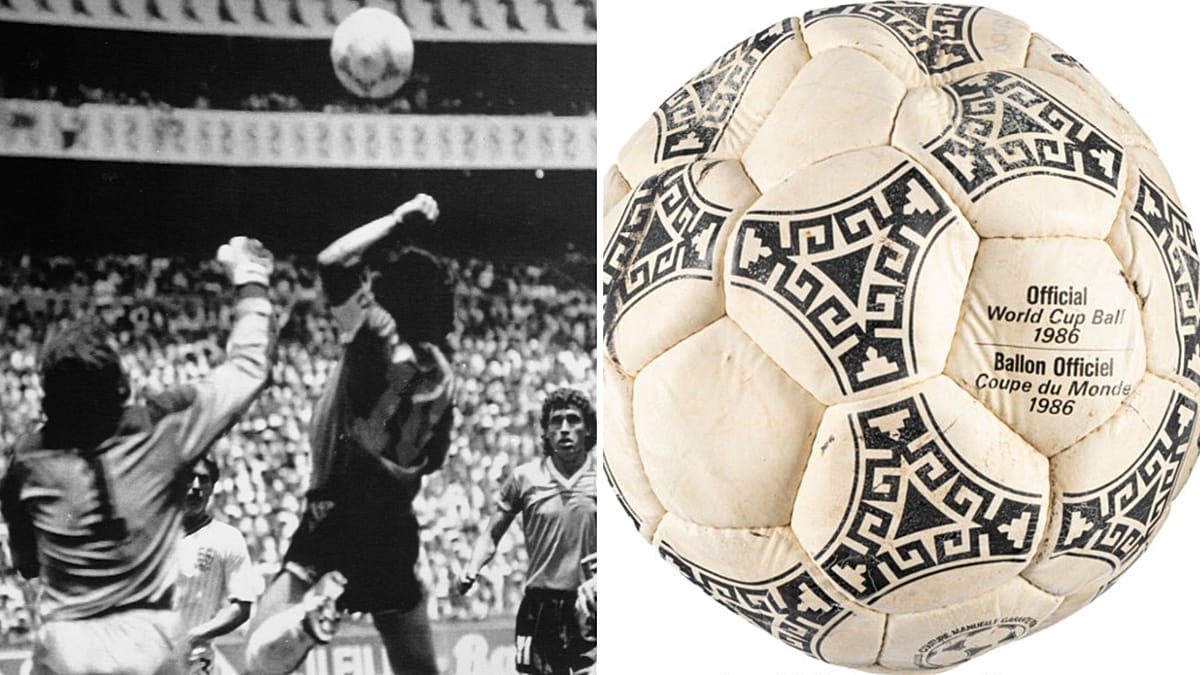
The Adidas Azteca ball that Diego Maradona used to score his infamous "Hand of God" goal against England at the 1986 World Cup has been sold at auction for $3.35 million (€2.9 million). The sale, conducted by Heritage Auctions in Texas, fell dramatically short of the $10 million (€8.6 million) presale estimate, reflecting the unpredictable nature of sports memorabilia markets.
Mike Provenzale, a Heritage auctioneer, had described the ball as a "true one-of-a-kind item" and "arguably the most significant soccer item that exists" in comments to Reuters before the sale. Despite such billing, the final price did not approach the record set by other Maradona-related artefacts.
A goal that divided football history
The ball was used during Argentina's quarter-final against England at Mexico City's Azteca Stadium on 22 June 1986. Maradona, who died in 2020, scored the opening goal by punching the ball over England goalkeeper Peter Shilton, a handball that went unnoticed by the referee, Ali Ben Nasser of Tunisia. Slow-motion replays later revealed the infringement, but the goal stood, and Argentina went on to win 2–1 en route to their second World Cup title.
Maradona famously described the goal as being scored "a little with the head of Maradona and a little with the hand of God." He later admitted to deliberate handling, calling it a form of "symbolic revenge" for Argentina's defeat in the 1982 Falklands War. The second goal, scored just four minutes later, saw Maradona dribble past nearly the entire English team and was later voted FIFA's "Goal of the Century."
Referee Nasser, who once owned the ball, defended his decision, saying he looked to his linesman for confirmation as per FIFA instructions. He recalled England coach Bobby Robson telling him, "You did a good job, but the linesman was irresponsible."
The ball's auction history has been turbulent. It first went under the hammer in 2022, where bidding reached $2.37 million (€2 million) but failed to meet the reserve. A second attempt in 2023 also ended without a sale. The latest result is well below the $9.3 million (€8 million) paid for Maradona's shirt from the same match at Sotheby's in 2022, which remains the highest price ever paid for a piece of sports memorabilia.
The ball also missed the record for the most expensive sports ball, which is held by Shohei Ohtani's 50th home-run ball, sold for $4.39 million (€3.8 million) in 2025.
For European football fans, the sale is a reminder of the enduring fascination with Maradona's legacy, a figure whose brilliance and controversy continue to shape debates about the sport's history. The Azteca Stadium, where the goal was scored, is set to host matches in the 2026 World Cup, adding another layer to its storied past.