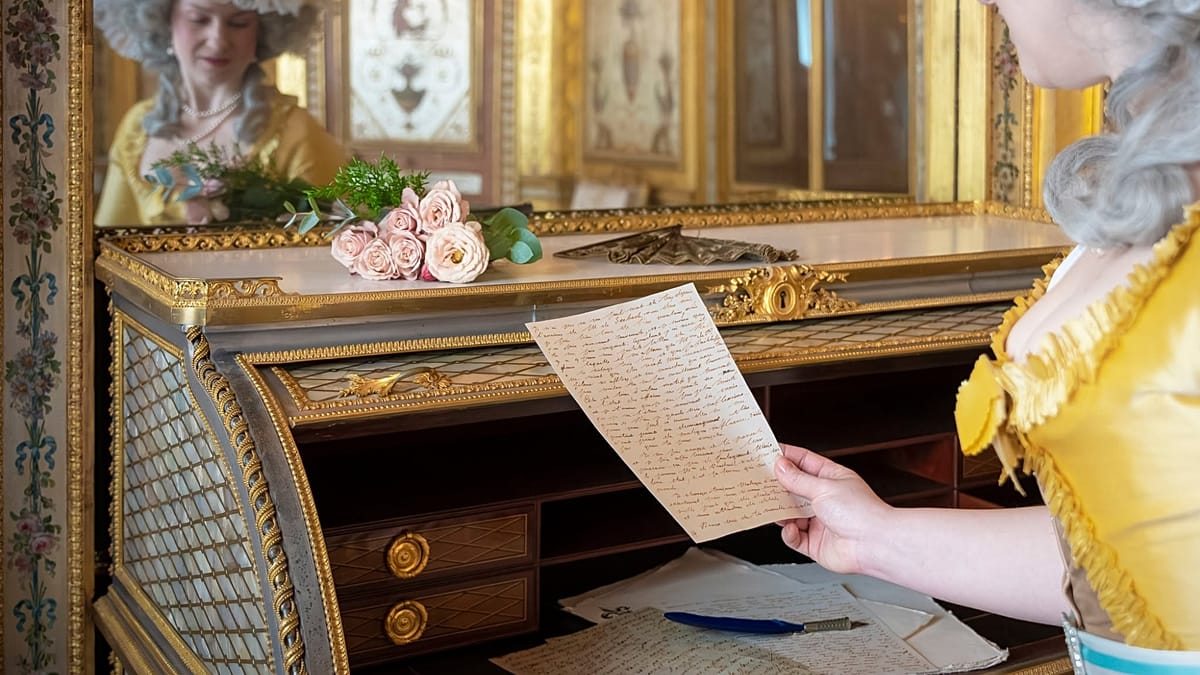
Nearly 240 years after her execution, Marie Antoinette continues to captivate the public imagination. The Château de Fontainebleau, her favoured country retreat southeast of Paris, has received 4,000 letters since launching its initiative "To your pens! Write to Marie-Antoinette" in January 2026.
The project is part of a theme year at the château dedicated to Marie Antoinette and Louis XVI, marking 240 years since her last visit to the estate. Between 1770 and 1786, the royal couple made 17 trips to Fontainebleau, seeking a less formal court life than at Versailles. The château has planned exhibitions, tours, and concerts throughout the year to celebrate France's most famous queen.
A Historian's Vision
Cécile Berly, a historian specialising in the 18th century, conceived the idea. "History is never more fascinating than when it comes to life," she said. "I immediately thought that we needed to use the medium of the letter to encourage genuine engagement. It helps create a connection and sense of closeness with the queen."
Letters have arrived written in a formal, respectful tone, each beginning with "Your Majesty." Sylvain Moulène, director of communications at the royal palace, described the response as "a wonderful success that has taken us by surprise." Outside the château shop, a boudoir—a small, elegant salon—has been recreated for visitors to write to the monarch.
Berly invites the public to share their feelings and what the queen inspires in them. "Why not dare to write a letter to the most famous queen in our history, addressed to one of her favourite residences?" she said. "Sending a letter to the Château de Fontainebleau is a unique and meaningful gesture!"
An Enduring Icon
Marie Antoinette was executed by guillotine on October 16, 1793, months after her husband Louis XVI. She remains France's last reigning queen. Her image has been instrumentalised over the centuries: promoted during the Bourbon Restoration, vilified under the Third Republic, and transformed into a cultural icon in the 20th century through nearly 70 films. Outside France, she is often portrayed favourably, which explains why many letters have come from the United States and Canada.
Recent productions continue to fuel interest. The French-Italian film "Le déluge", depicting her final years, was released in 2024, and the Canal+ series "Marie-Antoinette" dramatises her arrival at Versailles. The initiative runs until July 4, after which the most touching letters will be compiled into an anthology.
For those inspired to write, the château offers a direct link to a figure who, as Berly puts it, is "embedded in our collective imagination." The project underscores how historical figures can still provoke personal reflection, even across centuries.