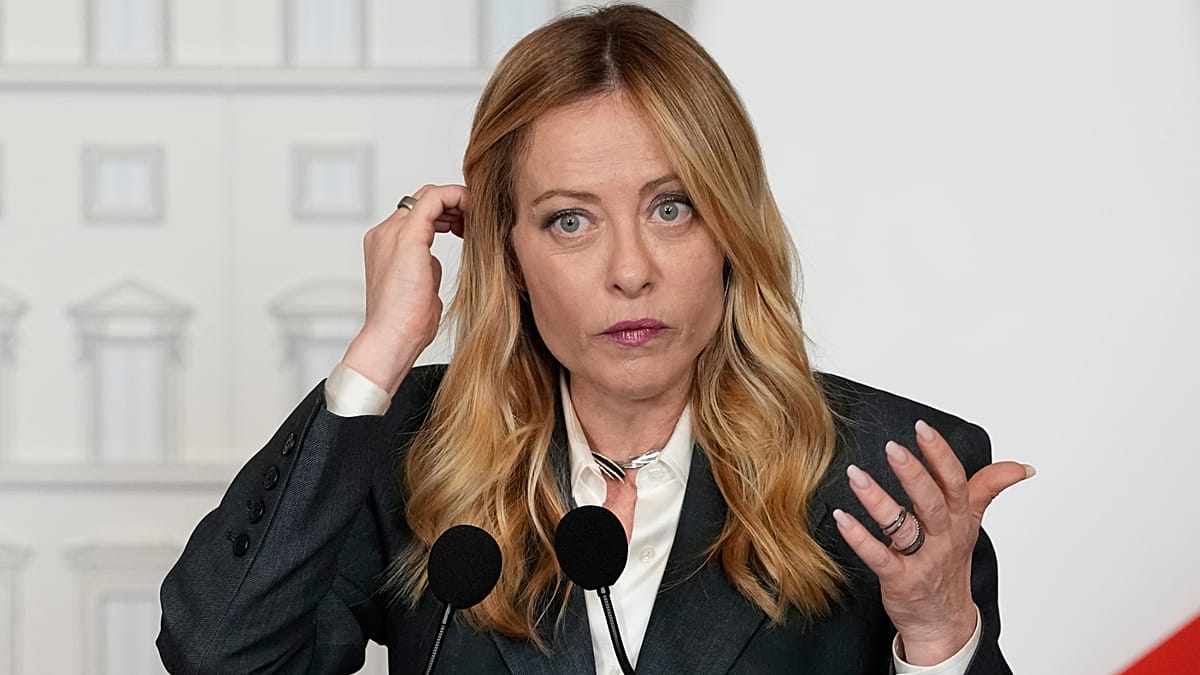
Italian Prime Minister Giorgia Meloni has formally asked the European Commission to loosen fiscal constraints on energy spending, arguing that the bloc should treat the current energy crisis with the same urgency as defence. In a letter sent Monday to Commission President Ursula von der Leyen, Meloni insisted that energy security must be recognised as a strategic priority on par with military preparedness.
“If we rightly consider defence to be such a strategic priority as to justify the activation of the National Escape Clause, then we must have the political courage to recognise that today energy security is also a European strategic priority,” Meloni wrote, according to a copy seen by Euronews.
The appeal comes as tensions in the Middle East raise fears of disruptions to the Strait of Hormuz, a critical chokepoint for global oil and gas shipments. European governments remain wary of a repeat of the energy crisis that followed Russia’s full-scale invasion of Ukraine, which led to factory closures, soaring inflation, and emergency state subsidies across the continent.
Fiscal Rules Under Pressure
At the heart of Rome’s request is the EU’s National Escape Clause, adopted on 8 July, which temporarily allows member states greater fiscal room to boost defence spending. Meloni argues that the same logic should apply to energy measures, especially as households and businesses struggle with high bills. Italy, with the second-highest debt-to-GDP ratio in the EU after Greece, has limited capacity for large-scale subsidies under existing rules.
“We cannot justify in the eyes of our citizens that the EU allows financial flexibility for security and defence strictly understood and not to defend families, workers and businesses from a new energy emergency that risks hitting the real economy hard,” the letter states.
Meloni’s government, led by her conservative Brothers of Italy party, also faces uneven public support for higher defence spending. Many voters remain focused on living costs, making it politically difficult to endorse further military outlays without parallel relief on energy. The prime minister warned that a lack of coherence could complicate Italy’s participation in the EU’s Security Action for Europe (SAFE) programme, a €150 billion joint borrowing mechanism designed to bolster defence capabilities and help member states meet NATO spending targets.
“In the absence of this necessary political coherence, it would be very difficult for the Italian government to explain to the public a possible recourse to the SAFE programme under the conditions currently envisaged,” Meloni wrote.
The move echoes broader debates across Europe about balancing fiscal discipline with strategic investments. In Germany, for instance, the auto sector is grappling with headwinds as companies like Mercedes-Benz pivot to defence, highlighting the interconnectedness of energy costs, industrial competitiveness, and security policy.
Meloni’s letter also underscores a growing sentiment among some member states that the EU’s fiscal framework must adapt to multiple overlapping emergencies. While the bloc has shown flexibility on defence in response to Russia’s war in Ukraine, critics argue that energy security—which affects everything from manufacturing to household budgets—deserves similar treatment. Meanwhile, the European Commission has yet to respond formally, but the issue is likely to feature prominently in upcoming discussions on the bloc’s economic governance review.