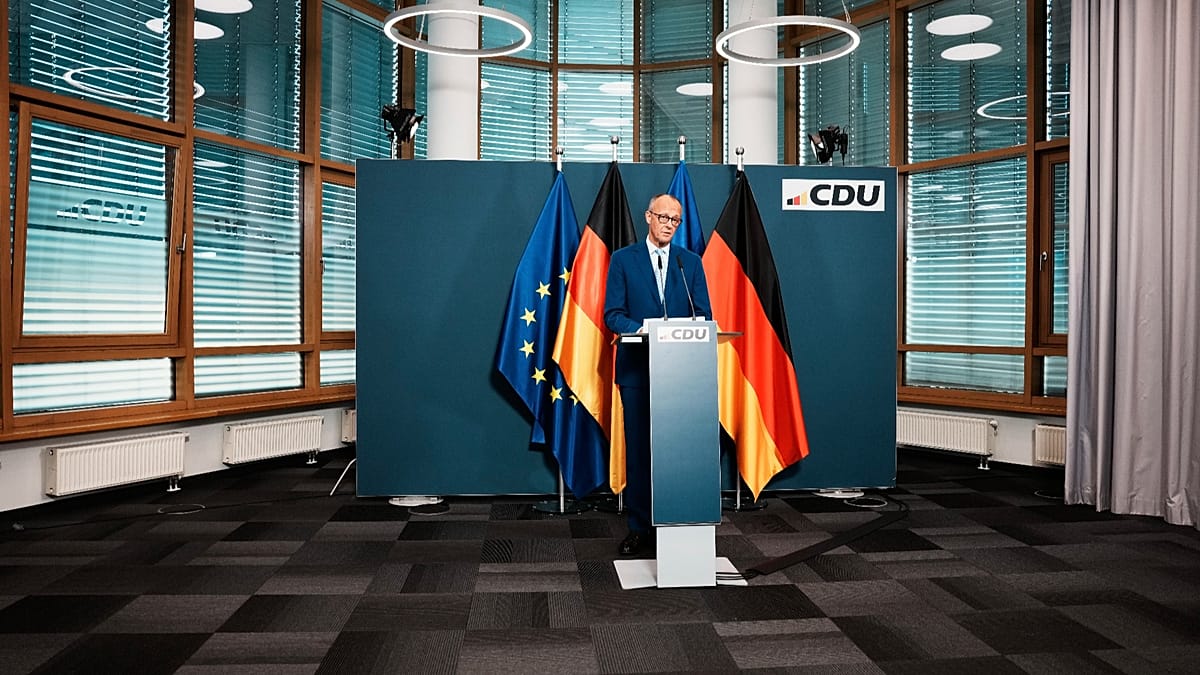
Germany's political landscape has been shaken by the final state elections of 2026, held over the weekend, with results that have dealt a severe blow to Chancellor Friedrich Merz and his centre-right Christian Democratic Union (CDU). In the northern state of Mecklenburg-Western Pomerania, the far-right Alternative for Germany (AfD) emerged as the strongest party, while the Left secured a victory in the capital, Berlin. The CDU's performance in Mecklenburg-Western Pomerania was its worst ever, with just 4.9% of the vote, failing to clear the 5% threshold needed to enter the state parliament.
Merz, visibly shaken, described the Berlin result as "reasonable" but labelled the Mecklenburg-Western Pomerania outcome "a disaster." The losses are directly linked to the AfD's swelling support, particularly in eastern Germany, where the party has made significant gains since the 2024 European Parliament elections. Sabrina Repp, a German Member of the European Parliament from the Socialists and Democrats group, noted that the AfD's results in the east have increased by over 30%.
A chancellor under pressure
Despite the setback, Merz has vowed to press on. "What needs to be done now requires backbone, steadfastness, and patience," he said in a statement after the exit polls were announced on Sunday night. "I will demonstrate these qualities as chairman of the CDU and, above all, as chancellor of our country." However, the result follows a similarly bruising defeat in Saxony-Anhalt, prompting speculation about whether Merz's leadership can survive. The CDU's poor showing has raised questions about the party's future direction and its ability to counter the far-right's appeal.
The elections come at a time of heightened political tension in Europe, with the EU's 27 ambassadors meeting in Brussels to renew sanctions on Russia before they expire at midnight on Tuesday. Failure to reach a deal would remove Vladimir Putin, Sergey Lavrov, and over 2,600 others from the blacklist. A senior diplomat said, "We have a very tight deadline. All our efforts are focused on reaching an agreement on Monday." The negotiations are complicated by demands from Slovakia, France, and Luxembourg regarding the delisting of Russian oligarchs Alisher Usmanov and Mikhail Fridman.
Meanwhile, European Commission President Ursula von der Leyen is in New York for the United Nations General Assembly, where she is expected to meet Australian Prime Minister Anthony Albanese and European Council President António Costa. The meeting could signal a potential associate membership for Australia, though Commission spokesperson Arianna Podestà downplayed such speculation. Von der Leyen also joined a multilateral meeting with leaders from Kenya, Brazil, and Canada, where they outlined a pitch for a new middle power partnership in a joint opinion piece for the Financial Times.
In a separate development, Ukrainian President Volodymyr Zelenskyy announced he would meet US President Donald Trump on the sidelines of the UNGA. "We agreed to meet in New York, and this meeting could change a lot. There is diplomatic momentum," Zelenskyy wrote on X. The announcement comes as Moscow's mayor reported Ukraine's "largest-scale attack" on the Russian capital since the full-scale invasion began. Federico Borsari, a fellow at the Centre for European Policy Analysis, expressed pessimism about Russia easing its assault, predicting further attempts to damage Ukraine's power grid and critical infrastructure.
Back in Brussels, the EU's Arctic strategy is set to be revised, with the Commission maintaining its ban on new oil and gas drilling in the region despite pressure from Norway. The revised strategy, due on 20 October, will reaffirm the bloc's commitment to environmental protection in the Arctic. This comes as the region gains increasing strategic importance, both for its resources and its geopolitical significance.
For more on the German election fallout, see our analysis of the CDU's defeat in Saxony-Anhalt. And for a broader look at Europe's political shifts, check our morning briefing from September 18.