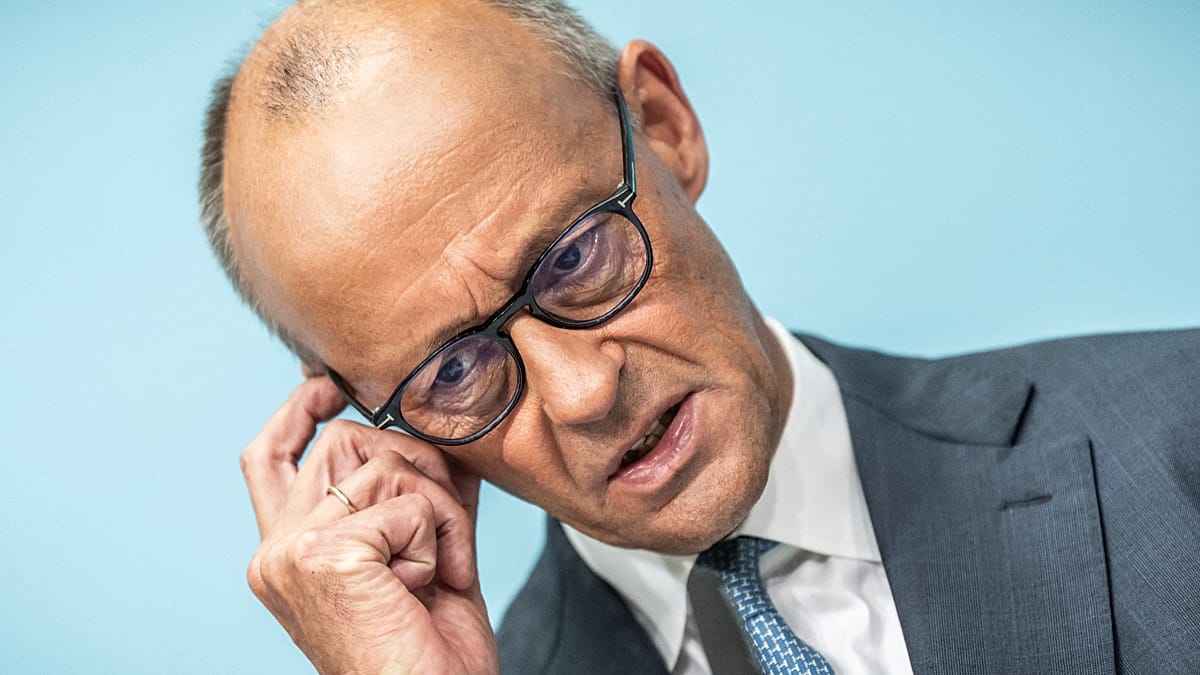
In a sombre press conference in Berlin on Monday, German Chancellor Friedrich Merz stood alongside Sven Schulze, the CDU's lead candidate in Saxony-Anhalt, to confront the fallout from a state election that has sent shockwaves through the country's political establishment. "Yesterday's result has changed not only Saxony-Anhalt, but Germany as a whole," Merz said, reflecting on the scale of the defeat. "We are all profoundly shocked. We did not expect it to turn out like this."
The far-right, anti-immigration Alternative for Germany (AfD) won a commanding victory, capturing 43.8% of the vote, while the CDU trailed far behind with just 17.2%. Compared with the 2021 state election, the AfD more than doubled its support, while the CDU saw its share halved. Merz noted that nearly 60% of voters had chosen parties that question democratic principles, calling it "the most severe electoral defeat" the CDU has suffered in years. "There will have to be consequences," he added, without specifying what those might be.
A chancellor under pressure
Merz's leadership has been under intense strain for months, with his approval ratings sliding to historic lows. A recent "trendbarometer" survey by RTL and n-tv, conducted by the Forsa institute, found that 78% of respondents believed Merz was performing worse as chancellor than expected. Even among CDU/CSU voters, 59% expressed disappointment with his performance. Despite these figures and the electoral debacle in Saxony-Anhalt, Merz insisted he would continue his course "without wavering."
"Our country needs fundamental reforms," he declared, attributing public dissatisfaction partly to the government's failure to communicate its policies in an emotionally resonant way. To address this, the CDU and its coalition partner, the SPD, plan to craft a more compelling "narrative" to reconnect with voters. Merz acknowledged a society "longing for disruption" and "fundamental change," and stressed the need to emphasise the importance of compromise in governance.
The chancellor also sought to reassure the public that the AfD's victory would not translate into radical policy shifts at the federal level. He argued that in many areas, including migration and foreign nationals policy, the AfD would have to adhere to the federal government's line, citing the principle of "federal loyalty."
Schulze faces internal rebellion
Sven Schulze, who remains minister-president of Saxony-Anhalt and chair of the CDU in the state, also pledged to draw lessons from the defeat, though he offered few specifics. Calls for his resignation are growing louder, with the Young Union (JU) in Saxony-Anhalt demanding a complete overhaul of the party leadership. According to a resolution reported by Stern, the JU called for "the resignation and the prompt re-election of the entire state leadership - from the state chair to the full executive board."
Schulze, however, remained defiant, stressing that the mandate to form a government now lies with the AfD. "Overall, this is a day that has shaken us deeply, not only in Saxony-Anhalt," he said. He noted that in his own constituency, his personal result was twice as strong as the CDU's statewide performance, a point he used to underline his continued local support.
The AfD, for its part, announced on Monday that it would seek to form a government despite lacking an absolute majority. Lead candidate Ulrich Siegmund, who had previously ruled out such a move, now aims to win over parliamentary groups or individual MPs to secure the necessary votes for his election as minister-president. This development adds a new layer of uncertainty to the political landscape in Saxony-Anhalt and beyond.
The defeat has also reignited debates within the CDU about its strategic direction. Some party members are urging a focus on policy rather than leadership disputes, as one CDU lawmaker has cautioned. Meanwhile, analysts see the result as a symptom of deeper populist divisions across Europe, with implications for the continent's political stability.
For Merz, the path forward is fraught with challenges. His promise of "consequences" will be scrutinised in the coming weeks, as will his ability to craft a narrative that resonates with a disenchanted electorate. The CDU's traditional centrist consensus, already fragile, now faces its most serious test in years, with the centrist consensus in Germany shaken. As the country grapples with this political earthquake, the rest of Europe watches closely, mindful that what happens in Berlin often reverberates far beyond its borders.