German Chancellor Friedrich Merz has described NATO's decision in 2008 not to put Ukraine on a path to membership as a "mistake," arguing that the alliance's reluctance emboldened Moscow and ultimately made Russia's full-scale invasion possible.
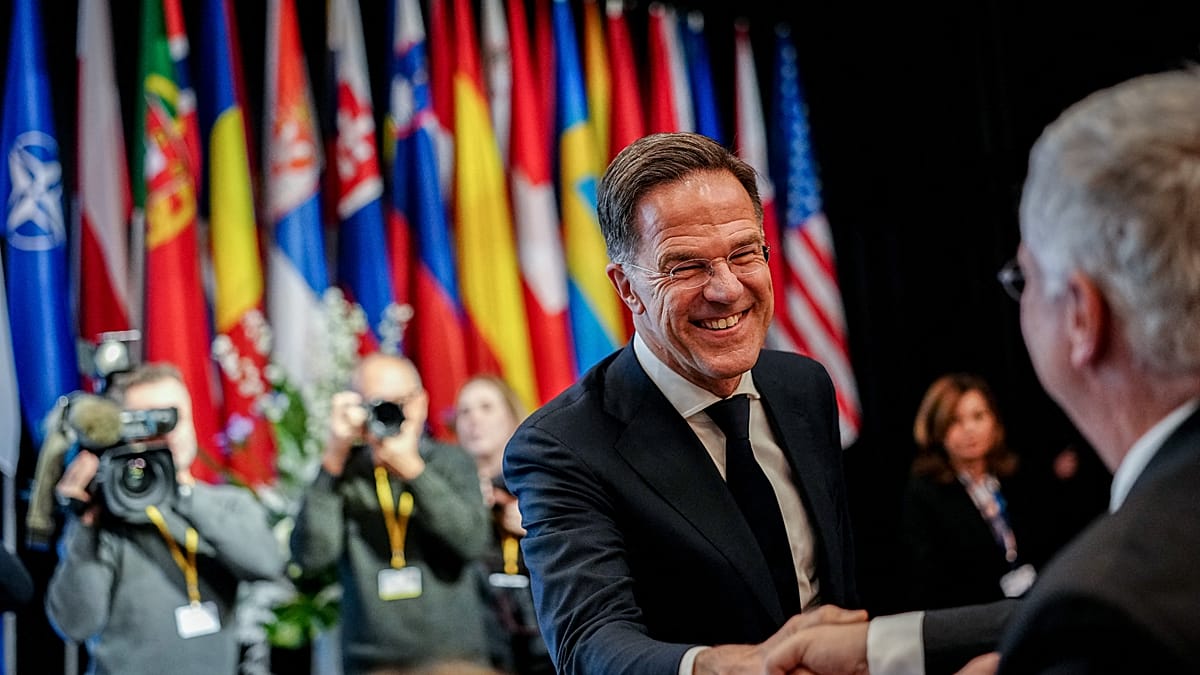
Speaking alongside NATO Secretary General Mark Rutte at a press conference in Berlin, Merz said the failure to follow a proposal by then-US President George W. Bush at the Bucharest summit was a strategic error. "I think we all see today, at least from the point of view of what a mistake it was, not to follow the American proposal in 2008 at the NATO summit in Bucharest," he told reporters.
Merz added that had Ukraine been granted a Membership Action Plan at that summit, the war that began in February 2022 would likely have been prevented. "If Ukraine had become a member of NATO, this war would have been likely to be prevented," he said, in comments translated from German.
The remarks came during a meeting in the German capital, where Rutte was attending the NATO Parliamentary Assembly's annual session. The two leaders also discussed the ongoing US-led efforts to broker a ceasefire, with Ukraine's future membership once again emerging as a central point of contention.
Rutte urges caution, rejects Russian demands
Rutte struck a more cautious tone, stressing that any meaningful discussion of Ukrainian accession would have to follow successful peace negotiations. "It's a long-standing position that Ukraine should be a part of NATO," he said, but acknowledged that there is no unanimous agreement among the 32 allies on the timing or conditions of such a move.
He also pushed back firmly against any suggestion that Moscow could influence the alliance's composition. "What cannot happen is we are forced to roll back NATO to the 1997 borders," Rutte said. "It's only the 32 allies deciding who is in NATO and who is not in NATO."
His comments were a direct response to reports that Russian President Vladimir Putin would be willing to end the war if NATO returned to its pre-2004 posture, which would effectively require reversing the alliance's eastern enlargement. That demand has been rejected by Western leaders, including Rutte, who called it unacceptable.
The debate over Ukraine's membership has been reignited by French President Emmanuel Macron, who recently called for the issue to be reopened. Kyiv has long sought a formal invitation, but allies remain divided, with some fearing that a rapid accession could escalate the conflict with Russia.
Rising hybrid attacks and battlefield losses
Rutte also addressed the growing number of hybrid attacks across Europe, including a recent incident in which Polish officials reported that two Russian cruise missiles and a drone had entered Polish airspace and landed on its territory. The alliance is now considering deploying additional assets to the region in response.
He attributed Russia's increased aggression to mounting casualties on the battlefield, claiming that Russian forces are losing up to 50,000 soldiers each month in Ukraine. He contrasted this with Soviet losses in Afghanistan and US casualties during the Vietnam War, underscoring the scale of Moscow's losses.
"Ukraine is rolling back the frontline in the direction of Russia and striking deep" into Russian territory, Rutte told journalists. He reiterated NATO's position that the most effective response to hybrid attacks is to maintain and even increase military support for Ukraine. "Most importantly, we need to keep our military support for Ukraine going," he said. "For every incident in Europe - more support for Ukraine."
Ukrainian President Volodymyr Zelenskyy, meanwhile, accused Putin of ordering the recent strikes following what he described as "weak meetings" with US President Donald Trump and Chinese President Xi Jinping. "Russia is trying to compensate for its military and diplomatic impotence with precisely this kind of terror," Zelenskyy wrote on X last Friday.
The latest escalation comes as Russian strikes on the Kyiv region have killed at least 15 people, raising fears of a renewed winter offensive. NATO ambassadors met in Brussels on Monday to discuss the Polish incursion and the broader pattern of Russian aggression, with the alliance weighing further measures to bolster its eastern flank.
As the debate over Ukraine's future in NATO continues, the gap between those who see membership as a necessary deterrent and those who fear it could provoke Moscow remains wide. For now, Rutte's message was clear: peace first, then politics. But Merz's blunt assessment suggests that the lessons of 2008 are still being felt across the continent.