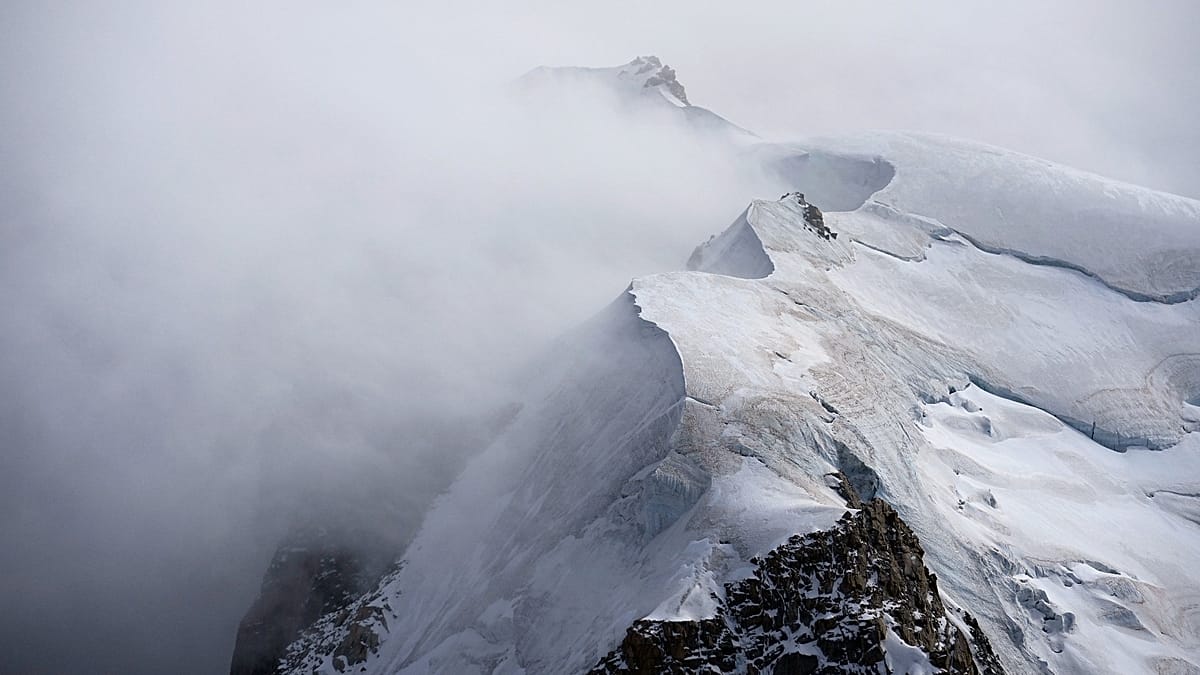
Mont Blanc, Western Europe's highest peak, has grown by nearly two metres since the last official measurement, according to new data released on Wednesday by French surveyors. The summit now stands at 4,807.47 metres above sea level, a rise of 1.88 metres compared with the 2023 figure.
The measurement was carried out on 17 September by experts from the Haute-Savoie Departmental Chamber of Surveyors, whose jurisdiction covers the French side of the massif that straddles the border with Italy. The results were presented in Saint-Gervais-Mont-Blanc, the Alpine town that serves as the base for many expeditions to the peak.
Jean des Garets, president of the chamber, stressed that the mountain is never static. “The summit is in constant motion,” he said, pointing to the dynamic nature of the snow and ice cap that crowns the granite peak.
Why Mont Blanc's height fluctuates
The apparent growth is not due to tectonic activity or volcanic processes, but to the accumulation and redistribution of snow and ice on the summit. Wind, precipitation, temperature, sunshine and seasonal weather patterns all influence the thickness of this cap, which can vary significantly from year to year.
This variability explains why periodic surveys produce different results. Between 2000 and 2010, the mountain was repeatedly measured at around 4,810 metres. A gradual decline followed, with the 2021 survey recording 4,807.81 metres and the 2023 figure dropping to 4,805.59 metres – the lowest in recent years. The new measurement reverses that trend, pushing the summit back above the 4,807-metre mark.
Compared with the historic measurement from 1894, the current altitude is roughly 27 centimetres higher, a reminder that even the most iconic landmarks are subject to change.
For scientists and surveyors, these regular campaigns are more than a curiosity. They provide valuable data on how weather and climate conditions affect the Alpine environment, helping researchers track long-term trends in snow cover and glacial dynamics across the region.
The new figure also has practical implications for mountaineers and local authorities, who rely on accurate altitude data for navigation, mapping and safety planning. While the change is modest in absolute terms, it underscores the need for continuous monitoring of Europe's highest peaks.
Mont Blanc remains the second-highest peak in Europe after Mount Elbrus in the Caucasus, and its measurement is a matter of pride and scientific interest for the Alpine nations. The French surveyors plan to repeat the exercise in two years, as they have done since 2001, to keep tracking the mountain's ever-shifting crown.