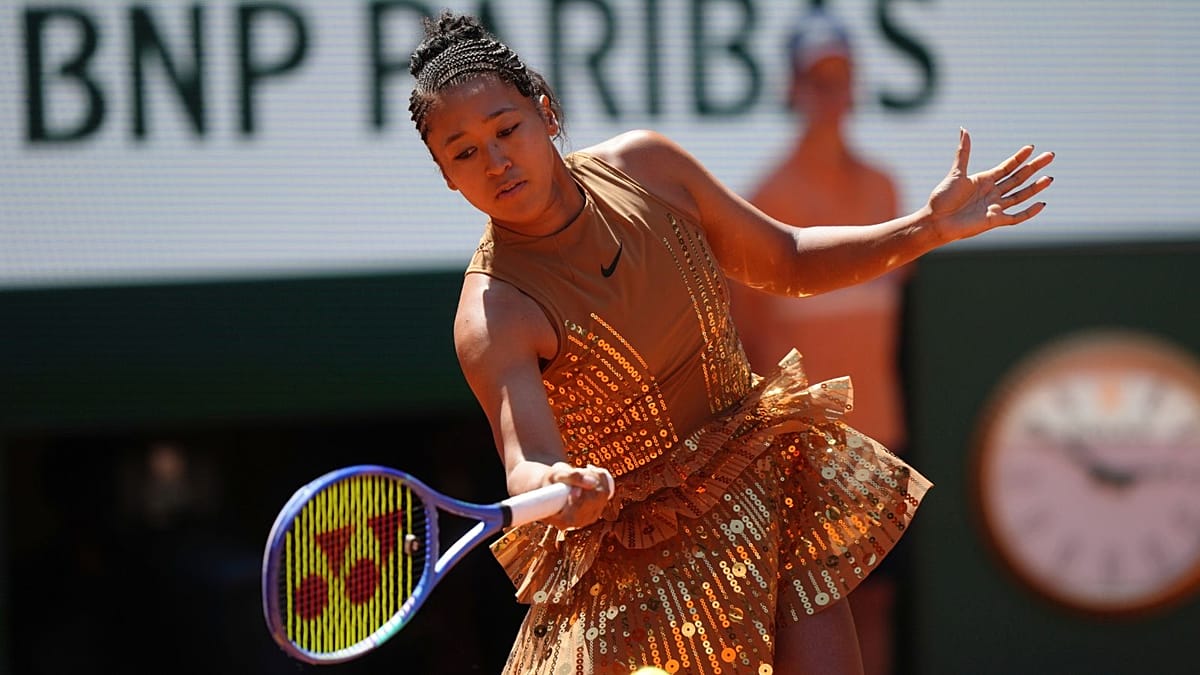
On the Court Suzanne-Lenglen at Roland Garros, two events unfolded simultaneously. Japanese tennis star Naomi Osaka defeated Germany's Laura Siegemund 6-3, 7-6 (3) in her opening match. But the real spectacle was her outfit: a ceremonial black skirt and sleeveless beaded bodice, removed to reveal a shimmering gold sequined playing dress.
Osaka, a 28-year-old four-time Grand Slam champion, described the dress as "very couture," comparing herself to the Eiffel Tower at night. The playing dress was designed by Nike, with outer pieces by Swiss couturier Kevin Germanier. "Athletes are in show business," Osaka said. "Grand Slam walk-ons are the only time that I possibly feel like I'm an entertainer."
Yet the internet, predictably, was divided. Some praised her boldness; others criticized her for prioritizing fashion over tradition. Conservative fans called the outfit disrespectful, while others demanded more modesty. This backlash is familiar territory for women in tennis, where dress codes have long been a battleground.
A History of Policing Women's Bodies
The controversy echoes past incidents. In 1985, Wimbledon officials told American player Anne White to change her long-sleeved white spandex bodysuit. In 2018, Serena Williams's catsuit—designed to improve blood circulation post-pregnancy—was banned from the French Open, sparking outrage. The Women's Tennis Association (WTA) later modernized its dress code to allow leggings and compression shorts without skirts, but the underlying sexism persists.
Osaka, who has been open about her media anxiety and mental health struggles, uses fashion as a form of expression. "I don't talk a lot, so I can talk through my clothes," she said. "That means I can be as loud with colours or patterns or fabric as I want." She added that she hopes her outfits inspire others who feel similarly.
Former British number one Annabel Croft noted that many players "would not be able to live up to the expectation" of wearing custom outfits. "If you go out there in an extraordinary outfit, you've got to live up to that and have the confidence to play in it," she said on BBC Radio 5 Sports Extra. "Naomi can handle it. She really loves it and she's not fazed by it."
Osaka's gold dress is not an isolated incident. She wore a red outfit with sparkly roses at the 2023 US Open and a jellyfish-inspired ensemble at the Australian Open earlier this year. Each time, the reaction has been mixed, revealing a sport still wrestling with modernity.
In a broader European context, the French Open is a showcase of culture and style, but the debate over women's attire reflects deeper societal tensions. As tennis continues to evolve, the question remains: can the sport embrace individuality without resorting to archaic policing? For now, Osaka's gold dress stands as a symbol of resistance—and a reminder that the court is also a stage.