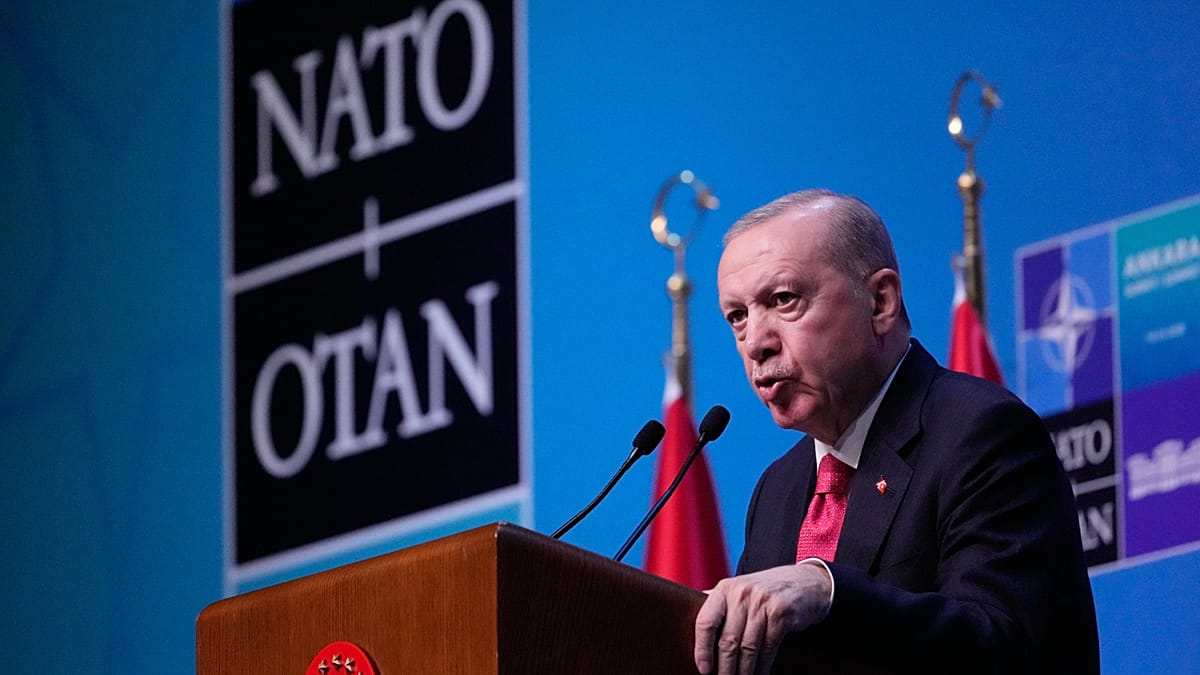
At the conclusion of the NATO summit in Ankara on 8 July 2026, Turkish President Recep Tayyip Erdoğan offered each attending leader a parting gift that raised eyebrows across the alliance: a personalised Magnum .357 revolver. The firearms, engraved with each recipient's name and the Turkish flag, were presented in wooden display boxes accompanied by a sign reading: “Gümüşay, the first revolver-type handgun produced in our country.” Live ammunition and a waiver for export controls were also included.
The summit itself had seen allies reaffirm their commitment to Article 5 amid ongoing tensions with Russia and debates over defence spending. The gift, however, quickly became a talking point as leaders decided how to handle the unexpected token.
How European Leaders Handled the Revolvers
Germany’s Chancellor Friedrich Merz, following legal restrictions on officials accepting gifts, handed the revolver to the German Embassy in Ankara. A government spokesperson told the German Press Agency (DPA) that the weapon would be “properly imported and then added to the inventory of official gifts.” In Berlin, such items are subject to strict rules: current and former government members must declare gifts, and parliamentarians must surrender any item valued over €200 unless they pay its equivalent to the Federal Treasury.
Spanish Prime Minister Pedro Sánchez transferred the firearm to the Interior Ministry, where it will be deactivated by the Guardia Civil’s Weapons Intervention Service. Portugal’s Luís Montenegro gave his revolver to the police’s Weapons and Explosives Department for forensic analysis, according to a source from his office speaking to Público. The source noted that the analysis would determine “the applicable legal provisions.”
Poland’s Secretary of State Marcin Przydacz confirmed that the revolver had cleared customs and passed all checks, and would be stored “appropriately” to “treat it with respect.” He added, “I do not know exactly whether it is a replica or an original. Certainly, no one will be firing it.”
Belgium’s Prime Minister Bart De Wever reportedly discovered the “exact nature” of the gift only after returning to Belgium, where he handed it over to airport police. His security team also dealt with the revolvers given to European Commission President Ursula von der Leyen and European Council President António Costa. Von der Leyen, in a post on X, thanked Erdoğan for his “warm welcome” and highlighted the EU-Turkey strategic partnership, writing: “In a more challenging world, our partnership matters more than ever.”
In Italy, the revolver was taken into custody and registered at the Chigi Palace, as is standard for prime ministerial gifts. Greece’s Kyriakos Mitsotakis decided to donate his to the Athens War Museum. UK Prime Minister Keir Starmer left the firearm in Turkey with British officials, where it is expected to be deactivated before transport to the UK. Canadian PM Mark Carney joked that his country’s gift of maple syrup “undermatched” the vintage weapon, which he said was being decommissioned.
The episode underscores the varied legal and cultural norms across NATO member states when it comes to accepting official gifts. While some leaders saw the revolver as a ceremonial token, others treated it as a security concern requiring forensic examination or deactivation. The summit itself, which also saw leaders discuss deterrence and the war in Ukraine, was marked by this unusual diplomatic gesture that highlighted the personal touch—and occasional awkwardness—of international gift-giving.