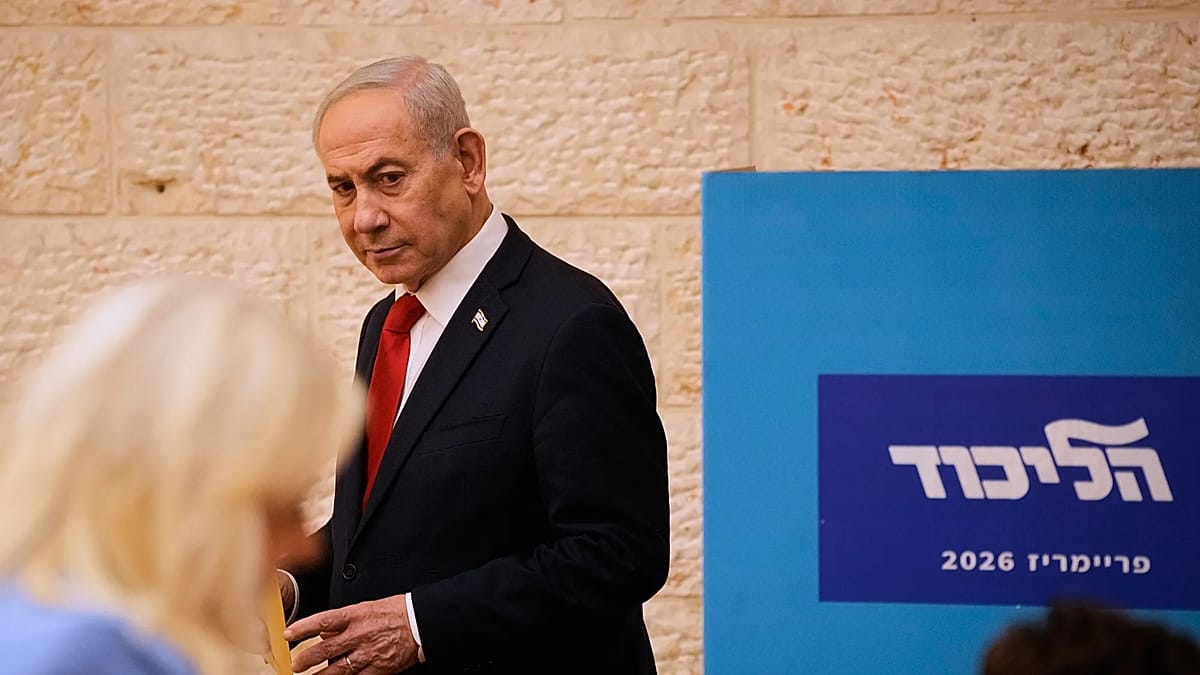
Israeli Prime Minister Benjamin Netanyahu is facing renewed political pressure after a report claimed that the United Arab Emirates had warned him about the Hamas attack of 7 October 2023, well before it unfolded. The revelation, published by the Israeli newspaper Haaretz, has intensified criticism from opposition leaders and former security officials, who accuse Netanyahu of ignoring intelligence that could have prevented the deadliest assault in Israel's history.
According to the report, which draws on a forthcoming book by Haaretz writers, UAE President Mohamed bin Zayed Al Nahyan personally conveyed to Netanyahu, about ten days before the attack, that Hamas was planning a large-scale operation that could destabilise the region. The warning was reportedly passed through an intermediary after Hamas's then-leader in Gaza, Yahya Sinwar, told a former Palestinian official that the group was preparing a "terrifying operation" and urged that the message be relayed to Israeli authorities.
The report, based largely on anonymous sources, says Netanyahu responded with "relative calm," expressing the view that Hamas was focused on the West Bank and that Israel was prepared for any scenario. The prime minister's office has categorically denied that any such conversation took place, branding the report an "absolute lie."
Opposition demands answers
On Tuesday afternoon, the leaders of the opposition "Change Camp" issued a joint statement calling for an "immediate and thorough investigation" into the claims. "The Israeli public has a right to know: What did Netanyahu know, when did he know it, why did he not brief the security establishment, and why did he not act to protect the citizens of Israel?" the statement read, adding that there was "no longer any room for excuses, denials, or cover-ups."
Gadi Eisenkot, a former chief of staff of the Israel Defense Forces and a rival to Netanyahu in the upcoming legislative elections, went further, saying on X that Netanyahu "received dozens of warnings for October 7 and ignored them all." He added: "He is unfit for office."
Yair Golan, leader of the Democrats party, accused Netanyahu in a video address of "endangering Israel" and "leading us to disaster." "You knew, you ignored, you failed, you are to blame, Netanyahu. The excuses are over," he said.
Eylon Levy, a former Israeli government spokesperson, told Euronews that the 7 October attacks represented a "strategic failure" on Israel's part. "If this report is true, it's hard to say why he wouldn't pass that on, other than that he didn't think it was credible. And that's because Netanyahu was really convinced that Hamas was deterred," Levy said. "It was a basic strategic failure to understand the nature of the enemy facing Israel, its true intentions and its real capabilities."
The attack and its aftermath
On 7 October 2023, Hamas militants breached the Gaza border by land, sea, and air, launching a coordinated assault that killed more than 1,200 people in Israel and took around 250 hostages back to Gaza. Israel responded with a massive air campaign and a ground invasion of the enclave. According to figures from the Hamas-run Gaza Health Ministry, which the United Nations considers reliable, more than 73,600 Palestinians have been killed in the conflict so far.
The war has also had profound regional and international repercussions, including cross-border exchanges with Hezbollah in Lebanon and heightened tensions with Iran. The United States has been drafting a post-war strategy for the Middle East, while European governments have repeatedly called for a ceasefire and a two-state solution.
Election context
Israelis are due to go to the polls on 27 October for a national election to choose the 120-seat Knesset. The vote will be a direct test of Netanyahu's leadership, with opinion polls suggesting a tight race. The Haaretz report has injected a new element of uncertainty into the campaign, with opposition parties seeking to capitalise on the allegations.
Netanyahu's denial is unlikely to quell the controversy. The coming days will likely see further calls for a formal inquiry, both from within Israel and from international observers. The European Union has repeatedly stressed the importance of accountability and the rule of law in the region, and any investigation into the warnings could have diplomatic implications for Israel's relations with its Gulf partners, including the UAE, which normalised ties with Israel under the Abraham Accords.