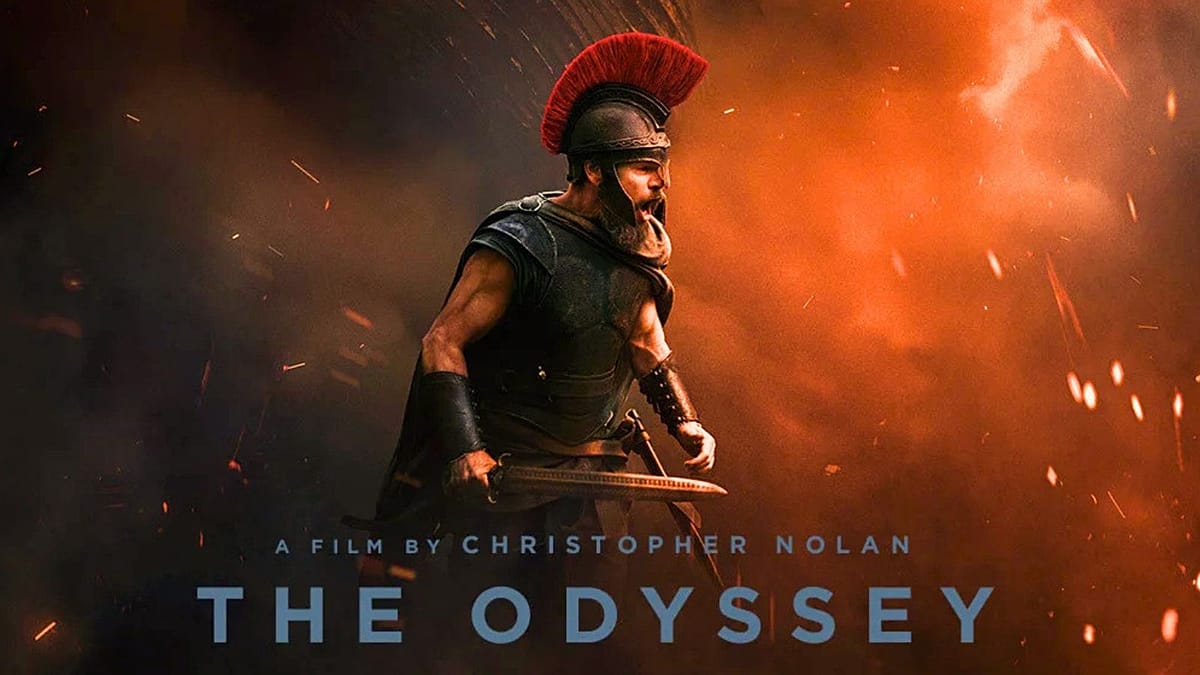
Christopher Nolan, fresh from his Oscar triumph with Oppenheimer, has taken on what many directors would consider a fool's errand: adapting Homer's The Odyssey for the big screen. The 8th-century BC poem, spanning 24 books of gods, monsters, and a decade-long journey home, is the bedrock of Western literary fiction. Nolan, however, approaches it not as myth but as a grounded, psychological drama—a choice that yields both brilliance and frustration.
Filmed across six countries and entirely on IMAX—a first for any feature—The Odyssey relies on practical effects and a reported 2,000 extras for the siege of Troy. The ambition is staggering, but as with any voyage, the course matters as much as the vessel.
A Tale of Two Timelines
The narrative splits early: Odysseus (Matt Damon), shipwrecked and amnesiac on the Isle of Ogygia, is nursed by the nymph Calypso (Charlize Theron). Meanwhile, back in Ithaca, his wife Penelope (Anne Hathaway) fends off suitors led by the slimy Antinous (Robert Pattinson), while their son Telemachus (Tom Holland) seeks news of his father from King Menelaus (Jon Bernthal). Nolan, never one for linear storytelling, intercuts these threads with flashbacks to Odysseus's encounters with the Cyclops, the Sirens, and the Laestrygonians.
This structure, however, comes at a cost. The episodic adventures feel rushed, almost curtailed. Jennifer Lame's editing, while keeping the 173-minute runtime zippy, often sacrifices tension for pace. No sooner do we glimpse the Cyclops than we're whisked away, leaving little room to absorb the threat or the existential dread of men navigating a universe ruled by capricious gods. The film's standout moment—a body-horror encounter with Circe (Samantha Morton)—is over too quickly, despite Morton's transfixing performance. It's a pattern that undermines emotional investment.
The film finds its footing only in the final act, when Odysseus returns to Ithaca in present tense. Here, Nolan's focus sharpens. Damon shines as a traumatized warrior broken by war and his own complicity in its horrors. Hathaway, Pattinson, and John Leguizamo's blind servant Eumaeus get room to breathe, unlike the bafflingly underused Zendaya and Lupita Nyong'o, who are relegated to cameo roles as Athena and Helen/Clytemnestra, respectively.
Nolan's decision to prioritize realism over myth—pushing the supernatural to the margins in favor of a modernist reading of Odysseus's psyche—will divide purists. Some anachronistic dialogue, including a few F-bombs, feels jarring. Yet the film's technical prowess is undeniable. It is a monumental achievement, but one that leaves you wondering what might have been if Nolan had lingered longer in the underworld.
For those interested in the broader cultural context, the film's release has stirred debates, including controversy over AI-generated versions and racist backlash against Nyong'o's casting. Nolan himself has spoken about younger audiences rejecting AI in filmmaking, a stance that aligns with his commitment to practical effects.
The Odyssey is a bold, flawed epic—a trip to Hades and back that dazzles but never fully immerses. It is a film to admire, but perhaps not to love.