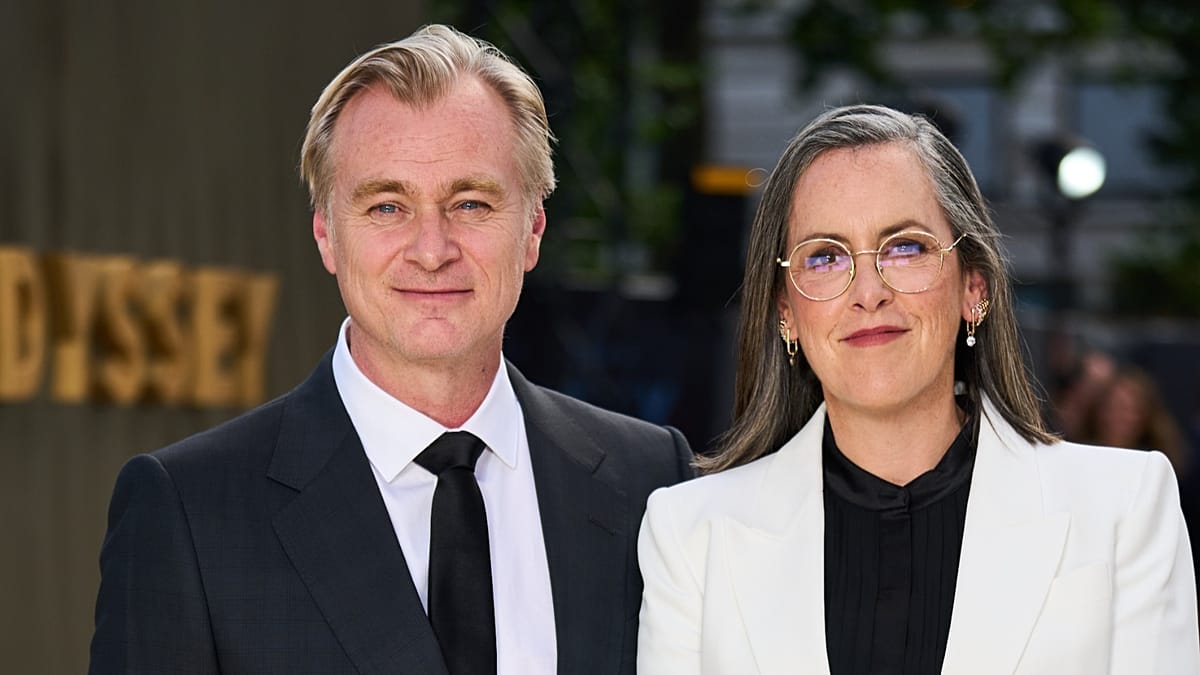
As Christopher Nolan prepares for the global release of The Odyssey on Friday, the Oscar-winning director has offered a sharp critique of the film industry's embrace of artificial intelligence. Speaking to The Telegraph, Nolan argued that younger generations are 'utterly rejecting' AI-generated content, a trend he sees as a hopeful sign for the future of cinema.
Nolan, known for his preference for practical effects and physical filmmaking, pointed to a 'rapid wholesale dismissal of a supposedly foundational jump in technology' among emerging filmmakers. He cited 21-year-old Backrooms director Kane Parsons and 26-year-old Obsession director Curry Barker as examples of a cohort that values tactile, real-world storytelling over digital shortcuts.
A Generational Divide Over AI
The director, who does not use email or own a smartphone, said his four children—whom he shares with producer Emma Thomas—have an 'immediate and harsh' reaction to AI slop. 'They see it for what it is very quickly,' Nolan explained. 'It's much easier for them to identify it, because it grew out of an online world they know really well.'
Nolan's stance places him at odds with an industry increasingly chasing generative AI, a trend that has sparked concerns over intellectual property rights and the existential threat to human creativity. These issues were central to the 2023 Hollywood strikes, which shut down productions and cost studios billions of dollars. The debate echoes broader European discussions about AI regulation, as seen in the EU's ongoing efforts to craft a legal framework for the technology.
'After years of driving towards heavily virtual environments, we're seeing a renewed interest in more tactile, more real forms of storytelling,' Nolan said. This perspective aligns with a growing movement across Europe, where initiatives like the Cannes Lions debate on AI's dependence on human creativity highlight the tension between innovation and authenticity.
The Odyssey: A Practical Epic
Nolan's latest film, The Odyssey, is a testament to his commitment to practical filmmaking. The adaptation of Homer's ancient Greek epic is the most expensive of his career, with an estimated budget of $250 million, and is the first feature shot entirely on IMAX's 70mm film cameras. The film stars Matt Damon, Tom Holland, Anne Hathaway, Zendaya, Charlize Theron, Robert Pattinson, Samantha Morton, and Lupita Nyong'o.
The production has not been without controversy. Elon Musk and other right-wing figures have criticized the casting of Nyong'o as Helen of Troy, a mythological figure often described as the most beautiful woman in the world. There has also been online backlash over the use of modern English dialogue, a choice Nolan dismissed as irrelevant. 'These conversations that happen before people see the film—they're always irrelevant, because no one having them knows what the film actually is yet,' he said.
The Odyssey recounts Odysseus's perilous journey home after the Trojan War, weaving in iconic myths such as the Sirens, the Trojan horse, and the Cyclops. As a cornerstone of Western literature, the epic resonates across European culture, from Athens to London, where the film premiered on Monday.
Nolan's critique of AI comes at a time when the technology is reshaping industries from filmmaking to energy. In Europe, debates over AI's role are intertwined with broader questions of sovereignty and competitiveness, as seen in the EU's strategic investments in space and Christine Lagarde's push for a capital markets union. Yet Nolan's focus remains on the human element. 'So much energy has been expended on bringing in AI,' he said, 'but if you look at that generation's reaction, they're utterly rejecting it.'