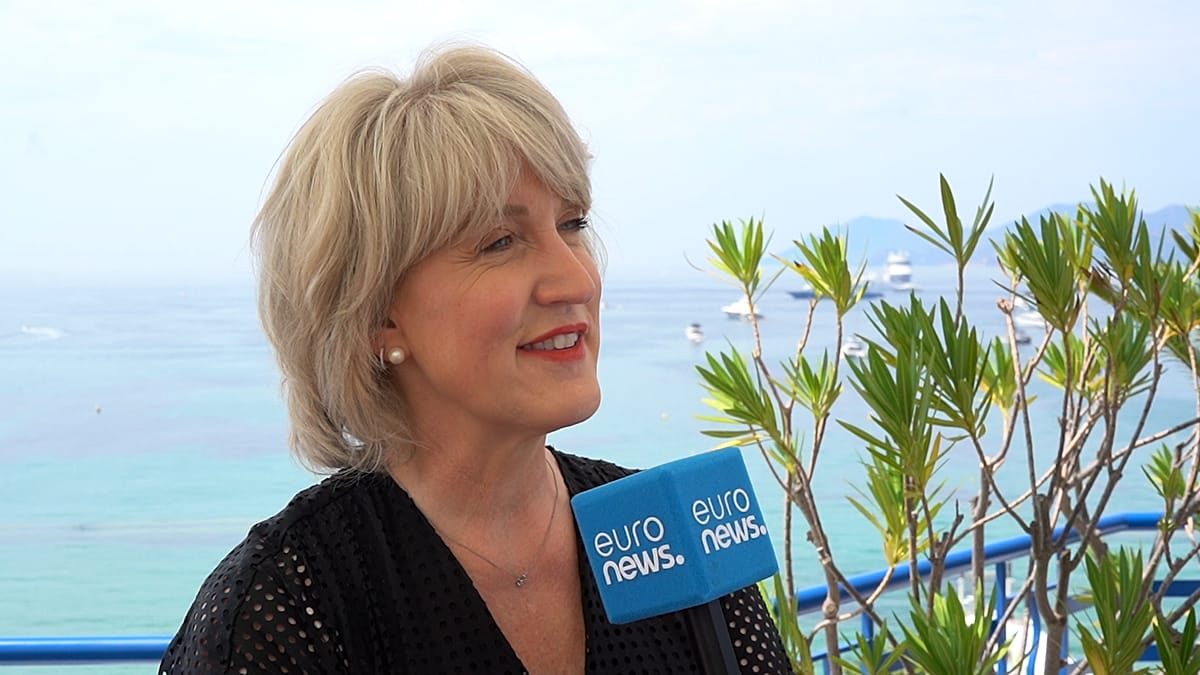
At this year's Cannes Lions International Festival of Creativity, the conversation around artificial intelligence took a distinctly human turn. Julie Linn Teigland, EY's Global Vice Chair, sat down with Euronews Culture to outline what she sees as the next phase of AI: one that prioritizes personalization and human judgment over raw computational power.
Teigland, who oversees EY's global strategy from offices in London and across Europe, argued that the most successful AI applications will be those that feel deeply personal to users. "The future of AI is not about replacing people," she said. "It's about augmenting human creativity and decision-making in ways that feel intuitive and tailored."
Balancing Algorithms with Human Insight
Her comments come amid a broader debate in the marketing and technology sectors about the role of AI in creative industries. At Cannes Lions, where brands and agencies gather to celebrate advertising and design, the tension between automation and artistry was a recurring theme. Teigland stressed that while AI can analyze vast datasets and generate content at scale, it lacks the contextual understanding and emotional intelligence that humans bring.
"We are seeing a shift from generic AI outputs to hyper-personalized experiences," she explained. "But that requires human judgment to interpret data, to understand cultural nuances, and to ensure ethical boundaries are respected." This balance, she added, is especially critical in Europe, where regulations like the EU's AI Act are setting global standards for transparency and accountability.
The discussion also touched on the practical implications for businesses. Teigland pointed to examples from EY's own work with clients across the continent, from a German automotive company using AI to tailor customer service to a French luxury brand employing machine learning for bespoke product recommendations. In each case, she noted, the technology was most effective when guided by human strategists.
A European Perspective on AI's Next Wave
Teigland's vision aligns with a growing consensus among European tech leaders that AI should serve as a tool for empowerment rather than a threat to jobs. At a time when AI anxiety often outpaces its actual impact, she urged marketers and executives to focus on practical applications rather than fear. "The real opportunity is in using AI to free up human talent for higher-value creative work," she said.
Her remarks also resonated with the festival's broader theme of creativity in the digital age. Earlier in the week, LEGO's Julia Goldin was named the first European CMO of the Year at Cannes Lions, underscoring the region's growing influence in global marketing. Teigland noted that Europe's diverse cultural landscape makes it a natural laboratory for personalized AI, as companies must adapt to different languages, customs, and consumer behaviors across the EU's twenty-seven member states.
Looking ahead, Teigland predicted that the most innovative AI applications will emerge from collaborations between technologists and creatives. "We need to build systems that learn from human feedback," she said. "That's how we ensure AI remains a partner, not a replacement."
For European businesses, the message is clear: the future of AI is not just about algorithms—it's about people. As Teigland put it, "The secret to success is remembering that technology is at its best when it serves human needs."