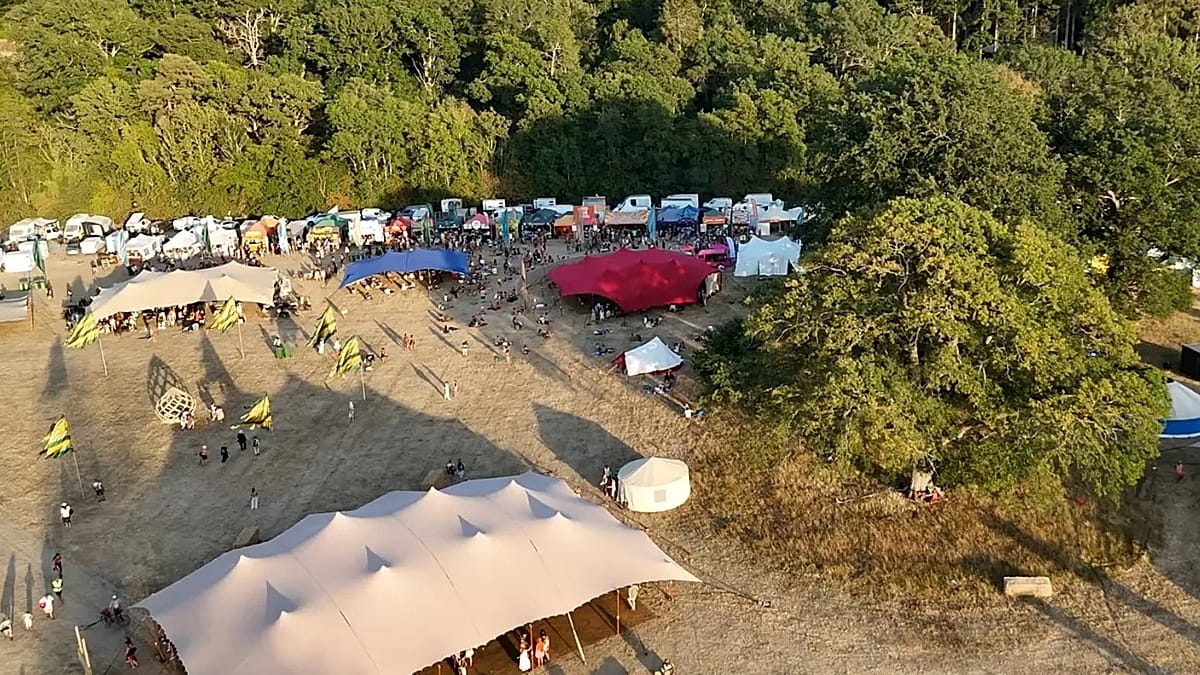
In a field in Berkshire, England, more than 10,000 people from across Europe and beyond have pitched tents and opened their minds for the sixth edition of the Medicine Festival. For four days, the site becomes a temporary village where concerts, yoga, movement workshops, traditional ceremonies and environmental activism unfold side by side.
The festival, which began as a small gathering, has grown into one of the most prominent examples of a broader cultural shift: the rise of 'conscious' events that deliberately blur the lines between entertainment, spirituality and ecological awareness. Attendees come not just to watch performances but to participate in a collective exploration of self, community and the natural world.
A European pilgrimage
Many participants have travelled significant distances to be here. Ayla, a first-time attendee from the Netherlands, told European Pulse: “What I like about Medicine is the sharing of wisdoms. I hope I get out of here inspired, rested and motivated as well.” Her sentiment echoes a wider trend across the continent, where festivals are increasingly being designed as spaces for personal growth and connection rather than mere spectacle.
The programme is dense: sunrise meditations, ecstatic dance sessions, talks on permaculture, and rituals led by indigenous elders from various traditions. But the organisers are careful to frame these elements not as exotic imports but as universal practices that help people reimagine their relationship with the planet.
“We see ourselves as part of nature,” says Joshua Dugdale, co-founder of the festival. “We promote the medicine of dance, the medicine of music, the medicine of community, but also seeing people who have maybe a different world view and engaging with that, learning new skills, understanding new ways of seeing the world. We would call it a sacred festival.”
This philosophy resonates with a growing number of Europeans who feel alienated by mainstream consumer culture and are seeking more meaningful forms of leisure. Similar events have sprung up in Portugal, Spain, Germany and the Balkans, each adapting the formula to local traditions and landscapes.
Beyond the music
Unlike conventional music festivals, where the main stage dominates, Medicine encourages a more holistic experience. Workshops on herbal medicine, breathwork and conflict resolution sit alongside live performances, and attendees are invited to volunteer in the festival's permaculture garden or join beach clean-ups if the event is near a coast.
The environmental dimension is particularly pronounced. Organisers have implemented a zero-waste policy, banned single-use plastics, and offset travel emissions through a dedicated fund. For many participants, this alignment with ecological values is a key draw. “I came for the music, but I stayed for the conversations about soil health and community resilience,” said Markus, a festival-goer from Berlin.
The trend has not gone unnoticed by the broader events industry. Major European festivals are increasingly adding wellness zones and sustainability initiatives, though few have embraced the full 'conscious' label. The distinction, insiders say, lies in the intention: not just to entertain, but to transform.
As the sun set over the Berkshire fields on the final day, a circle of drummers led a closing ceremony. Many participants embraced, exchanged contact details, and promised to meet again next year. For them, Medicine is more than a festival; it is a template for a different way of living.
Whether this model can scale beyond the niche remains an open question. But for now, the growing crowds suggest that the appetite for such gatherings is far from fading. As Ayla put it, “I came alone, but I leave with a community.”