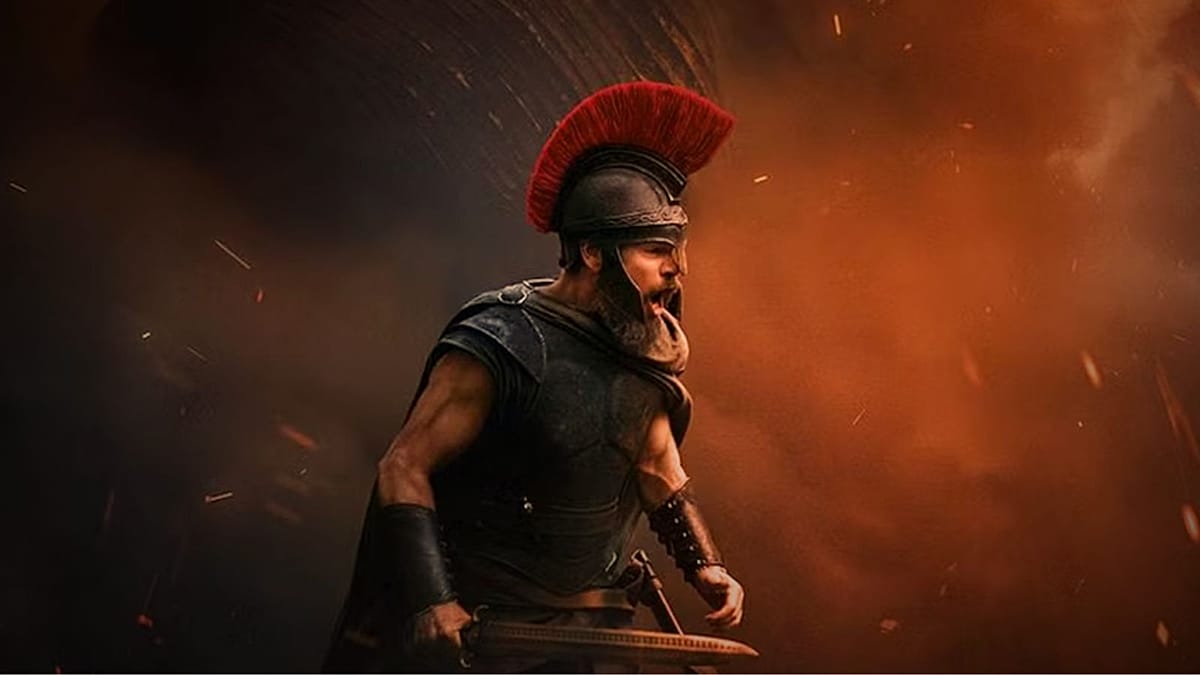
Christopher Nolan's The Odyssey has become a cultural phenomenon across Europe, not just for its box office dominance—exceeding $650 million globally in two weeks—but for its unexpected ripple effects on reading habits and language learning. The film, which is on track to cross $1 billion, has driven a reported 70% increase in sales of Homer's ancient poem in the UK compared to 2025, according to data from Circana BookScan. In France, daily listening hours for The Odyssey on Spotify rose by over 752% in mid-July versus the previous month, while US book sales climbed 76% since the start of the year.
Greek language searches surge
Beyond literature, the film has sparked a remarkable interest in learning Greek. Google Trends data, cited by Preply and The Times, shows searches for “learn Greek” have jumped by 5,000% in the past fortnight. Madeline Enos, a language trends expert at Preply, noted that Homer's epic was composed in ancient Greek, which differs significantly from the modern language spoken in Greece today. “Ancient Greek offers the opportunity to engage more closely with Homer's original text and the wider classical world, while modern Greek can help people connect with contemporary Greek culture and communicate with speakers today,” she said. Enos added that the initial spark from the film could lead to a deeper understanding of Greece's linguistic and cultural heritage.
This surge in interest aligns with broader trends in European cultural tourism and education. For instance, Spain's World Cup win sparked a tourism surge from China, showing how pop culture events can drive engagement with European destinations. Similarly, Nolan's film is drawing attention to Greece's ancient roots, potentially boosting travel to Athens, Crete, and the Ionian islands.
Purists push back
While the film has been a commercial and cultural success, not everyone is impressed. British-American classicist Emily Wilson, whose 2017 translation of The Odyssey was the first by a woman into English verse, published a scathing essay in the London Review of Books. She wrote: “I had hoped that Nolan's affinity with these Homeric themes might push him to new creative heights, and enable him to conjure more believable characters. But The Odyssey features his usual combination of grandiosity and superficiality… The film's vision is too confused, its characters too underdeveloped, to deliver what it half-promises in terms of big ideas—although it is very good at conveying big bangs and big giants.”
Wilson criticised the film's lack of psychological, emotional, political, and ethical depth, calling its narrative structure “gimmicky” and the writing “abysmal.” She added that none of the characters have convincing motivation, and noted the absence of sex scenes and unappetising food. “I would be ashamed to have written any part of this script,” she said.
Yet Wilson conceded the film's positive impact on cultural awareness. She told The Times that “the release of The Odyssey is still an event to celebrate” and that it is “bringing audiences back to cinemas.” She added: “Nolan is doing his best to get the general public reading again, and I am grateful.”
Our own review noted that while there is much to admire in Nolan's gargantuan undertaking—particularly his modernist reading of Odysseus's psyche—the film suffers from editing and pacing issues, and a lack of fun or emotion. “Something is missing. Not the filmmaking flair, nor the ambition; rather a moment to breathe and emote during what sometimes feels like a dutiful α to β to γ trip to Hades and back,” we wrote.
The debate over Nolan's adaptation echoes broader discussions in European cultural circles about the role of cinema in reviving classical texts. As home sales surge across Europe amid easing borrowing costs, the film's success suggests that audiences are willing to invest time and money in cultural experiences that connect them to the continent's shared heritage.