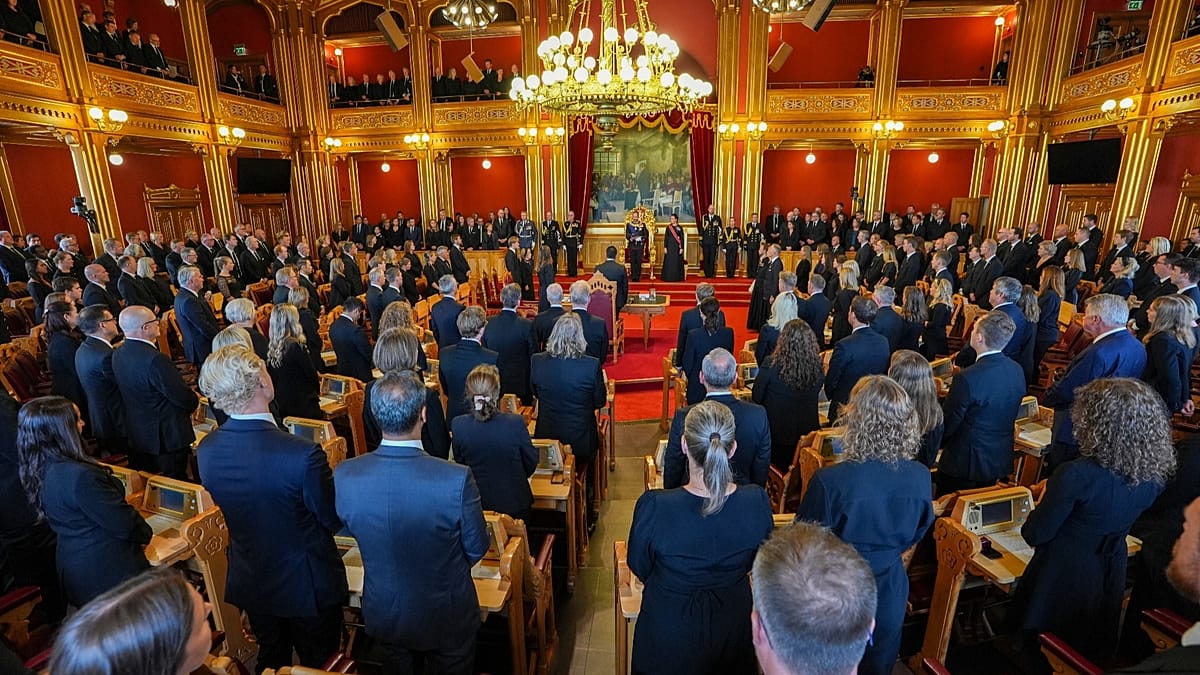
Norway's new monarch, King Haakon VIII, formally pledged allegiance to the country's constitution in a ceremony at the Storting in Oslo on Tuesday, marking a key step in the transition of power following the death of his father, King Harald V, last Friday at the age of 89.
Haakon, 53, was driven the short distance from the royal palace to parliament in an open car, where Storting president Masud Gharahkhani read the official proclamation of Harald's death and Haakon's accession. The new king then took the oath, stating: “I promise and swear that I will govern the Kingdom of Norway in accordance with its Constitution and Laws; so help me God, the Almighty and Omniscient.”
The ceremony was a poignant moment for a nation that has been in mourning since Harald's passing, which ended a 35-year reign. Haakon has adopted the motto “All for Norway,” a phrase that dates back to his great-grandfather, Haakon VII, who became king in 1905 after Norway regained independence from Sweden.
A monarchy with deep roots
Norway's monarchy traces its origins to King Harald Fairhair in the ninth century, making it one of the oldest in Europe. However, its role today is largely ceremonial, with political power resting in the elected government and parliament. The royal family continues to serve as a symbol of national unity and promotes Norway abroad.
On Monday, Harald's coffin was moved to the chapel of the royal palace in central Oslo, where it will remain until his funeral on 9 September. From Tuesday afternoon until 8 September, the chapel will be open to the public for those wishing to pay their respects. The palace has asked visitors not to take photographs or leave flowers inside the chapel.
Queen Mette-Marit, Haakon's wife, made her first public appearance since assuming her title during Monday's coffin procession. She has been largely absent from public life following a lung transplant in June. The palace announced that she would not attend Tuesday's swearing-in ceremony due to complications from the transplant.
In a statement, Are Holm, a pulmonologist at Oslo University Hospital, explained that post-transplant complications are not uncommon and that Mette-Marit has experienced them on several occasions, “including today.” He added: “As a result, the Queen must remain under observation throughout the day. Unfortunately, the Queen will therefore be unable to attend the swearing-in ceremony at the Storting today.”
The new king's accession comes at a time when the Norwegian monarchy faces both public affection and scrutiny. Recent controversies have tested the institution, but the outpouring of grief for Harald suggests strong public support. Harald's death has prompted tributes from across Europe, with European leaders expressing their condolences.
As Haakon begins his reign, he inherits a role that is both symbolic and diplomatic. His first months will be closely watched, not least for how he navigates the balance between tradition and modernity. The new king's commitment to the constitution, sworn in the presence of parliament, underscores the monarchy's place within Norway's democratic framework.
For now, the nation's focus remains on honouring Harald's legacy. The public will have several days to pay their respects before the funeral, which will be attended by dignitaries from across the continent. Haakon's reign has begun with a solemn promise—one that echoes the words of his forebears and sets the tone for his time on the throne.