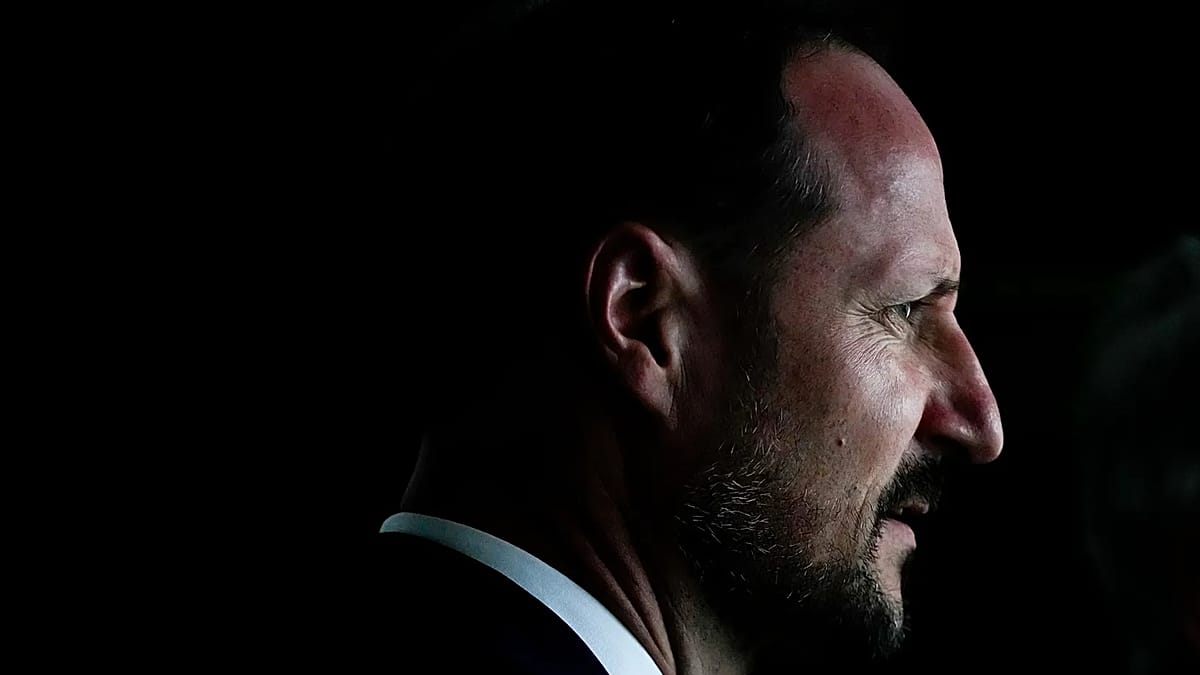
Norway has a new monarch. Crown Prince Haakon, 53, ascended to the throne as King Haakon VIII following the death of his father, Harald V, on Friday. The transition was long anticipated, as Haakon had served as regent on multiple occasions in recent years while his father's health deteriorated.
Haakon's eldest child, Ingrid Alexandra, now becomes Crown Princess and heir to the throne. The Norwegian monarchy traces its lineage back to King Harald Fairhair in the ninth century, and its continuity was reaffirmed by a 1905 referendum in which three-quarters of voters chose to retain a royal head of state.
In practice, the monarch's role is largely symbolic; political power rests with the elected parliament. Yet the royal family remains highly visible, representing Norway at home and abroad. Haakon's accession comes at a delicate moment, with public support for the institution under strain.
From Berkeley to the throne
Born in 1973, Haakon was not originally the heir apparent. His grandfather, King Olav, died in 1991, making Haakon's father king and Haakon the crown prince. A 1990 constitutional amendment gave firstborn children priority in the succession regardless of gender, but it was not applied retroactively, so Haakon's older sister, Princess Martha Louise, remained behind him in line.
Haakon's education reflects a modern, international outlook. He holds a bachelor's degree in political science from the University of California, Berkeley, and a master's in development studies from the London School of Economics, where he focused on international trade and Africa. He also trained at the Royal Norwegian Naval Academy and completed a diplomatic programme.
An avid surfer and skier, Haakon once told Norwegian broadcaster NRK that had he not been born royal, he would have pursued a life as a surfer. His youthful attendance at music festivals across Europe and his taste for rock and rap endeared him to many Norwegians.
A marriage that divided the country
Haakon's relationship with Mette-Marit Tjessem Hoiby, a single mother he met at a music festival in 1999, sparked considerable controversy. Her connections to a party scene involving illegal drugs led some to question her suitability as a future queen. Nevertheless, Haakon obtained his father's permission to marry, and the couple wed at Oslo Cathedral in August 2001. Over time, Mette-Marit won over much of the public.
The couple has two children, Ingrid Alexandra and Prince Sverre Magnus. Haakon also became stepfather to Mette-Marit's son, Marius Borg Hoiby, who holds no royal title.
Challenges ahead
King Haakon VIII faces the task of stabilising the monarchy and rebuilding its popularity following revelations about his wife's past contacts with the late sex offender Jeffrey Epstein and his stepson's rape conviction. In June, Hoiby was sentenced to four years in prison after being convicted of two of four rape charges, as well as assault and abuse in a close relationship. His lawyers have indicated they will appeal.
The trial brought renewed scrutiny of Mette-Marit's links to Epstein. She has apologised for maintaining contact with him, citing poor judgement, and has not been accused of any wrongdoing. Nonetheless, the episode has damaged the royal family's standing.
Public support for the monarchy has declined in recent years, and Haakon's sister, Martha Louise, has also attracted criticism for her unconventional beliefs, including claims that she can communicate with angels. The new king will need to navigate these controversies while maintaining the dignity of his office.
As Norway looks to the future, Haakon's international experience and modern outlook may help him connect with a younger generation. His reign begins at a time when European monarchies are reassessing their roles, and his ability to adapt could prove crucial. For more on the late king's legacy, see our coverage of Harald V's death and the critical condition that preceded it.