At the United Nations General Assembly in New York this week, the chief executive of Palantir Technologies, Alex Karp, held separate meetings with the presidents of Lithuania and Poland, signalling a deeper push into European defence technology. Gitanas Nausėda posted on X that Vilnius is ready to become a regional hub for the Baltics and NATO's eastern flank, combining "top talent, AI, data and defence technologies" to address real security needs across the alliance. Polish media reported that Karp expressed interest in establishing a similar technology development centre in Warsaw.
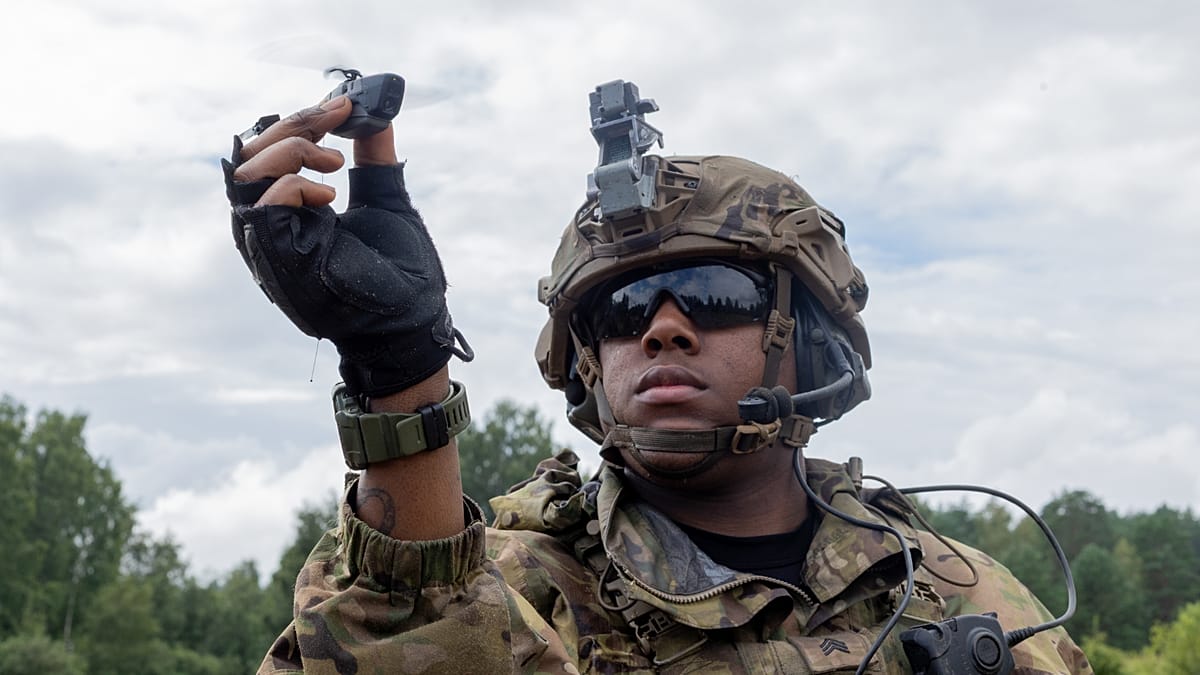
Palantir, a US-based company known for embedding artificial intelligence into military and intelligence systems, already works with American forces, including the Department of Defence and Immigration and Customs Enforcement. Its software has been used on the battlefield in Ukraine, where Kyiv's Delta system for battlefield data management has become a model for modern warfare. The company's expansion into Europe comes as NATO members seek to bolster their eastern defences amid heightened tensions with Russia.
AI as the new normal in warfare
European Commissioner for Defence Andrius Kubilius defended the meetings, calling Palantir a "great company" and arguing that AI development is essential for contemporary military doctrine. "Developments with AI for intelligence, for managing the data, are very crucial for modern warfare doctrines," he told Europe Today. He pointed to Ukraine's Delta system as an example of how data management is becoming "a new normal in the management of battlefields and in implementation of warfare or defence doctrines."
Not everyone is convinced. Spanish Prime Minister Pedro Sánchez has blocked Palantir from public contracts and state-controlled companies. Human Rights Watch has criticised the company for supplying surveillance and data-analytics tools used in military operations, including what it described as the "widespread scale" of the US operation against Iran in February 2026. Critics argue that such technologies risk enabling mass surveillance and undermining civilian protections.
The race to establish AI defence hubs in Europe is intensifying. Lithuania and Poland are positioning themselves as gateways for NATO's eastern flank, while other member states remain wary of relying on US tech giants. The European Union has yet to formulate a common approach to AI in defence, leaving individual countries to strike their own deals.
Brussels defends the ICC against US pressure
Meanwhile, at the UNGA, US President Donald Trump again attacked the International Criminal Court, prompting a robust response from Brussels. European Commissioner for Justice Michael McGrath said in a statement shared with Euronews that the EU is "strongly committed to international criminal justice and the fight against impunity." He added that "attacks or threats against the Court, elected officials, personnel and those cooperating with the Court are not acceptable."
The Dutch Foreign Minister Tom Berendsen has reportedly requested the activation of the EU's "blocking statute," a legal mechanism designed to shield European companies and entities from foreign sanctions. MEP Chloé Ridel (S&D), part of a group pushing for stronger EU support for the ICC, told Europe Today that the statute must be launched. "Ursula von der Leyen has refused to do that. Even so, we gather the majority in the European Parliament in favour of the activation," she said.
The dispute underscores a growing transatlantic rift over international justice. While the EU sees the ICC as a cornerstone of the rules-based order, the Trump administration views it as a threat to US sovereignty. The blocking statute, if activated, would be a significant escalation, potentially affecting US sanctions against ICC officials.
Climate displacement and sinking islands
Beyond the headlines, the UN General Assembly is expected to approve a declaration recognising statehood and UN membership for countries most affected by rising sea levels, such as Tuvalu, the Marshall Islands and Kiribati. Kamal Amakrane, Managing Director of the UN's Global Centre for Climate Mobility, told Europe Today that the climate emergency is not only an island issue. "For some, it is definitely a matter of how they affirm their statehood continuity, their maritime zones, their rights, their dignity," he said. "In Europe, it's an infrastructure challenge. It's an insurance challenge. It's a livelihood challenge."
European countries, particularly those with long coastlines like the Netherlands and Italy, are already grappling with these challenges. The declaration could set a precedent for how international law adapts to climate-induced displacement.
Montenegro's EU bid hits a Croatian roadblock
Back in Brussels, Montenegro's ambition to become the EU's 28th member by 2028 faces a serious obstacle. An intergovernmental conference scheduled for Tuesday was postponed after Croatia reiterated its opposition to closing several negotiating chapters due to unresolved bilateral disputes. Podgorica has already closed 18 chapters and aims to complete the remaining 15 by the end of the month, but the disputes with Croatia risk derailing the entire process. The EU's enlargement policy, already strained by the war in Ukraine, now faces another test in the Western Balkans.
As Europe navigates these challenges, the continent's leaders are increasingly looking to technology and international law to secure their future. Whether it's AI on the battlefield or protecting the ICC, the decisions made this week in New York will resonate far beyond the UN halls.