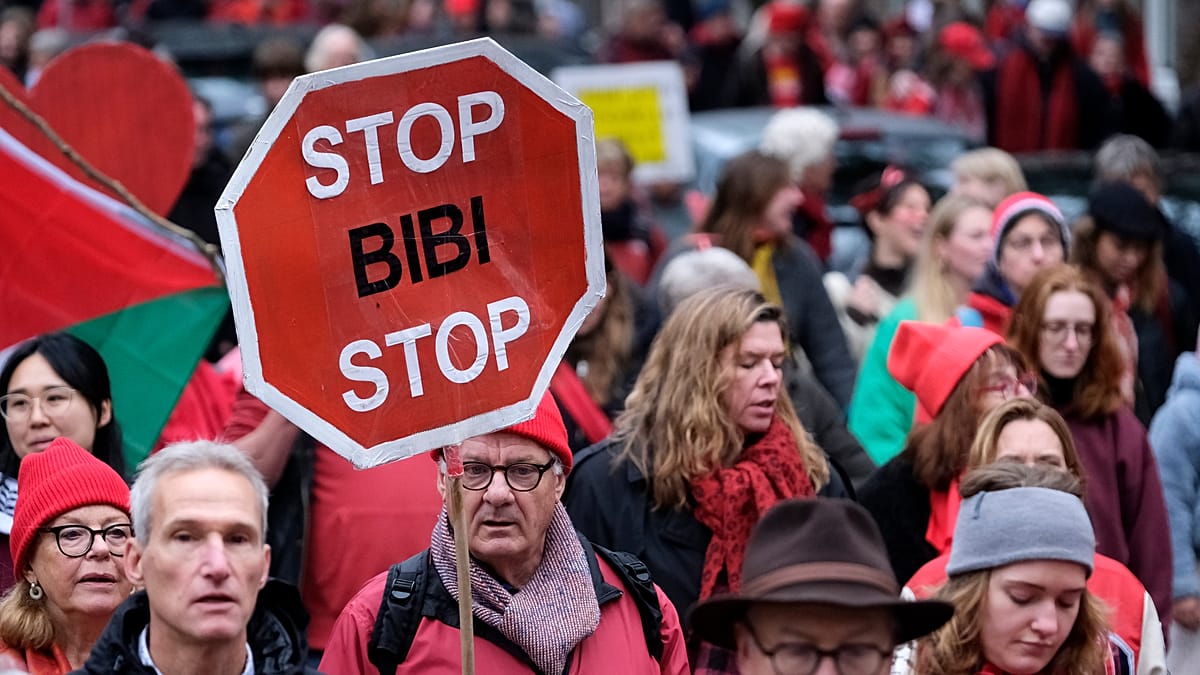
Amsterdam witnessed a striking display of solidarity on Sunday as tens of thousands of demonstrators, many wearing red, converged on the city centre to demand that the Dutch government adopt a more forceful policy toward Israel over the ongoing war in Gaza. The protest, which organisers described as one of the largest of its kind in the Netherlands, turned the capital's streets into a sea of crimson, a colour chosen to symbolise the bloodshed in the Palestinian enclave.
A growing movement
The march, which took place on 8 November, saw participants from across the country, including families, students, and activists, calling for an immediate ceasefire and for the Netherlands to suspend arms exports to Israel. Many carried Palestinian flags and banners reading “Stop the genocide” and “Dutch government, act now”. The demonstration reflects a broader surge in public pressure on European governments to reassess their positions on the conflict, which has now entered its second year.
Among the crowd was 34-year-old Amsterdam resident Fatima El Amrani, who told European Pulse: “We are here because our government cannot remain silent while thousands of civilians are being killed. The Netherlands must use its voice in the EU to push for a real change in policy.” Her sentiment was echoed by many who expressed frustration with what they see as a lack of decisive action from The Hague.
The protest comes at a time when similar demonstrations have been held across Europe, from Lyon to London, as public opinion increasingly questions the legality and morality of Israel's military operations. In the Netherlands, the issue has also intersected with domestic debates about free speech and the limits of protest, particularly after recent incidents involving activists targeting technology infrastructure.
Political pressure mounts
The Dutch government, led by Prime Minister Dick Schoof, has so far maintained a cautious stance, balancing its traditional support for Israel with growing calls for restraint. However, the scale of Sunday's demonstration is likely to intensify pressure on the ruling coalition, which includes parties with differing views on the Middle East. Some members of parliament have already called for a debate on the issue, and the protest organisers have promised to continue their campaign until concrete measures are taken.
“This is not just about the Netherlands,” said political analyst Maarten van der Weijden of the University of Amsterdam. “The Dutch government's position matters because it influences EU policy. When a country like the Netherlands shifts its stance, it can have a ripple effect across the bloc.” Indeed, the Netherlands has historically been one of the more pro-Israel voices within the European Union, making any change in its approach particularly significant.
The demonstration also drew attention to the broader humanitarian crisis in Gaza, where the United Nations has reported widespread shortages of food, water, and medical supplies. Protesters called on the Dutch government to increase humanitarian aid and to support efforts to bring those responsible for war crimes to justice, including through the International Criminal Court in The Hague.
Broader European context
Sunday's march is part of a wider wave of activism across Europe, where citizens are increasingly demanding that their governments take a more principled stand on international issues. In France, for example, protests have been ongoing over domestic policies, but the Gaza conflict has also featured prominently in recent demonstrations. Similarly, in Lisbon, activists have linked housing rights to broader social justice causes, including Palestine.
The Amsterdam protest also highlighted the role of civil society in shaping foreign policy. Organisations such as the Dutch Palestine Committee and the left-wing party GroenLinks-PvdA played a key role in mobilising participants. The event was peaceful, with police reporting no incidents, and the city's public transport system was temporarily disrupted as the march made its way through the central Dam Square and along the canals.
As the war in Gaza continues, with no end in sight, the pressure on European governments is unlikely to subside. For the Netherlands, Sunday's demonstration sends a clear message: a significant portion of the population wants a more assertive Dutch role in ending the conflict. Whether the government will heed that call remains to be seen, but the sea of red in Amsterdam has certainly made an impression.