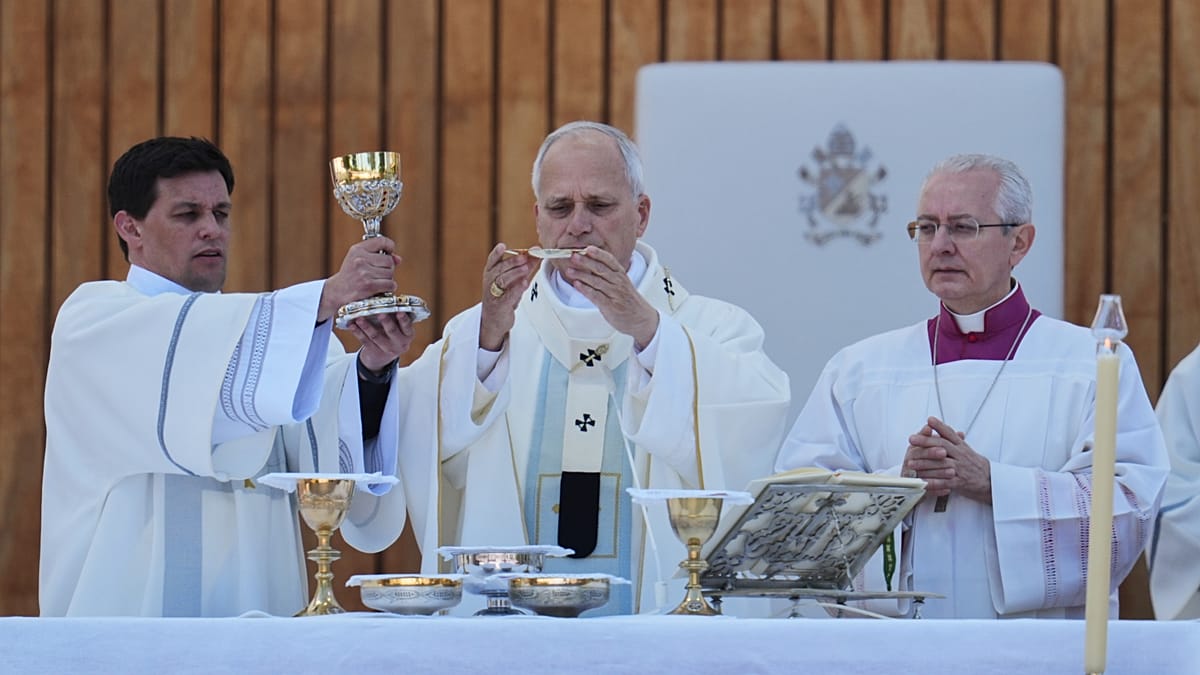
Pope Leo XIV wrapped up his three-day visit to Uruguay on Sunday with a final Mass in the small city of Florida, north of Montevideo, where he paid tribute to the women who have kept the Catholic faith alive across generations. Speaking before a crowd the Vatican estimated at 50,000 — far exceeding the city's population of about 40,000 — the Pope acknowledged the deep secularization of Uruguayan society while urging mothers and grandmothers not to give up.
“You taught your children to pray, and today they no longer do so. You used to attend Mass together, and it has been years since they entered a church,” he said. But he added: “Mothers and grandmothers: never tire of passing on the faith!”
The Mass marked the feast of the Virgin of the Thirty-three, a cherished local devotion that dates back to Uruguay's independence era. Many pilgrims walked several kilometers to reach the square under brilliant blue skies, a testament to the enduring pull of religious tradition in a country often described as Latin America's most secular.
A homily against gender-based violence
In his homily, Pope Leo turned to a pressing regional issue: the epidemic of femicides. Over the past five years, Latin America has recorded nearly 20,000 such killings, most committed by current or former partners. The Pope called on men to treat their wives with respect, framing the issue as a matter of basic human dignity and Christian duty.
“Live your faith with courage,” he urged the congregation. “Do not be afraid to say: I am a Christian, I am a Catholic, I believe in Jesus Christ.” He also expressed confidence in Uruguayans, saying, “The people of Uruguay are capable of great things. What we have received and offer freely through the grace of God multiplies, opens up horizons and enriches our lives, giving them new meaning.”
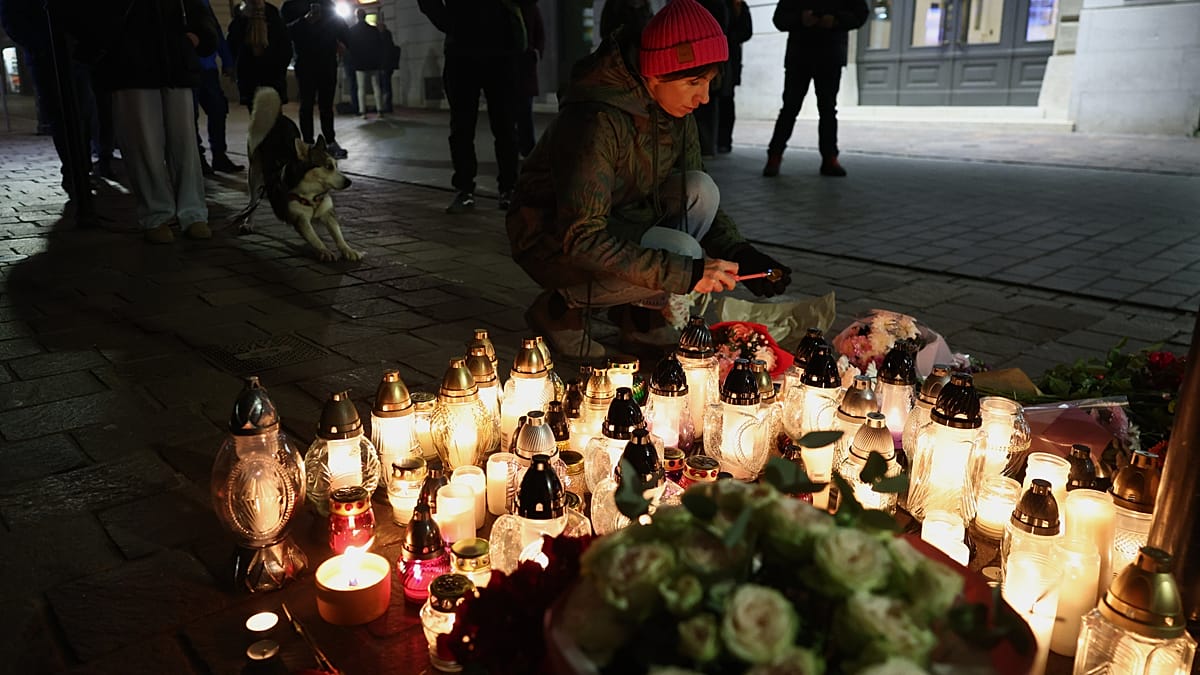
The Pope also voiced his sorrow over the recent attack in Kraków, Poland, saying he was “deeply saddened” by the violence. That attack, which targeted a school, has resonated across Europe and prompted messages of solidarity from several EU leaders.
From Montevideo to Buenos Aires
On Sunday evening, Pope Leo landed in Buenos Aires, where he was received at the Casa Rosada by Argentine President Javier Milei. The visit comes with political undercurrents: the Catholic Church has been critical of Milei's austerity measures, which have slashed social spending, and of his enthusiastic embrace of artificial intelligence — a stance that has raised eyebrows in Vatican circles.
Milei, who has made cutting public expenditure the cornerstone of his presidency to stabilize Argentina's troubled economy, has dismissed social justice as “an aberration” and mocked the growing complaints from families struggling to make ends meet as “huge stupidity.” His government's policies have sparked protests and a deepening rift with the Church, which has traditionally been a voice for the poor.
Pope Leo's South American tour, which began with his Uruguay visit, is seen as an attempt to reconnect with a region where the Church faces declining attendance and rising social challenges. His message in Florida — a blend of pastoral encouragement and social critique — reflects a broader strategy of engaging with secular societies without compromising on moral teachings.
As the Pope begins his Argentine leg, observers will watch for any direct confrontation with Milei's policies. The Church's stance on social spending and AI could become a flashpoint, especially given the Pope's previous remarks on technology and inequality. For now, the focus remains on the faithful, many of whom traveled long distances to see him.
Uruguay, a country of 3.4 million, has seen a steady decline in religious practice, yet the turnout in Florida suggests that the Catholic identity, however dormant, still resonates. The Pope's visit, the first by a pontiff in nearly four decades, may not reverse secular trends, but it has certainly reignited a conversation about faith, family, and the role of women in passing on traditions.
As he departed, the Pope left behind a message of hope and resilience, urging Uruguayans to hold onto their heritage while embracing the future. His next stop, Argentina, promises to be a more politically charged affair, with the Pope's moral authority set against Milei's radical economic experiment.